Thursday, August 28, 2014

Writer Reveals The Truth About Zoe Quinn & Women In Tech


It's been a hell of a week for a few prominent women in video games. Just two days ago, Anita Sarkeesian got explicit, credible threats to her family, address and loved ones that she actually had to call police and move herself and her family out of their home for a night.

I've written pretty extensively about the campaign of harassment that's surrounded Zoe Quinn in two posts: "Not Okay: Hateful Man-Babies Target Zoe Quinn. Again." and "If You Call This Justice, I Don't Want Your Support". Since publishing those two posts, I've gotten comments, tweets and emails (the majority of which are unsigned) saying I was spreading a campaign of lies, that it was incumbent upon me to tell "the truth" about Quinn.

Yesterday, Elizabeth Sampat wrote a post called "The Truth About Zoe Quinn". Here's what she had to say:
The truth about Zoe Quinn is that no one in the world deserves the shit that she has gotten. The truth is that these witch hunts over journalistic ethics and transparency and whatever bullshit dog whistle that 4chan and its ilk are using for their issues with a woman’s sexual agency are driving women out of the industry.
...The truth is sometimes I have survivor’s guilt, and sometimes I have panic attacks about being the only one left fighting, and sometimes despite all of my tough words and the fact I literally cannot imagine doing anything else with my life, the truth is that I can’t stop thinking about maybe leaving the industry. I don’t want to; the thought is like an involuntary tic, tugging at my consciousness. Maybe it’s a survival instinct. I keep using the word “survive” but I can’t help but wonder: is this surviving? What parts of me are surviving? Can any woman escape this whole? 
...The truth is, a lot of the women who are being driven away have never met or interacted with Anita or Zoe. A lot of the women in our industry exist in a constant state of fear.  
Women who make games and would never dream of connecting their face or real name with a Twitter account, just in case.  
Women who would never go indie. Women who are terrified of starting a crowdfunding campaign but who can’t get their dreams funded any other way, and so their dreams just die.  
Are you okay with this?  
Is this the industry that you want?
It certainly isn't one I want. However, a lot of men don't realize they're complicit in creating this atmosphere, either by inaction of playing devils advocate. In the comments section almost every games news site I've seen there will be comments that start out with the obvious “What happened was horrible! I can't believe people would stoop so low" and then follow up with a huge "BUUUUUUUT look, her videos are so controversial and maybe if she hadn't been nicer or less emotional or were virtuos or didn't game people a reason to mad it would happen blippety bloo it's just my opinion blorpety blah not all men and not all gamers blah blah devilsadvocatecakes." It's maddening.


Tainted Love: How Game Companies Exploit Employees' Passion

It's a familiar homily to those looking at a satisfying career: "Do what you love, and work won't seem like work." It sounds all well and good, doesn't it? Imagine, a job that not only give you a paycheck to fill your wallet, but satisfaction to fill your soul. Creative industries abound where workers are not just happy to be there, they are passionate about the work they do, or want to find a place where they feel like they belong.

Blizzard Entertainment, the company behind the 300-pound gorilla of MMOs, World of Warcraft, looks to tap into that very feeling, that yearning for a sense of belonging. And in the company's latest recruitment video, they leap right past the Army's "It not just a job, it's an adventure" type of pitch and goes straight into "We a family of people, just like you". Take a look:


In just six minutes, the video has tons of variation on passion, family, fulfillment and even love.he message is hammered home that this is not a job, it’s a new family. One part in particular that caught my ear was a  few employees emphasizing that all of the departments in Blizzard, even the purely creative ones, are considered part of the company's success. There is one part of the video that also confused me. One talking head says that the first thing you see when you start a Blizzard game is "... 'Designed by Blizzard'. And it's very true."

Um... I sure hope so. I mean, it seems obvious that a Blizzard game made in-house by Blizzard is designed by Blizzard. This statement seems like it was written by one of the Krang from Teenage Mutant Ninja Turtles. As Ian Williams and Austin Walker outline in their anaylasis "Working For the Love of the Game: The Problem With Blizzard's Recruitment Video", peel back a layer and you see it reflects nearly everything wrong with video game companies as employers:

It is telling of the ideological and material conditions of the games industry that the simple act of giving a full group of workers credit on their production seems like an accomplishment. The irony, of course, is that those employees, beaming with pride, aren't themselves named or credited in the recruitment video.

But the video makes no mention of the concrete benefits that working at Blizzard provides. There’s no mention of benefits or wages; nothing about crunch time, that specter haunting the industry; nothing about the sort of material, tangible things that make a difference in how one is employed, rather than how one feels during employment. There are perfectly acceptable, subtle ways to talk about these things without veering into the gauche. Employees could talk about their own financial security, or about being able to plan for the future while simultaneously being fulfilled with their work today... But your recruitment will be based in love, not on wages. The mentions come rapid fire, culminating in the grand pronouncement from one employee: Blizzard employees are “just a bunch of geeks,” just like you. 

This is a window into how the industry as a whole views employment... this is [also] an industry with a layoff rate twice the national rate across all industries and a culture of crunch where 68% of respondents work more than 50 hours a week for months at a time in order to get a product out the door. It’s a bad tradeoff: In exchange for being quiet about wages, hours, benefits and the like, you’ll get to hang out with like-minded people you’ll love to be with. The Blizzard video is the distillation of this pitch in a very blunt form....Blizzard’s video is just one more artifact of a culture that preempts demands for fair remuneration with a prodding reminder that, after all, if you love what you do, then the pay shouldn’t matter. This is the same story told by Twitch executives who say that its streamers “aren’t interested” in being paid. It’s the same story that crops up any time someone wonders if modder labor is exploitative. It’s the same story that is so often leveraged to blur the line between fandom and promotional labor. It’s a story told so well and so often that it doubles in on itself: Exploited fans become exploited modders. Exploited modders become exploited developers. 

You might wonder, though, in a pitch that aims to capture a creative's sense of fulfillment, or a fan's love of playing games, what's wrong with focusing so much on passion?

All this talk of passion sets a very real paradigm, limiting the acceptable actions of those in poor labor conditions. Why is the industry so insistent that game development is “more than just a job?” Because if it’s just a job, just a 9 to 5 workday in a cubicle pounding out code or testing content, then the crunch time is something you can object to. In fact, you would (or should) be expected to object to a 60 hour week. If, instead, protesting crunch time means letting down a grand artistic vision (one which Blizzard reminds the viewer all employees contribute to) or, even worse, letting down your new family, that’s a very different proposition. None of us wants to let down our family and friends, but we can probably get away with letting down management. That social pressure is what keeps crunch time and other bad practices in place as a normal part of the industry. 

The mythology of crunch and a culture of layoffs have naturalized them, erasing their histories. Instead of being able to identify key shifts in industry labor practices, we’re told that we’ve always been at war with the 60 hour work week. There’s a sheepish air when people at leading companies bring up issues such as crunch, as if it’s unavoidable, like a downpour or an unbidden burp. This is nonsense. Crunch is certainly a disaster, but it is not an act of God. There is nothing that says that crunch and layoffs are unavoidable. The laws we write about how we work are products of men and women, not natural forces imposed upon us by an unseen hand.

And that's the heart of the issue, isn't it? The video seems directed at super fans but it really just hides the reality of  grueling work conditions and preys upon people's need to belong and sense of pride. Honestly, for all of the rah-rah about being a part of Blizzard, it all sort of comes off a little defensive.

Luckily, Paste Magazine bucks the comments section trend by both being not awful and having relevant and insightful commentary. Here what one former video game worker of 20 years had to say:

After over 20 years in the industry I finally had to pull back. They'd squeezed every last drop of passion out of me. Games haven't really been "design driven" for a long time anyway, and with F2P gaming gaining dominance the impact of the bottom line is only growing stronger Yes, they're beautiful, but all the innovation is happening in the back end. As for all the extracurricular stuff, that won't mean much when they hand you your walking papers, and you suddenly realize that for all the hours of your life they took may help you get your next job, but is meaningless for the job after that. Meals, games, entertainment are all about one thing... keeping you on campus for as many hours as possible.

So just because things have been this way, and are this way now doesn't mean they have to stay this way. But what will it take for that to happen?

Wednesday, August 27, 2014

Responsible Fans & Thinking Critically

Image from Battle ROyale courtesy of J-Flim Pow-wow

In light of the recent discussions on entertainment's approach to the militarization of the police in the wake of Ferguson, Anita Sarkeesian getting a death threat today that involved law enforcement and having to leave her house, I wanted to revisit (friend of the blog's) Jenn Frank and her essay entitled "On Consuming Media Responsibly". In it, she delves deep into how one can still enjoy both an entire genre and specific works that also have problematic parts:
In the right context I’m not even slightly offended by gross-out stuff, tits-and-ass, or sexualized violence. I tend to accept these things as classic horror staples, staples that—especially in the case of the best North American slasher ever made, Black Christmas (1974)—can be used to chilling, humorous, and otherwise surprising effect... it’s less important what a movie says and more important that you, the viewer, understand why you’re enjoying it. I believe in judicious self-awareness; a director like Nicolas Winding Refn knows exactly why he makes the directorial choices he makes, and he works those kinks right out onscreen. Or, if you aren’t enjoying a piece of work—if ultraviolence isn’t your thing, or if you’re suffering a visceral reaction—it’s every bit as important that you identify what about the piece is making you uncomfortable.

This also applies to video games as well, as she points out:

But for better or worse, video games and their themes consistently alienate broad swathes of game players—and often for the very reasons other demographics of player enjoy them. As critics, players, and creators, it becomes important to identify and acknowledge both what is happening and why...
Feminist Frequency videos aren’t fearful or phobic; instead, they extend hope that video games and other media live up to their promise. But that hasn’t stopped some video game fans and men’s rights advocacy collectives from repeatedly decrying (and possibly even sabotaging) Sarkeesian’s work. Tellingly, Sarkeesian’s game videos themselves go into little depth at all. Their arguments are radically nonconfrontational, and also limited by time constraints. They’re basically “supercuts” themselves, demonstrating a medium’s laziest trait—this is the humor and value in any good supercut, really—so there is barely anything about Sarkeesian’s takeaway message to cause real affront to anybody. The disproportionately angry reaction to the Feminist Frequency videos, however, is due cause for alarm. If people, especially female people, can literally say nothing in criticism of lazy game narratives, what hope do we have? Nobody should become absolute arbiter of what we consume; that’s a private responsibility for adults or parents. We ourselves are our own gatekeepers.
Seriously, just liking something with problems in it doesn't make you a bad person. Similarly, someone pointing out why something is harmful or problematic isn't an attack on you. If we are to be responsible fans, let alone responsible people, it's important to think about what we like and why. We don't all have to agree, but there's a galaxy-wide gulf between disagreeing with someone's interpretation and declaring that they want to destroy something you love-- and by extension, you.

Read This 25th Anniversary Retrospective on TGFX-16

image courtesy of boomhammer.com
In another video game milestone that is sure to make some of my readers feel very old indeed, 2014 marks the 25th anniversary of NEC's video game console, the TurboGrafx-16. While the name may be a little chuckle-worthy, the history of the console and the impact it had on video games are both fascinating and important. Leigh Aexander has a great retrospective entitled "TurboGrafx-16: A Quarter Century of Gaming Excellence". She blends a look back at the console with personal reflections, including one element that really hits home for me, too-- playing video games with Dad. An excerpt:
The thing was absolute magic to me: Black as a beetle, sleek as an animal, elegantly compact. Even when I knew about other consoles, I preferred this one: It was the Hu-Cards, you see. TG-16 games came on small, flat rectangular cards just a little bit thicker than a credit card. Usually they were a bright, solid color with the game’s logo on it. They dwelled in slick, lucid plastic sleeves. Their business end was black licked in gold connectors. You slipped one into your machine like you were at a chip-and-pin machine.
...It was the only phase of my life during which my Dad and I played videogames together. At the end of the very first jungle level, the boss music would begin with a dissonant, almost locomotive hooting, insistently, and two prehistoric bears would shamble ominously onto a screen from which there was suddenly no retreating. Dad called up the hint line about the bears. Although I learned to get good at Legendary Axe eventually over the years—and I persisted at it for years, even after the TG-16 had attained total obsolescence—I could not quite get as far as Dad got, to some temple-land of pit traps where monkeys would leap onto your back, chipping away at your life.
The whole essay is a great read, and there's some great reminiscing in the comments section too.


Check Out This Awesome Supercut of Video Games In Film

An oldie but I good I found while trawling youtube the other day, Slacktory has compiled a slick, entertaining 20 minute super-cut of memroable depictions of video games in movies:


Here's a list of the movies that appear: WarGames, Nightmares ("The Bishop Of Battle"), Shaun Of The Dead, The Beach, Tron, Joysticks, Night Of The Comet, Hollywood Hot Tub, The Avengers, Rancho Deluxe, The King Of Kong, Boyz N The Hood, Grosse Pointe Blank, Parenthood, Brainscan ,Terminator 2: Judgement Day, Fast Times At Ridgemont High, Freddy's Dead: The Final Nightmare, The Wizard, Wreck-It Ralph, The Last Starfighter, The Thing, The Hurt Locker, Adventureland, Cloak & Dagger, Airplane!, Snakes On A Plane, Toy Story, The Wrestler, Bloodsport, Jackie Chan's Street Fighter (City Hunter), Surf Ninjas, Ferris Bueller's Day Off, High School U.S.A., Midnight Madness, Back To The Future 2, Ghostbusters 2, 40 Year Old Virgin, Mallrats, Paul Blart: Mall Cop, Scott Pilgrim Vs. The World, Lost In Translation, The Karate Kid (2010), The FP, Superbad, Reign Over Me, The Wackness ,Swingers, Robocop 2, Wasabi, Juice, Inside Man, Crank 2, Dawn Of The Dead (1978), Superman III, D.A.R.Y.L., Encino Man, Jaws, Monster House, The Princess Bride, Rookie Of The Year, Teenage Mutant Ninja Turtles, Stay Alive, Soylent Green, Eddie Macon's Run, Jekyll & Hyde... Together Again, and Scanners 2.

Tuesday, August 26, 2014

Open Letter To Aaron Diaz: Stop Hiding


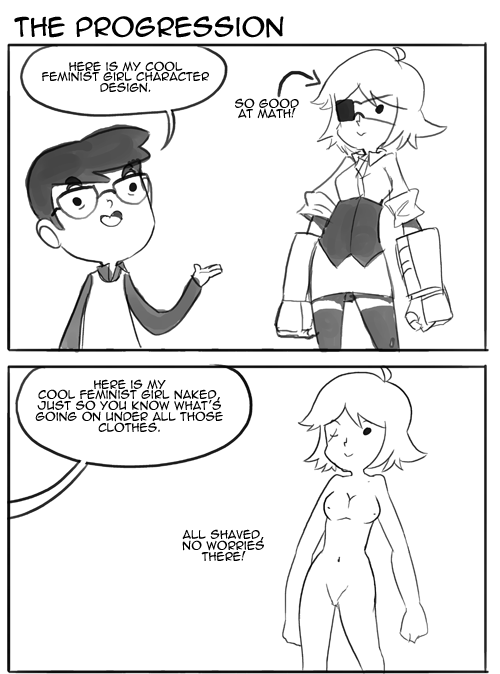
Web comic artist Mary Cagle, known on tumblr by the handle cube-watermelon,  recently posted the comic above, poking fun at the phenomenon of many male comic artists that self-identity as some form of progressive or feminist ally where they will draw cheesecake type pinups or costumes and scenarios that appeal to them specifically, but then try to dress them up (no pun intended) as not just pleasing to look at, but that the art is somehow "empowering" or transgression.

She concludes her post with the bon mot, "Sometimes I think it's okay to just admit you like looking at certain types of bodies naked, and that's okay."

While Cagle most likely wasn't surprised at getting some push-back from some people on tumblr, she was definitely surprised by one response: Aaron Diaz, the writer and artist of transhumanist science fiction web comic Desden Codak. He sent Cagle a note on tumblr:

Hey, how about not being a passive-aggressive shit next time, eh?
To which Cagle published the response:
I would think that you, who spend so much time pointing out the flaws and problematic areas in other people’s work, would be able to take one silly comic directed at your work and others like it. Normally I wouldn’t respond to this kind of thing publicly, but I’ll make an exception since you called me a shit.
Diaz has done many examples of comic and media criticism, notable among them being his redesigns of iconic DC Comics super heroes and concept art he made of Zelda as the lead character in a video game inspired, he said, by Anita Sarkeesian's Tropes Vs. Women in Video Games. And while Cagle parody comic wasn't specifically aimed at Diaz, it most certainly was inspired by a tumblr post (since deleted, see cached copy here) by him where he said "Inspired by some amputee photo shoots, I decided to try my hand at some cyborg-themed pinup sketches with Kim, a sort of celebration of the female form and taking agency over one’s body." Which is pretty ridiculous in the face of it, more so when you see the pin ups and his justification for drawing them (and that's leaving aide his kind of creepy "being disabled is totally an opportunity for the transhumanism movement). That fact that he deleted it shows that he recognizes that he messed up somewhere along the line, but instead of addressing it, he just vague-tweeted about it for a while.

In response to Diaz's actions, Magnolia Porter, a fellow web comic artist and friendly acquaintance of Diaz, published an open letter to Aaron Diaz:
There’s a place for everything, and an artist has the right to create whatever they want to create, for whatever ends they choose. What I have a problem with is that your comic is not presented as a science fiction comic with a dash of sexy thrills, but rather as a feminist narrative in support of powerful independent women. You've made it clear on many occasions that you don’t consider your work to be objectifying or sexist. I have a problem with cheesecake-style art being presented as something feminist, empowering, enlightened- something made “for women”, when it’s clearly made for men.You’re allowed to make art with male gaze. But please call a spade a spade... 
I don’t think I've seen a single page of Dresden Codak that doesn't feature a woman posed in a male-gazey way, with loving focus on her ass or cleavage, or wearing a sexual costume, or in some situation that puts her in a compromising position (like the most recent page in which Kimiko's clothing is burned off of her body, which has happened at least twice in the series’ run.) I have a very hard time believing that these details are accidental. 
...Aaron, you can do whatever you want with your own comic. However, if you really do care about female characters in media, or care to know why so many people seem to be angry with you about it, I would do one of two things. If you don’t want your comic to present its female characters in a borderline-erotic light, then stop doing that. If you don’t mind that, then by all means continue, but please just admit that you like drawing t&a and that it’s not particularly empowering, or feminist, or a celebration of personal agency. As a woman, I resent being told that men’s eye candy is actually meant to uplift me and that I should celebrate it.
Honestly, I don't have any sympathy for Aaron Diaz, nor do I have any sympathy for his position nor his reactions. He got called out for his messed up behavior and has fired back with sadly-all-too-typical defensiveness.

I've seen it happen so often, it's become distressingly familiar. A woman points out that a character or story or the way something is presented is sexist. Men insist that woman is seeing things that aren't there or otherwise reading too much into things because it doesn't come across as sexists to them. This is something I've done before, myself. As men, we are often taught that our perspectives are the default. We end up taking our perspectives and assuming that's how it is for everyone.

Commenter divined by radio at metafilter said it pretty well, I think:
So men who adamantly refuse to believe that their own gender privilege may have resulted in a variably-applied resistance to accepting a woman's objection or approach as valid -- to believe a woman when she speaks, to allow that what she is saying is true, even if they have not experienced precisely what she has experienced -- are displaying, at best, a touch of willful ignorance. They are privileging their own feelings and desires over women's truths, lives, stories, and experiences. And the end result doesn't tend to be very flattering.


Admin Note: We're Back

Sorry for the radio silence over the past few days. The technical issues that prevented any posts from going up have been fixed. I'll try and post an extra post or so a day to catch up. Thanks for your understanding!

Friday, August 22, 2014

If You Call This Justice, I Don't Want Your Support

Image courtesy of shutterstock.com
After my post on the unacceptable torrent of abuse that has been heaped upon Zoe Quinn by misogynist nerd man-babies so desperate to deny that the little clubhouse of video games is changing that they are perfectly happy to take a vituperative screed from her ex-boyfriend and run with it to harass, hack, speculate, insult and demean her by claiming that the private sexual life matters because she's a women making a game they don't like, , someone anonymous left a comment saying that I should link to "unbiased sources". The sources the comment linked was one tumblr post labeling her everything from a "shit-tier developer" to literally calling her a whore that faked every single bit of her abuse, harassment and public hacking at the center of an industry-wide conspiracy (that comment's gone, now, btw).

Prominent youtube "personality" joined the pile-on, with Youtuber JonTron linking approvingly to a pornographic slander comic, and then later approvingly linking to a fan comparing the outcry against his actions to black people being lynched.

Other games industry writers from Stephen Totilio and Patrick Klepek to Leigh Alexander and Jenn Frank took to her defense. One of her most prominent game developer defenders of Zoe Quinn was Phil Fish (who had recently returned publicly to twitter to comment on the human rights abuses in Ferguson). This week, both his twitter account and business website Polytron were hacked, and personal details were released-- everything from back accounts to home address history, along with a data dump of 1.5 GB of developer only assets and financial records for FEZ and his business. After he regained control of his accounts, he announced he was selling off the FEZ IP, the Polytron assets and leaving video game development for good.

Liz Ryerson has a cutting analysis of these angry, scared self-appointed gatekeepers:
Zoe has become the scapegoat for every bit of internalized misogyny and misdirected rage these people felt. she appears to them an amorphous assemblage of everything that is viewed as wrong with women - manipulativeness, sluttiness, being an 'attention-whore'. the idea of trusting the word of a frighteningly narcissistic ex who's out to ruin her reputation is fine with them, because it meshes with their worldview... 

...often it's a conservative, reactionary anger that comes out of disillusionment and fear, and gets constantly externalized onto marginalized people, especially women and queer people. they struggle to understand and adjust to a rapidly shifting cultural landscape, in and out of games, that's moving away from traditionally catering to them and their empathy-deficient values into something more culturally sensitive and aware. and so they find simple explanations for these complex phenomena that fit within their bigoted worldview - boogeymans of evil, manipulative and misleading women like Zoe Quinn or Anita Sarskeesian. they view themselves as anti-authority and anti-power, even as their actions are tremendously conservative and tremendously serving of the interests of power.

The outrage over alleged private infidelity that never even resulted in an actual review lays bare the lie that this is about hand-wringing over worries of "journalistic ethics" and shows instead that those joining in on the pile-on really just see women as a threat to the world of video games and other geeky hobbies, and are ready to rage and holler and attempt to intimidate any woman they decide is somehow a threat at the flimsiest provocation. If you really cared about favorable review currying for games, you'd maybe throw some of this vitriol at the industry practice of only releasing game information to friendly outlets, perhaps.

It shouldn't be up to women to fight these battles alone. As I mentioned in my post about what men need to do about the harassment of women online, we need to make it absolutely clear that this behavior is unacceptable and that anyone that feels otherwise is unwelcome.

So let me make this crystal clear: If you support the harassment of Zoe Quinn or her supporters, if you think you are doing the right thing by shaming her about her private relationships or sexual history, if you think that anyone harassed in the way she has been "had it coming" or that by doing any sort of gate-keeping to women in your hobby you are fighting the good fight-- I don't EVER want your support.

Don't visit my blog. Don't support my patreon. Don't donate to me. Don't read my work or play my games. Don't listen to my podcast. You are not welcome here on The Code, and I don't want you as a fan.

I call on major gaming sites to issue clear condemnations of this behavior in general and defense of Zoe Quinn in particular. When fans or site visitors heap abuse on women that criticize actions or inaction of those in the industry, it because these harassers and misogynists view this as okay thing to do. And if your site policy doesn't explicitly forbid these attitudes and actions from your audience, the toxic elements of your audience view this sort of pile on as implicitly okay. Look at the harassment of Courtney Stanton and Maddy Meyers by webcomic fans, the harassment of Samanta Allen by Giant Bomb fans, the pile-ons from 4chan and reddit and totalbiscuit and jontron fans and elsewhere of Zoe Quinn.

It is unacceptable and unforgivable. You are not noble truth seekers. You're just flinging shit.

Thursday, August 21, 2014

Admin Note: No Posts Today

There are some personal matter that I have to attend to today that will have me away from a computer ptetty much all day. I'll catch up later, I promise!

Wednesday, August 20, 2014

Not OK: Hateful Man-Babies Target Zoe Quinn. Again.

Image via shutterstock
 Zoe Quinn, the indie lead developer behind the emotionally moving interaction fiction game Depression Quest recently released for free on Steam, as well as Narrative Designer for FRAMED, is being targeted by an unruly mob of misogynist anti-feminists (both overtly and under the guise of being concerned with journalistic integrity) again.

She was first targeted last year when her attempt to get Depression Quest approved via Steam's Greenlight program was cancelled after she was the target of a harassment campaign from a message board. The harassment bled from online into her offline world when her private phone number was published, leading to harassing and obscene phone calls. 

She resubmitted Depression Quest to the Steam Greenlight program a second time, and this time, despite the harassment from reddit, twitter, 4chan, and down-voting campaigns on Steam itself, Depression Quest was approved and released on Steam last week.

Now the same brigade of angry dudebro gamers are claiming Quinn is corrupt, or corrupting Kotaku, or setting back women developers? Quinn tweeted about her parents' phone number getting obscene phone calls. The sub-reddit r/Gaming has a post from its moderator calling out the egregious, harassing behavior of its members-- only to receive nearly 2,000 down-votes.Why? Thanks to a multi-part blog series by an angry ex-boyfriend that did nothing but air out relationship problems in public. Suddenly, men that would not bat an eye over sexual behavior were it done by a fellow dude are calling for an end to her career.

Quinn herself addressed the matter as much as it deserved in a blog entry on Monday:
I am not going to link to, or address anything having to do with the validity of the specific claims made by an angry ex-boyfriend with an ax to grind and a desire to use 4chan as his own personal army. This is not a “she-said” to his “he-said”. The idea that I am required to debunk a manifesto of my sexual past written by an openly malicious ex-boyfriend in order to continue participating in this industry is horrifying, and I won’t do it. It’s a personal matter that never should have been made public, and I don’t want to delve into personal shit, mine or anyone else’s, while saying that people’s love and sex lives are no one’s business. I’m not going to talk about it. I will never talk about it. It is not your goddamned business. 
What I *am* going to say is that the proliferation of nude pictures of me, death threats, vandalization, doxxing of my trans friends for having the audacity to converse with me publicly, harassment of friends and family and my friends’ family in addition to TOTALLY UNRELATED PEOPLE, sending my home address around, rape threats, memes about me being a whore, pressures to kill myself, slurs of every variety, fucking debates over what my genitals smell like, vultures trying to make money off of youtube videos about it, all of these things are inexcusable and will continue to happen to women until this culture changes. I’m certainly not the first. I wish I could be the last. 
Because I've had a small degree of success in a specific subculture, every aspect of my life is suddenly a matter of public concern. Suddenly it’s acceptable to share pictures of my breasts on social media to threaten and punish me. Suddenly I don’t have any right to privacy or basic dignity. Suddenly I don’t get to live out normal parts of life, like going through a bad and ugly breakup in private. I have forfeited this by being a blip in a small community, while those who delight in assailing me hide behind their keyboards and a culture that permits it, beyond reproach. 
My life and my body are not public property. No one’s life and body are public property.
And that's what it boils down to-- a bunch of sexist shook gamers acting like gatekeepers and hypocritically talking about ethics and integrity while trying to bring up a women's private life as a detriment to her career. Talking about fighting corruption while harassing her via reddit and twitter. Talking out of one side of their mouth about the truth while talking gossip and character assassination with the other.

This is unacceptable. It's unacceptable to happen to Zoe Quinn. It's unacceptable to happen to any women in the games industry. This happening to even one woman is one too many, and while Zoe Quinn isn't going anywhere, a number of bright, talented women writers in the gaming scene have been targeted, harassed and hounded-- Anita Sarkeesian, Samantha Allen, Courtney Stanton, Maddy Meyers, and Brianna Wu are the most recent that come to mind. Samantha Allen actually stopped writing about games because of the daily level of constant harassment. 

I covered a bit on the difference between the harassment men and women get in the games industry in "Mythbusting Ideas About Women In Games" that excerpted from Brianna Wu's article as well as linking to an example provided by Sarkeesian, but I want to quote from the end of my post "The Status Is Not Quo: Being A Geeky Woman Online & What Med Need To Do":

Women's hurt and fear for safety and the emotional toll for being harassed online have real, chilling impact on discourse.

This is unacceptable. And the burden of speaking out shouldn't continually fall to the women being harassed. So what can we do? Guys, we have to loudly speak out against this behavior. We have to support women in our creative and media spaces. We need to let other men know that this behavior is not okay, and we need to make it socially unacceptable. We need to listen to women's experiences-- really listen, and not just wait for our chance to say "not all men". We need to realize that online harassment isn't something that just happens-- it's a choice that is made, it is a crime that is done.

As Andy Kouri says in "Fake Geek Guys: A Message to Men About Sexual Harassment":

It is wholly and rightfully and crucially up to men in this society and especially in this subculture to speak out and watch out. To end the cycle of bullying, harassment and violence. To recognize the grotesque irony of degrading women over matters of heroic fictions whose lessons about fairness and decency we've supposedly been studying since we were just little boys, and to start putting those ideas into practice as grown-ass men.


It's not just a few bad apples, guys. It's a lot of bad apples. These are guys that think they represent gamers, that they say what other men are thinking. And we have to push back on this. If you care about safety, if you care about equality, you must push back on this. Staying silent in an attempt to be neutral isn't really being neutral. It just makes dissenting voices less common, and makes the misogynists think that they have your support.

Mayor Orders Police Raid On Parody Twitter User

Photo illustration courtesy of ArsTechnica
Jim Ardis, the mayor of Perioa, Illinois was so upset at a parody twitter account making fun of and insulting him that he had the city legal team try and find a misdemeanor as a pretense to involve city police to shut the account down. It ended with 4 officers showing up to a house, dragging everyone in it down to the station for questioning (including one woman who was in the shower at the time) as well cops rifling a mobile phone, a laptop, and asked for access to the full contents of someone's Gmail account. Ars Technica's Nate Anderson has the story in "How a mayor’s quest to unmask a foul-mouthed Twitter user blew up in his face":

On March 11, 2014, Urich was working early. "Someone is using the Mayor's likeness in a twitter account," he wrote to Peoria's Chief Information Officer Sam Rivera at 6:06am. "It's not him. @Peoriamayor. Can you work to get it shut down today?"
...Urgency was the watchword; Settingsgaard almost immediately assigned the matter to Detective James Feehan of the Computer Crimes Unit, and Feehan just as quickly got to work. By 11:00am that morning, he wrote back to his chief that nothing in the @peoriamayor account added up to a criminal act—though "there are tweets posted by the individual which amount to defamation," he said. Should Ardis want to pursue that angle, he could do so through a civil lawsuit, but the police would have no involvement. At 11:21am, Settingsgaard passed the bad news back to Ardis. No crime had been committed, and indeed, even the possible defamation angle raised by Feehan might be problematic. "I'm not an expert in the civil arena but my recollection is that public officials have very limited protection from defamation," he concluded. Case, apparently, closed.
Except it wasn't. The mayor, Jim Ardis, leaned on his staffers to see if there was any way to turn the parody twitter account from a civil case into a criminal one. They found a possible loophole in a newly-enacted misdemeanor statute, which was enough justification for the mayor to involve the police by pressing charges. Police subpoenaed Twitter, and used the information from that to subpoena Comcast. From there, they were able to isolate the physical address the the parody account (which had since been suspended by twitter) posted from, and from there... there was a police raid!
What had begun as a few tweets to a handful of people had now escalated to the point that the Peoria police were ready to send men with guns over to a local home with orders to search every drawer and dresser for clues to the owner of a Twitter account that had already been suspended... It was also a hunt for drugs. One of the images tweeted out by @peoriamayor had included an image showing "a hand holding a razor blade which was separating a white powdery substance." This was enough for the police to believe that "cocaine, heroin, [or] drug paraphernalia" might be found at the home. 
At 12:34pm on April 15, a judge signed the warrant. Five hours later, a Peoria detective and three additional officers were at the University Street house, knocking on the door. In a thorough search, the police turned up three desktop computers, one laptop, four iPhones, an iPad, two SD cards, an iPod, and two Xboxes belonging to several different people who lived at the house. They also found a "broken black ashtray with green seedy substance," "two multicolored glass pipes," a "large gold gift bag with five sandwich bags containing a green leafy substance," and "two glass pipes [and] two metal pipes with small blue Bic lighter." 
... Jacob Elliott, the 36-year-old whose name was on the home's Comcast account, hadn't created @peoriamayor, but got his home turned inside out by the police anyway. He ultimately copped to ownership of the "green leafy substance," which was of course marijuana. “I couldn’t believe this much force was being used for a fake Twitter account—it blew my mind,” he told the Journal Star after the raid. “It was extremely frightening. I don’t think I’ve ever been so scared in my life... As soon as I opened the door, a female officer shoved her hand into my pocket and screamed, ‘What’s in your pocket?’" A second officer then handed him a copy of the warrant. No one was charged with "false personation" related to the Twitter account. Elliott was charged with felony marijuana possession and spent two days in jail before getting the chance to make bail; when he got out, he was suspended from his job.

The whole sordid episode was hard to believe but had absolutely happened, leading to questions first from a local crime reporter, then from the Associated Press raising questions of abuse of power, criminalization of free speech, and wasting taxpayer's money as well as police's time. The mayor was raked over the coals by both council members and citizens at a town meeting.

Then came another bombshell: There might not even have been a misdemeanor committed in the first place.

The Ars Technica article is a great example of using a FOIA request in the service of some really good investigative journalism, and I urge you to read the rest of the article to find out the rest of the story.

Tuesday, August 19, 2014

The Pug Files: The Truth Is Out There

The Pug Files- fawn fur by macncheesecabra

The Pug Files- black fur by macncheesecabra
If you like pugs, whimsy, The X-Files, cute art or novelty clothes, then this post's got you covered. Redbubble artist macncheesecabra (previously featured on this blog as the world's only example of Double Dragon Neon's Fuzzface fan art) has released a new line of stickers, prints or shirts featuring two great things that go great together: aliens and pugs.

You can get the fawn colored variant here or the dark fur variant here.

Studio Says Steam & Bundles Killed Indie Gaming

Image courtesy of puppygames
UK indie games studio puppygames, most famous for its tower defense games, its retro-inspired arcade games and declaring that the games demo was dead, has fallen on some hard times recently, as they posted on their official blog last week:
We tried for several solid months to rescue our direct sales but it seems nothing but nothing that we can do will change the fact that at any given moment, Steam comprises 97% of our income. And that’s just when there isn't a crazy Steam sale on. So we wasted months on that and achieved precisely nothing. This is especially depressing when we consider that those months could have gone into furthering the progress of Battledroid... we only had about four months’ cash left in the bank (as of the start of May), and by my best estimates, we needed to spend about another 12 months on Battledroid before it could actually take in any money (which itself is a dauntingly difficult prospect for a game we were planning to release for free).
While the frustration and disappointment are understandable, puppygames unleashed a salvo yesterday entitled "BECAUSE YOU’RE WORTHLESS: THE DARK SIDE OF INDIE PR" where they place the blame for sinking profit on Steam & bundled sales:
...the value of an independent game plummeted from about $20 to approximately $1, with very few exceptions. Steam is great! You can sell loads of games! But only if they’re less than $10. Technically Valve don’t actually dictate the prices we charge... market expectation of games now that means you can only sell them for a dollar. That’s how much we sell our games for. One dollar. They’re meant to be $10, but nobody buys them at $10. They buy them when a 90% discount coupon lands in their Steam inventory. We survive only by the grace of 90% coupon drops, which are of course entirely under Valve’s control. It doesn't matter how much marketing we do now, because Valve control our drip feed.

So where does that leave customers in this value equation? Not worth very much to them, according to the entry:
Now you’re worth $1 to us. If you buy every one of our games, you’re worth $5. After Valve and the tax man and the bank take their cuts, you’re not even worth half a cup of coffee. So, while we’re obsequiously polite and helpful when you do contact us for support, even if it’s just the same old “please install some actual video drivers” response, you really should be aware that you are a dead loss. Even if you buy everything we ever make again. Even if all your friends buy everything we ever make again. You just cost us money. Not just fictitious, huge-piles-of-filthy-lucre indie-game-developer who made-it-big money. All our money. 
We barely scratch a living, like most indie game developers. You quite literally cost us lunch because the shop sold you a computer with broken software on it. So you’ll understand now why customers aren't worth anything much any more. You’ll realise why we’re actually happy to see you go if you feel like insulting us. You might add two and two together and realise that for four, we’re not going to cry ourselves to sleep over the loss...
I don't know if I really agree with much of what they have to say, though. Some games don't sell well because they're not fun to play or put together well. For example, the tower defense genre has hundreds of games, many of them completely free to play. So when you take a game like puppygames' Revenge of the Titans, it's already up against a lot of competition. For example, I thought the character design was really well done, but the actual game wasn't fun. The progression from level to level was really stop and start, and the skill progression tree was hard to use and harder to understand for me. 

The post also has some really odd classism ("When he [Phil Fish] walks into the restaurant where you pitifully scrub the floor like a servile wretch in order to pay for DLC in DOTA 2, you'll call him sir.") and a lot of sour grapes, like Homer Simpson complaining that "They won't let me into their crappy club for jerks!" What do you think, readers? Are they right on the money, or have they missed the mark?

Monday, August 18, 2014

Why Should You Support The Code?


Here's what one industry professional has to say about my writing and work:

Shawn Struck is as close to the soul of Internet geek culture as it gets, having been there almost since the beginning. He was blogging before they were called blogs. He was writing articles on gamer culture before anyone thought of it as gamer culture. He was arranging covers of Final Fantasy music before OCRemix, interviewing Nobuo Uematsu before GameSpot, running forums before "community moderator" ever became a paid position, and doing human interest pieces on gamer parenting for a readership that was, at the time, mostly teenagers--and he's never let up since. For over fifteen years, he's been both a keen observer of nerd culture and one of its great bastions of conscience, cutting through oceans of slick PR and fanboy bickering to deliver genuinely insightful commentary on the issues actually matter to fans: the creative future of popular media, the changing ways in which we enjoy them, the communities we build around them, and the rights of those who are marginalized within those communities. As a game developer, when I want to look beyond the mechanics of a game and into how and by whom it will be played, or delve into the most recent debate or controversy dividing the community, I know exactly who to ask: long before the big gaming news sites can bang out a blog post, Shawn is already there.-- Kevin Chen, Game Developer

I update The Code by myself, three times a day, five days a week. I focus not just on geek culture, but aim to make geek culture more inclusive, to shine a spotlight on problems that marginalized groups face and signal boost their efforts.

I would love to offer more to The Code and its readers: novelty food reviews, on location coverage and interviews, updating 3 times a day 7 days a week and even doing all that while releasing a bi-monthly podcast and offer regular contests and giveaways! 

I am also an non-traditional independent student entering college at 34 as a sophomore to get my Bachelors (and was accepted to Rutgers-Newark stating this fall), a writer and designer with 13 years of experience, and currently my only income are the cents from the occasional Google AdWords click. If you feel what I do is worthwhile and want to help out, there are two ways you can help directly support the work I do at The Code:
  • Become a patron to my Patreon campaign for as little as $1 a month. No matter what amount you become a patron at, you get a reward-- everything from monthly special thanks to choosing a topic you want me to write about to a free surprise package to having me as your own personal designer!
  • You can also drop a one-time amount of whatever you want into my virtual tip jar by clicking below:

Problem Attic: Cure for the Common Code

The Title Screen
Title screen image courtesy of Liz Ryerson
(Note: This article was supposed to appear last Friday, but due to technical difficulties with the Blogger backend, did not. It appears today. Thanks for your understanding.)

Brendan Vance, a game developer most famous for his stated mission to advance video games as an artistic medium through analyzing its theoretical underpinnings recently posted about the parts of a game design contributing to the whole, Marshall McLuhan, dissatisfaction with AA gaming, then video games in general... and the game that brought him back: Problem Attic by Liz Ryerson, in an essay titled "Form and Its Usurpers":
I develop video games for a living, but I spent last year really hating video games. I questioned how it was I could consume 60 hours of ‘content’ for Assassin’s Creed 3 yet feel utterly unsatisfied by my act of consumption. I questioned what it was I had consumed, other than my own time. I questioned what it was I sought from the game in the first place. I questioned the nature of the ‘content’ it claimed to offer me; privately I began to suspect it might not even exist. The games I was making and playing seemed more and more to me like empty forms: Puzzle boxes within puzzle boxes, each layer promising ‘content’ underneath it yet in the end yielding an empty centre. I became too tired and bored to care about games anymore. I could no longer see the point in it. I felt as if some enormous detritus had gathered upon my career and favourite hobby; that I could no longer reach through this detritus to claim the enjoyment I had once found underneath. 
I awoke from my yearlong stupor the night I encountered a game called Problem Attic by a person named Liz Ryerson. It was like nothing I’d seen before. Rather than a puzzle box, it was more of a sculpture.
The game Problem Attic itself is a bizarre 2-D platformer about that takes place in a prison, and addresses the idea of both prisons as a physical space and a psychological block. It has a deliberately lo-fi presentation done in a purpose glitch style, and as jarring as it can be visually, I think it feeds into the atmosphere of the game really well. One of the problems with the presentation though, is that it seems to get hung up on the "hellscape" atmosphere and tricking the player and confuses being overtly hostile in the story with being overtly hostile to the player (there is a part of the game where it quite literally tells you to go fuck yourself).

At any rate, Vance's essay covers a multitude of thoughts on being and identity and loss. It's also fairly long. You might want to pack a lunch or something.


Pokemon Shaming

Image courtesy of mrpresidentlincoln.tumblr.com
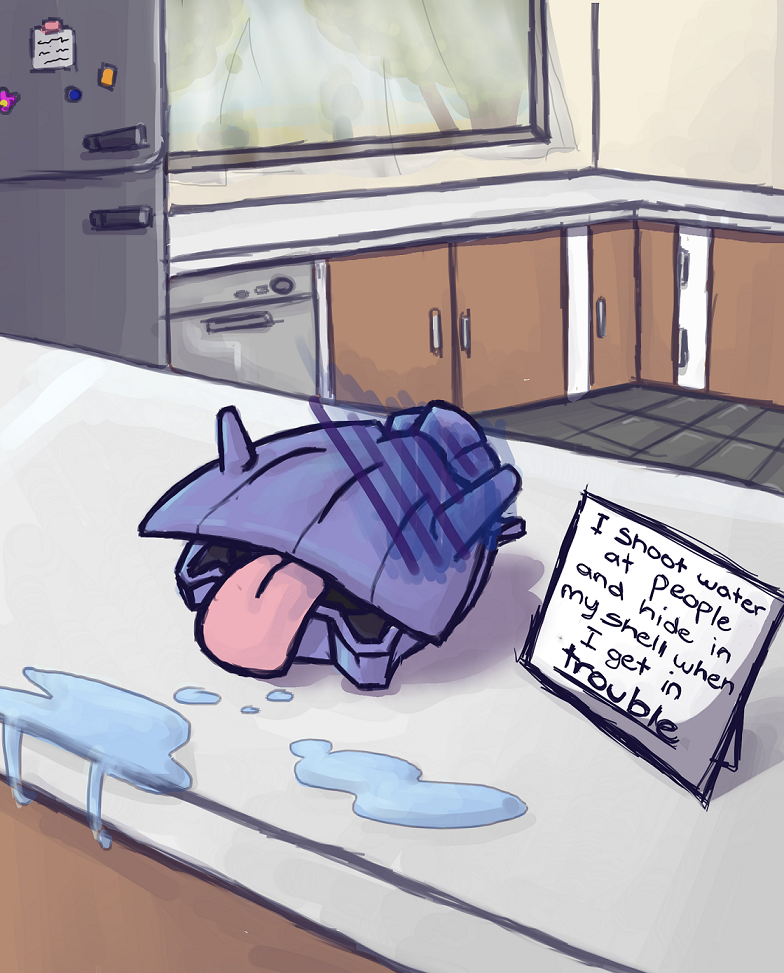
 It started 2 years ago on tumblr, when one user launched the "dog shaming" blog-- in this case, a photo of a dachshund next to a chewed up pair of underwear, a sign shaming them for chewing it up, and the dog looking guilty. It caught on like wildfire, spawning other pet-shaming inspired blogs and trends-- cat shaming, lizard shaming, pet shaming, et al. It's hilarious, of course, because animals can't really feel shame, and everyone can relate to both loving their pets and feeling frustration at some of the things they do.

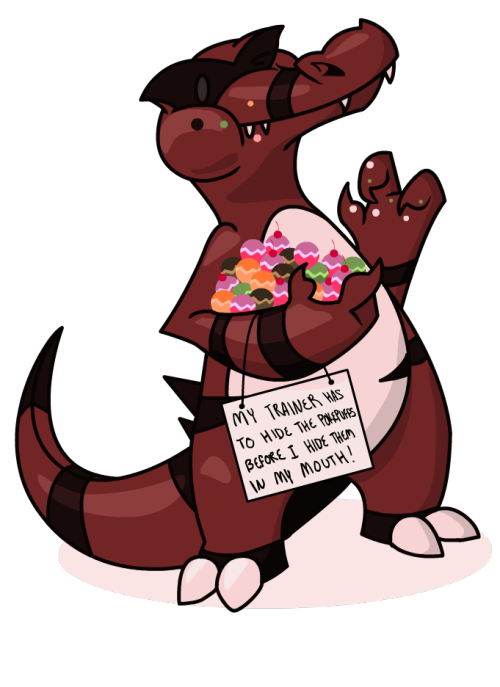
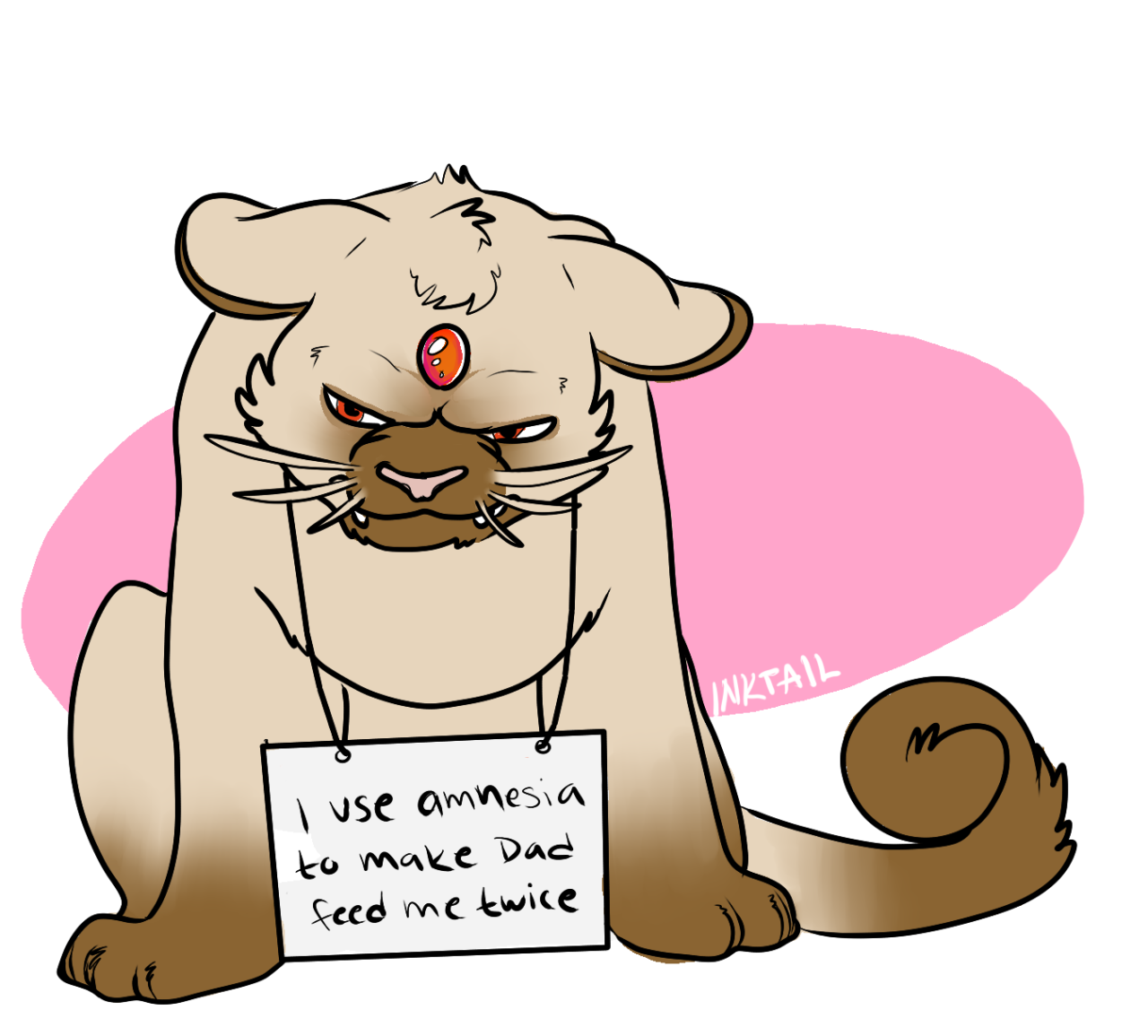
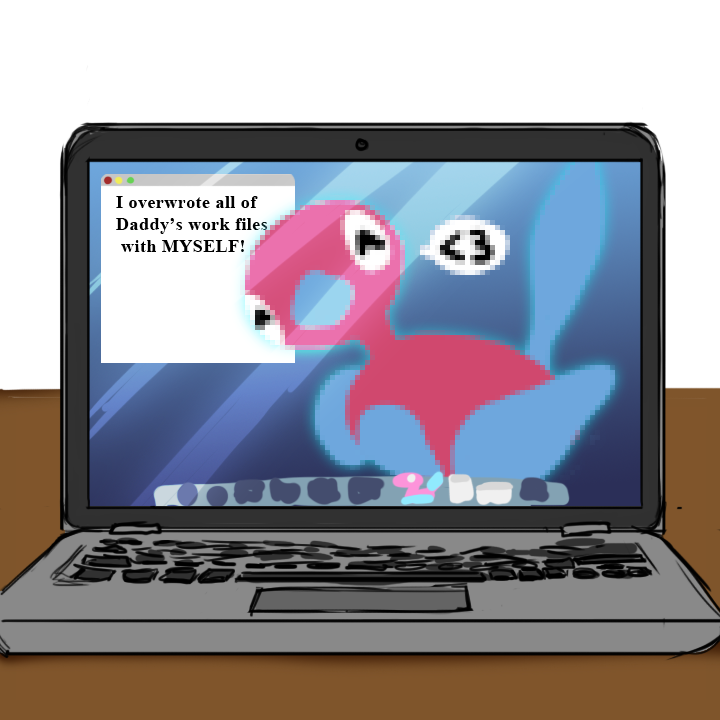
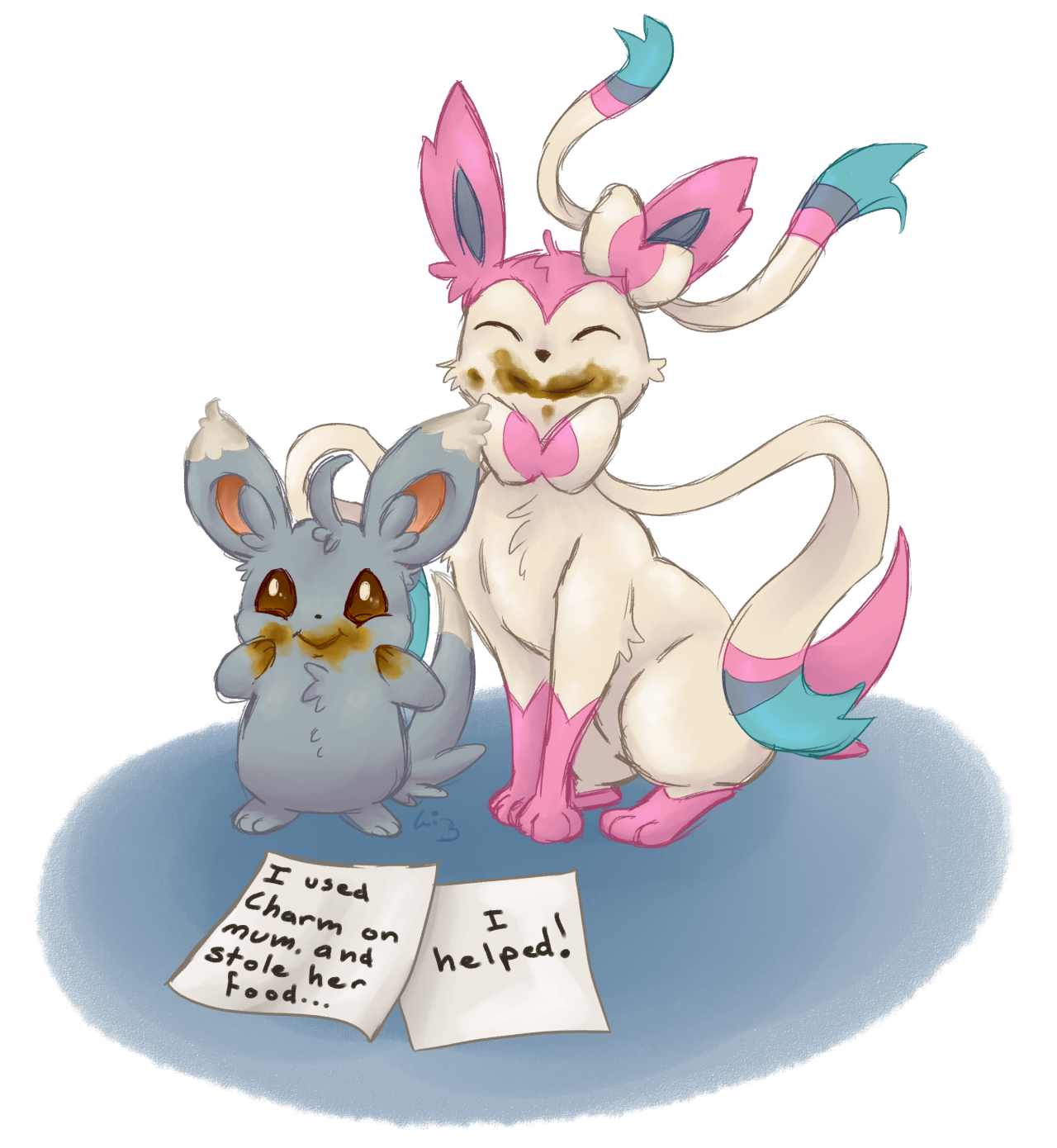
Keeping that in mind, it's a wonder that the latest pet shaming trend didn't appear sooner: Pokemon Shaming! About two months ago, Tumblr user and fan artist davidmakesart posted a multi-image set on his tumblr where he took the idea of pet shaming, and applied it to several of the Pokemon's signature moves:

image courtesy of davidmakesart.tumblr.com
And from there, the phenomenon has continued to grow. While you can simply peruse the "pokemon shaming" tag on tumblr, I wanted to compile and share a few of my personal favorites.

ambersdraws.tumblr.com

inktail.tumblr.com
inksword.tumblr.com

mineapple.tumblr.com
lizapproved.tumblr.com

Share This Post