Showing posts with label poc. Show all posts

Tuesday, July 11, 2017

Spider-Man YA Novel Swings Into Action Next Month


I just found out something really cool. The Disney-owned Hyperion imprint is publishing a new young adult novel about the newest (and I'd say the best) Spider-Man, Miles Morales. Even better, it's being written by Jason Reynolds, a talented Black author. Reynolds is no stranger to quality storytelling, either-- last year his book "As Brave As You" won the Kirkus Prize last year and he's a previous winner of the Coretta Scott-King Award.

Seriously. This is a book you want to read. Pre-order it at your local indie bookstore or at Amazon. Request it at your local library. Get it in the hands of a teen you know. I got an advance reader copy and was blown away.

Reynolds' Spider-Man novel deals head-on with issues of race and class in Brooklyn, being a young biracial kid on scholarship, and how these influences shape his life as he also struggles to be a superhero. Even more so than in the comics, Miles Morales' Puerto Rican and Black backgrounds are implicitly referenced in the text and made important. It examines not just what being Miles Morales means for Spider-Man, but what being Spider-Man means for Miles Morales. It's been getting rave review from everyone from Kirkus Book Reviews to the co-creator of Miles Morales himself, Brian Michael Bendis.

Friday, June 16, 2017

Listen Up: MEGASheen


MEGASheen is hosted by Nick and Viktor, with a focus on queer people of color that identify as geeks or nerds. Nick is a passionate video game and 80s cartoon fan, while Viktor's wheelhouse is comics (he's a graphic novel creator himself as the creative mind between the amazing urban fantasy StrangeLore) politics and pop culture.

MEGASheen has a website, and you can follow the podcast via iTunes on iOS or via soundcloud .  They're on a 3 week hiatus right now, so this is the perfect time to catch up!

Listen Up is an ongoing series devoted to shining a spotlight on podcasts by diverse creators. You can check out all the podcasts previously featured here. If you have a podcast you'd like to recommend, post it in the comments or email me at shawnstruck at gmail dot com.

Wednesday, June 14, 2017

Black, Queer & In Love: "Bingo Love" Comic Coming Soon

Black queer romance is not a common sight in comics.  Tee Franklin, a black queer disabled comic book writer, has set to change that with her graphic novel "Bingo Love". "Bingo Love" centers on two teenage girls, Hazel and Mari, who meet when their grandmothers bring them along to a church bingo night. They become best friends in the 1960s, then fall in love, and then are forbidden to see each other by their families. Over the next couple of decades decades, the two friends reconnect and become closer as they get older.

In an interview with The Root, Franklin said that she felt this graphic novel was important because “...very rarely do we see queer people, women of color and elderly people in comics, so I knew I was taking a risk, but it’s been well worth it,People need to see that you can be LGBTQ and have a partner for life. We are all worthy of that happy ending, too.”

Some of her own life served as inspiration for the characters' struggles. Franklin explains that she was "...once married to a man and wasn’t fully out to my extended family until very recently. I definitely understand that there are black LGBTQ people out there like Hazel and Mari who feel that they have to hide their true selves from the world because of how society views them. I wanted to tell that story.”

Franklin is no stranger to boosting Black-creator comics, as she is the creator of the #BlackComicsMonth hashtag, but she was still overjoyed to see her work supported. "Bingo Love" was successfully crowd-funded via Kickstarter in March and is currently available for pre-order.

"Bingo Love" is written by Tee Franklin and drawn by Jenn St-Onge ("Jem and the Misfits", "Steven Universe", "Rick and Morty") and the art is gorgeous. Here's an a page:


To get the latest news and pre-order the graphic novel, you can visit the "Bingo Love" website.

Wednesday, June 7, 2017

Listen Up: Blacker Than Black Times Infinity

While listening to the Those Damn Comic Book Guys podcast, I was really taken with a request guest they'd have on to talk about anime: Prodigy. Prodigy was insightful and funny, and I was delighted to find out he's also one of the hosts of a great ensemble podcast called Blacker Than Black Times Infinity.  Hosted by Prodigy and three of his friends (Stitch, Old Ninja, and Blue Cronus), they talk about everything nerdy: video games, comic books, tv shows, streaming media, anime (they all have been anime fans since they were little kids), and superhero movies from the indie to the AAA blockbusters.

Their facebook is here, and you can listen along on their Soundcloud or via iTunes.

Tuesday, June 6, 2017

Listen Up: Mah Nameks

Welcome to the first post in a multi part series of Listen Up, where we feature podcasts created, hosted and run by people of color covering all sorts of media fandoms and subjects. Kicking things off is the excellent Mah Nameks.

NJ's own Antoine Lucas (along with rotating cast of 6 other recurring friends & co-hosts) all watch and discuss recently released anime. Of course, any good podcast review needs a good ratings theme , so as you might guess from the name, "Mah Nameks", it revolves around Piccolo from Dragon Ball Z.
  • A bad show is given the rating "Special Beam Cannon" (since it is Piccolo's signature move and also easily the worst special attack in the series)
  • An average show's rates "Needs More Training"
  • A really good show is rated "Mah Namek" 
The vibe is pretty chill and often funny as hell, like you have a bunch of friends hanging out chatting about anime while dunking on bad anime, and each other. You can listen along on Soundcloud and on iTunes.

Friday, May 19, 2017

Fan Art Friday #1: Harry Potter and the Chat of Snap

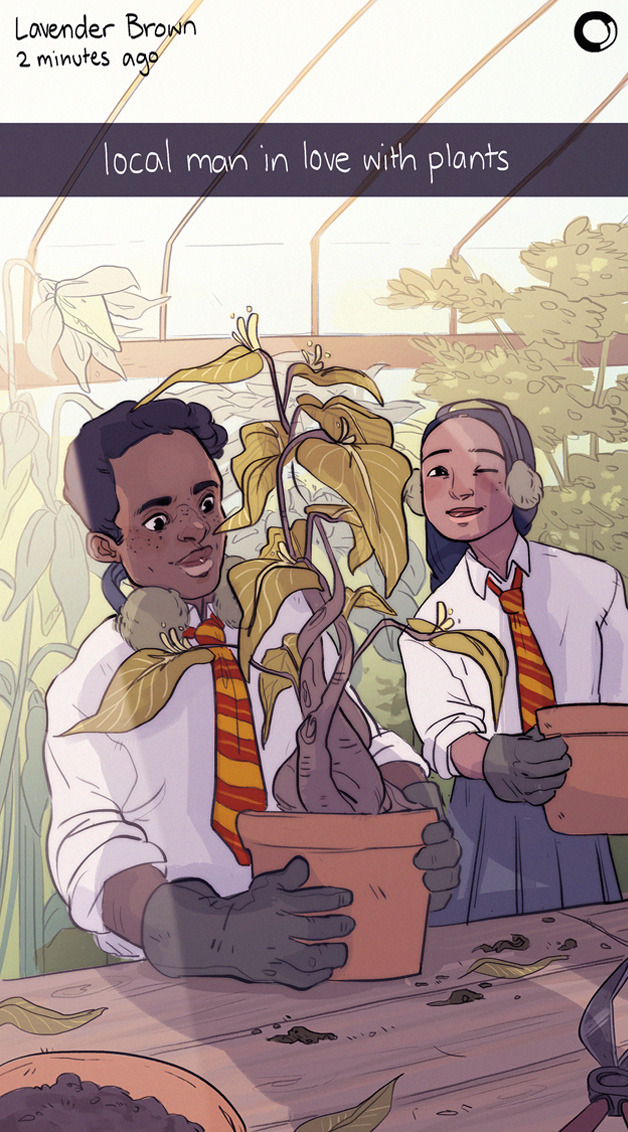
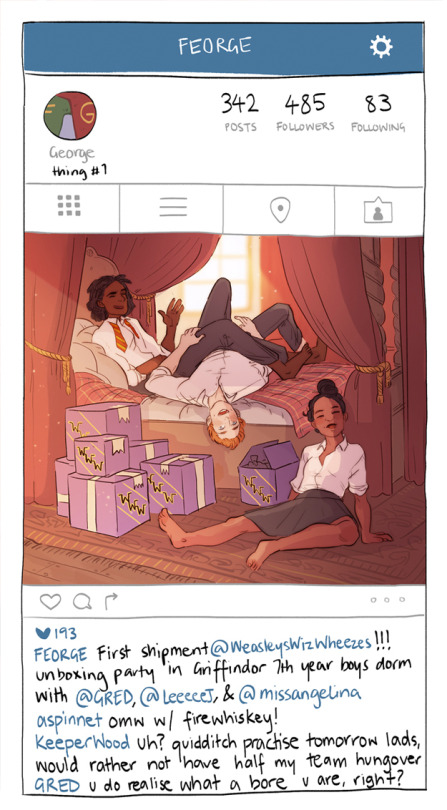
Melbourne, Australia-based illustrator Sas Milledge recently did some amazing fan art for the Sparknotes tumblr that imagined what the kids of the Harry Potter-verse would have been up to had Snapchat and Instagram been around then, and it's AMAZING. Check it out just two of many creative and skillfully composed drawings from the post:


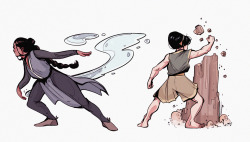
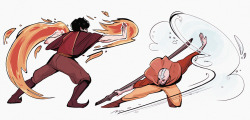
Milledge has also done some great Avatar: The Last Airbender fan art:


Check out the online folio for even more great art, still from animated shorts they done, and more!

Fanart Friday is a now-weekly tradition I'm setting up for the blog. I'm interested in spotting fanworks, of, for and by POC, LGBT artists and if you know of any work you think should begiven a boost, send me an email at shawnstruck@gmail.com or comment below!

Thursday, August 20, 2015

Harry Potter and the Invisible People of Color

Description: From left to right are screenshot of the character of Lavender Brown from the Harry
Potter movie series In the first two pictures, she is played by a black girl. In the 3rd picture, the character
is portrayed by a white girl. A comment sarcastically asks "Did she get a haircut".
The Harry Potter film series has been a worldwide blockbuster, spanning 8 films and a cornucopia of related merchandising tie-ins. The entire series has many allegories for hatred, genocide and racism. Which, as the Every Word Spoken project points out, is really weird considering that there are so few characters of color in the movie series, and the characters of color that are in the movie barely have any speaking lines. They released a video supercut tallying up how much screen and speaking time people of color got across the entire 19 hours & 39 minutes of the films. POC speaking time, in comparison, was just a little over 5 minutes and 40 seconds. Here's the video:


The tally:
  • Total POC talk time: 5 minutes and 40 seconds
  • Total run time of all films: 1,207 minutes
  • That comes out to 0.47% of screen time in which POCs speak throughout the entire series. This is split among 12 characters and 13 actors (Parvati Patil was played by two actors, Sitara Shah & Shefali Chowdhury)
  • Of these 12 characters, 2 were CGI bodies voiced by POC actors (Firenze & Shrunken Head)
  • On average, each POC character speaks for 28.33 seconds. 
The books aren't that much better, sadly. Looking at the 200 most mentioned characters in the series, here’s what you’ll find:

  • Number of POC characters: 9 (4.5%): Cho Chang, Dean Thomas, Angelina Johnson, Parvati Patil, Lee Jordan, Kingsley Shacklebolt, Blaise Zabini, Padma Patil, Hassan Mostafa 
  • Number of POC characters in the top 50: 2 (#44 Cho Chang, #45 Dean Thomas)
  • Number of non-human characters in the top 200: 26 (13%)
  • (4 more characters are described as being part giant or part veela, but are white-appearing.)
As they point out this means that even in the books, there is better representation of centaurs, house-elves, giants, and goblins in this series than there are of human characters of color. Dobby and Kreacher in particular get way more page time and deeper character development than any of the POC characters. And unlike the series you can't fixit by waving a wand, but maybe we can address it better by pointing it out so the next fantasy series has plenty of different kids from all sorts of backgrounds, too.

Monday, August 17, 2015

Devil Dinosaur Returns With New Friend, Series

Description: Illustration of a young black girl leaning forward to kiss the
snout of a red dinosaur several times larger than she is, the dino's sharp teeth
prominently visible in frame.
In the late 1970s, legendary comic artist Jack Kirby created a short-lived comic series for Marvel- Moon Boy and Devil Dinosaur. Decades later, Devil Dinosaur returns in a new series: Moon Girl and Devil Dinosaur. While the original series took place in an alternate Earth where Neanderthal-like cave people lived side by side with dinosaurs, Moon Girl & Devil Dinosaur places the titular dino in modern-day New York City, where he befriends Lunelle Lafayette, aka Moon Girl.

So what was the inspiration to revive a decades-old, somewhat obscure Marvel comic book series? Why bring a dinosaur to NYC? As Assistant Editor Emily Shaw explains in an interview with Entertainment Weekly's Andrea Towers, there was something she and the series writer noticed when looking at Marvel's current line-up:

“Mark and I were talking about how whenever people come in with young kids, or even just for Mark’s own kids, we don’t have that many publications that we can give to people that have that broad reach,” Shaw explained to EW. “Generally, we’re skewing a little bit older with a lot of our titles and we wanted to create something that adults and kids could really love, like a Pixar feel. That’s where the tone jumped off for us.”

And the artist Natcha Busto adds that she sees the introduction of Lunelle Lafayette as someone that she wished she could have seen growing up as an artist and comic fan herself:
“For decades now, we have seen more independent publishers taking a gamble on diversification, but always within the underground scene,” she explained. “It’s really important that the mainstream throws up new references like these and it’s an honor to be a part of that change that Marvel is bringing to the comic book creative landscape. A greater number of readers are looking for characters they can identify with, and above all, with the aim that any reader, whatever their background or lifestyle, is capable of transcending their own identities to see themselves in a mirror of entertainment for 20 or 30 minutes without any difference.”
With a talented roster, an interesting concept, and plenty of excitement surrounding the title, this is one comic series I'm definitely going to be keeping an eye out for.

Thursday, June 4, 2015

Angry White Gamers vs Social Constructs: We Can Do Better

angry white male gamerRust is an indie survival horror game currently in alpha testing on Steam. In a thematic twist that's sort of a cross between Minecraft and Resident Evil, you start the game buck naked and have to craft everything you need to survive, from shelter to the clothes on your back, and try and survive as long as possible. It's a multiplayer game, so if the monsters don't get you, another player might!
 Last week, the developers of Rust issued an update to their game. It has some of the usual features one would expect: bug fixes and the like. It also added a new cosmetic feature: randomized skin tones.

As the developers explain on the official blog:
Everyone now has a pseudo unique skin tone and face. Just like in real life, you are who you are – you can’t change your skin colour or your face. It’s actually tied to your steamid... There’s a lot of skin colours in the world, and it’s really easy to appear racially insensitive when doing this. This is compounded by the fact that everyone is really used to seeing this guy as a white guy, so when you see him as a black guy it feels like he’s just “blacked up“. So we’re spending a lot of time trying to lessen that effect.
So what happened? Players lost their ever-lovin' minds! As Megan Condis writes:
The reactions to Rust’s unprecedented experiment were swift. Many gamers were aggrieved by the skin tone automatically assigned them. Others felt drafted into racial discourses that they preferred to ignore, and lamented the entrance of social justice activism into what they saw as a blissfully post-racial online world. But the backlash only underscored a disturbing reality: By insisting that race doesn’t or shouldn’t exist online, such attitudes ensure an online status quo in which people of color remain marginalized and invisible.
Yes, in addition to the sad but predictable racist reactions, there were also plenty of white gamers who insisted that they didn't have a problem per se with playing a black character, but thought that the randomized possibility of your in game avatar having black skin was forcing racial diversity or taking them out of the game experience by making them play someone that they couldn't identify with. This is a bit of a head-scratcher for me, because if that's how they felt about possibly getting a default character who's black... why wasn't there a similar outcry when the game's avatar was only a default white guy? What about a woman player who must play video games as a male hero? What about a gay or bi gamer playing though a game with romance options that can't romance characters of the same sex?

As Condis puts it, it's due to most white people just sort of unconsciously accepting "white" as "default" because that's also what society does:
The reactions reflect a failure on the part of some gamers to recognize that whiteness is a race at all. These players appear to think of whiteness as a neutral type of embodiment, the universal category of humanity against which all those who do “have” a race (anyone who is not white) are compared.
I agree. Default choices are choices. As a white guy, living in a culture that prioritizes white men, there are lots of things I don't actively have to think of or worry about because I see a lot of people who look like me as the default. I don't have to consider other ways of living in my day to day life-- what it's like to live as a black man, or a gay woman, for example. It's like the fish that lives in the ocean, surrounded by water, not realize what surrounds it. It's this sort of thing that leads to marginalized and minority groups not only being dismissed, but often just flat-out not even being thought of in the first place. As Tauriq Moosa writes in Polygon about the lack of people of color in current AAA title hit The Witcher 3:

Let’s look at a few uncomfortable facts. Almost every Witcher 3 review I came across was written by a white man — excellent writers and all of whom I respect. But games media itself is, like the tech world, a very white-male dominated area. This is why we got a hundred articles confronting the Witcher 3 devs about less pretty grass physics, but not a single article asking them about no people of color. As a person obsessed with graphics... downgrade questions concern me, too. But I’d hope more folk would be asking questions about entire races not existing in a game world and why. But the lack of persons of colour, and the lack of questions about our absence, comes from ignorance rather than animosity. It probably just wasn’t even considered. That is itself the major issue. It’s not just that people of color weren’t in the game, it’s that so few people in the gaming press noticed.
So how and why does representation-- making sure people of color can seem themselves in games matter so much? Why does leaving them out, even it's it's "just an oversight" become so harmful? As Moosa explains:
By creating digital representations of people who aren’t white, it indicates a culture and industry who view us as people. It counters the status quo that dehumanizes us by erasing us or casting us as a non-human. We want to be seen as people, too. There’s little more to it, for me. But seeing angry responses to this simple request speaks volumes about the kind of culture we’re creating by not diversifying races, genders and so on. Consider: In Witcher 3, all humans are white and every other being is non-human. That’s not exactly friendly or inclusive of people of color. A game can include diverse number of monsters, but not a diverse number of skin colours or races for humans? And then we see panic and anger when white gamers may be asked to play as people of color in Rust. The double standard is rarely addressed. Being white is apolitical, being a person of color, even simply by existing, is threatening to some players.
Many geeks and gamers want to uphold the idea of gaming as a welcoming and inclusive hobby. But when when can have a AAA title released with humans and dragons but not a single person of color, or when gamers act like they feel threatened for even having a character avatar whose skin might be a little brown... we're obviously a long ways away.

Fellow white folks: listen to gamers of color. Work to include them. We may not be able to change a bigot's mind, but we can certainly do what we can to make gamers of color amd other marginalized people considered, listened to and welcome so that just existing in this gamer space isn't considered some sort of radical act.

Tuesday, August 5, 2014

NPR Tackles Diversity In Comics

Diversity in Geekdom: Comic Books
Miles Morales, the current Marvel Ultimates' Spider-Man. Image courtesy of Marvel Comics Group.
NPR's Daisy Rosario has a great series runinng in Latino USA on NPR called "Diversity In Geekdom". This installment covers comic books and the comic book fandom. From the podcast description:
There’s a really interesting conversation happening about comic books and diversity. And it’s largely happening online. Producer Daisy Rosario takes us to Special Edition NYC, a comic book convention, to talk to fans and creators and bring you an overview of just how the conversation is shaping up. People who already follow comics are likely very aware, but for the people who maybe see the movies and don’t know much else, this is a chance to hear it right out of the mouths of the people who are living this. As is true in other art forms, such as film and music, there are a lot of diverse creators making their work independently and with smaller companies. But we are focusing on well-known superhero comics, the type that have a greater reach, for the purposes of this story. First we meet some fans. Then we talk to David Marquez, the artist who draws Miles Morales aka Ultimate Spider-Man. Later we meet Rachel Edidin, former comic book editor for Dark Horse Comics. She is also a writer, podcaster and pop culture journalist who has covered comics, as well as other topics for Wired magazine and more. 

Hell of a lineup, and a great listen besides. The first part of the podcast series is available here, and also features some bonus segments with David Brothers of Image Comics.

Share This Post