Showing posts with label representation. Show all posts

Monday, August 7, 2017

Reaction Gifs: The New Digital Blackface?

Teen Vogue has been offering up a continuous supply of well-written, well researched essays, from a diverse range of writers. At least once a week, I'll read something on Teen Vogue that will give me pause and have me re-evaluate something I normally take for granted. This one surprised me: reaction gifs. As Lauren Michelle Jackson posits in her Teen Vogue op-ed, that could very well be the case:

 There’s no prescriptive or proscriptive step-by-step rulebook to follow, nobody’s coming to take GIFs away. But no digital behavior exists in a deracialized vacuum. We all need to be cognizant of what we share, how we share, and to what extent that sharing dramatizes preexisting racial formulas inherited from “real life.” The Internet isn’t a fantasy — it’s real life. After all, our culture frequently associates black people with excessive behaviors, regardless of the behavior at hand. Black women will often be accused of yelling when we haven’t so much as raised our voice. Officer Darren Wilson perceived a teenage Michael Brown as a hulking “demon”and a young black girl who remained still was flipped and dragged across a classroom by deputy Ben Fields. It’s an implication that points toward a strange way of thinking: When we do nothing, we’re doing something, and when we do anything, our behavior is considered “extreme.” This includes displays of emotion stereotyped as excessive: so happy, so sassy, so ghetto, so loud. In television and film, our dial is on 10 all the time — rarely are black characters afforded subtle traits or feelings. Scholar Sianne Ngai uses the word “animatedness” to describe our cultural propensity see black people as walking hyperbole.

The entire op ed is very well-written. Agree or disagree, you're likely to come away with a lot of food for thought, so be sure to read the whole article.

Monday, July 31, 2017

Disfigured Villains In Films Harm Real People

Batman's nemesis Two-Face, the Harry Potter series' Lord Voldemort, and Wonder Woman's Dr. Poison-- all of them are villains, and they all have disfigured faces. It's a common trope in fiction to show the internal ugliness of a character's evil deeds and thoughts be reflected by giving the character facial disfigurement. Popular culture reflects the world around us, which society reflects back, creating a feedback loop that further reinforces harmful stereotypes and makes the lives of people with facial disfigurements worse, because audiences have internalized these messages. In an interview with Brendon Connelly, when asked why so many James Bond villains have disfigurements, James Bond producer Michael G. Wilson said it was meant to honor the narrative device that Bond novel author Ian Fleming employed, "the idea that physical deformity and personality deformity go hand in hand in some of these villains.”

Writing for Teen Vogue, Alaine Leary outlines how Wonder Woman's Dr. Poison portrayal feeds into that idea and reinforces an already painful stigma for people with facial disfigurements:
Dr. Poison falls into the easy trope that suggests disability — and in this case, specifically facial disfigurement — means that a character is evil. We never find out Dr. Poison’s backstory and whether her facial scarring caused her to become a villain or happened after she already was one, but the message is the same: We should be afraid of people whose faces and bodies are different from our own... When we pigeonhole disabled characters into basic roles that are easily defined, such as sympathetic and pitiable or villainous and evil, we’re reinforcing the idea that disabled people don’t live full, meaningful lives the same way non-disabled people do. We need more media that offers a diverse perspective on disability and facial disfigurement, and doesn’t just boil our vast experiences down to a plot point.
Ariel Henley, an author with Crouzon Syndrome, has also talked about how Dr. Poison affects her as a person with facial disfigurement, saying "As someone with a facial difference,... [t]he only evil most of us have experienced has been at the hands of a society that refuses to accept us."

Honestly, I agree. The idea of someone's outward appearance reflecting anything about that person's inner life and worth is junk, and the "Evil Makes You Ugly" trope is cliched, lazy, harmful nonsense that had worn out its welcome ages ago.

Thursday, July 20, 2017

5 Easy Ways To Find Diverse Summer Reading For Kids

Photo courtesy of The Book Trust via Creative Commons
If you're a parent, caregiver for kids, youth activity leader, or tutor, then you know that Summer vacation for kids usually come with some required reading over the summer, too. As a conscientious caregiver, finding diverse stories to share with kids can seem difficult. But it doesn't have to be. Writing for Huffpost, Nancy Traversy, Co-Founder of Barefoot Books shares a few tips.  For example, don't just stick with stuff you remember from when you were a kid! Branch out a bit:

[T]here are many other exceptional books out there that represent a wide range of experiences. To find them, look for book awards lists that honor creators of specific identities and backgrounds and best-of-class publishing. For example, the Coretta Scott King Award honors African-American authors and illustrators, while the Stonewall Awardcelebrates books with positive LGBTQ representation and the Foreword INDIES Book Awards recognizes the best of independent, innovative publishing. Share these stories with your children, and you’ll not only keep their book diet diverse - you’ll also inspire them with some of the very best children’s literature available.

Another great, and overlooked resource? Your local librarians:
Ask them to recommend books by a wide range of authors and illustrators that are appropriate for your child’s reading level. Many libraries run free literacy programs over the summer, so ask them if they have events or activities that feature diverse books. Your librarians may also be able to point you to local readings and events that celebrate authors and illustrators from a range of cultures or religions. Borrow as many diverse books as you can carry and encourage your child to read them all.

There are three more tips Travesy gives that are simple, effective and easy to start doing right now, so go read the article to get the rest!

Readers, do you have any tips you'd like to share? Post 'em in the comments below!

Monday, June 26, 2017

Marvel vs. Limits of Diverse Representation

I've written before on the numerous times Marvel comics has tried and failed to grasp just how diversity works. Seriously, just search the marvel tag. However,  the example that sticks out for writer Paige Allen isn't Marvel's continuing mishandling of Captain America. Nor is it Marvel's VP of Sales blaming attempts at diverse casts of superheroes for hurting sales. According to Allen, the most egregious example is the writing of Marvel's Invincible Iron Man. Penned by Brian Michael Bendis, Invincible  that introduced the world to a new Iron Man – a young black teen by the name of Riri Williams. Writing for Geeks of Color, Allen points out that "...some fans were skeptical of Bendis writing the experiences of a young black girl, especially since Marvel had no black women writers on its staff when the series was first announced."

Bendis has also written also wrote about another black teen assuming the mantle of of Marvel franchise powerhouse-- Miles Morales as Spider-Man. Bendis has also talked about the research he's done as an author and the perspective that raising two of his adopted African-American children have given him. Allen points that while Bendis is able to write about the challenges and loss Riri Williams faces as a black girl, his knowledge is reflected in a very narrow focus of the Black experience:
Unfortunately, this knowledge is the overall problem Bendis has in his depiction of Riri Williams. He knows about black pain and the various micro- and macro- aggressions that black people face every day, especially during these particularly fraught times of racial hostility... Basically, Bendis is like your white classmate that took one Africana class and now believes himself to be the purveyor of all knowledge on black life. However, because he acquired his knowledge as an outsider to the culture, the only way he really knows how to depict blackness is through identifiable aspects of The Struggle – all the negative social realities of being black that you see reported on TV, lambasted on Twitter, and through quickly cruising through activist circles in search of easily transferable knowledge about racism without any nuanced understanding of how black people deal with it.

This came to a head when scans from a page of Invincible Iron Man #8 appeared online recently, where it shows Williams in class trying to actively seek out marginalization as a motivator.

Allen reflected:
Never in my wildest nightmares would I imagine a black child seeking out racism to fight against in the pursuit of their dreams. Racism isn’t a Sailor Moon villain that waits for us to level up before trying to kick our ass; we are always aware of it and are always affected by it, but one of the best traits that black people have is our ability to bypass that negativity and live our lives despite it, not to specifically spite it.
This isn't the first time Bendis' writing for a black character has been criticized. The Nerdist pointed out that Bendis and other white writers writing characters of color often come off as tone-deaf and run the risk of alienating the very fans they want to recruit.

As I wrote in an earlier post, the real key is to actually hire diverse creators to write diverse casts. Otherwise we're just slapping a Band-Aid on the issue:
Looking at a diversity initiative as the beginning and end of what's needed to help improve the state of comics is short-sighted and wrong-headed. Instead of just having the same white men tell stories with some characters of color here and there, there should be structure in place for minority writers and artists and creators to tell the stories they want to a mainstream audience. Diversity as the final and only goal is a hollow act that does nothing but reinforce whiteness and the status quo as the default. That's not the world we live in, so why should worlds we get to make up have to be that way? Free your mind, and the audience will follow.

Thursday, June 15, 2017

Listen Up: The Black Geeks Podcast

The Black Geeks website has a companion podcast and it works in concert with the website to report on news geek culture art large from a Black perspective. The Black Geeks lend collective decades' worth of knowledge and passion for all things geeky with the mission to "uplift diverse voices and perspectives into everyday conversations".

Follow along on iOS via iTunes or on soundcloud.

Listen Up is an ongoing series devoted to shining a spotlight on podcasts by diverse creators. You can check out all the podcasts previously featured here. If you have a podcast you'd like to recommend, post it in the comments or email me at shawnstruck at gmail dot com.

Thursday, June 8, 2017

Writing Diverse Characters & The Fear Of Doing It Wrong

Prolific author and blogger s.e. smith recently wrote about his thoughts about white people writing diverse characters and settings (smith is white himself), and it's pretty relevant right now. There have been increasing calls for more diverse representation in media. As smith points out, though, that push comes with a fear that many white authors are reluctant to discuss: the fear of getting it wrong, and the fear of being widely criticized. Could that be attributed to a sudden influx of angry fans? Smith says those discussions aren't really anything new:
One consequence of more open discussion about diversity is that nondiverse creators are forced to see that discussion. It’s not like diverse readers and creators just now started criticising works that have huge problems. Rather, those conversations were happening, often in the open, and no one cared or paid attention. Now, there’s enough momentum that they become highly visible, that it’s no longer possible to be insulated from them. Some nondiverse creators appear to be operating under the impression that there’s an army of mean people gearing up to descend on whatever they write to shred it to pieces as soon as it hits the shelves — or before. Often, that comes from a defensive position, because it hurts to hear that you did something wrong, or that something you worked on for months or years has major problems, and the instinctive reaction is to lash out to neutralize the criticism so you can go on with your life.
Smith goes into the difference between the fear of doing it wrong, and the fear of how you'll be perceived, and offers some pretty good advice. Another excellent resource are the annual "Writing The Other" workshops and classes offered by authors Nisi Shawl and K. Tempest Bradford.


Tuesday, May 30, 2017

Hollywood Still Way Behind LGBT & Racial Representation

Description: Screenshot from GLAAD study that reads: Transgender
representation was merely one character in "Zoolander 2". The
character, played by Bennedict Cumberbatch, was used as the punchline
to a joke.
Two years ago, GLAAD released a video titled "Hollywood Must Do Better" that  was basically a supercut of the most egregious anti-LGBT moments from major Hollywood films from the past few years. It was a companion piece to studies the group releases every year that rate major Hollywood films on a "social responsibility index" that looks at the representation of racial minorities as well as LGBT characters. "Moonlight" won an Oscar this year, so that must mean things are pretty great now, right?

Wrong. As this year's study shows, Hollywood is still way behind when it comes represention people that aren't white, straight, or male. in a study of 125 major film releases from major film studios, only 23 films included LGBT-identifying characters. That's just 18 percent.

Of those 22 films, 19 had a gay male character. Lesbian characters went from 23% in 2015 to 35% in 2016. 3 films had a bi character. Transgender representation in major Hollywood films last here clocked in at exactly one: a character played by a cis male actor as the butt of a transphobic joke.

Racial diversity in onscreen characters declined as well. From the LGBT characters of the last year, 48 of them were white (69%), nine were Black/African American (13%), four were Asian/Pacific Islander (6%) and one character was Latinx. Eight LGBT characters were identified as non-human.

The study also outlines a great thumbnail guide in looking at LGBT characters in films called the Vito Russo Test. A  film passes the Vito Russo test if:


  • The film contains a character that is identifiably lesbian, gay, bisexual, and/or transgender.
  • That character must not be solely or predominantly defined by their sexual orientation or gender identity (i.e. they are comprised of the same sort of unique character traits commonly used to differentiate straight/non-transgender characters from one another).
  • The LGBT character must be tied into the plot in such a way that their removal would have a significant effect, meaning they are not there to simply provide colorful commentary, paint urban authenticity, or (perhaps most commonly) set up a punchline. The character must matter.
Similar to the Bechdel Test, it's a fairly low bar to clear. Sadly, even the above reasonable standards aren't met by most films. As the study says:

Only 8 of the 22 (36%) inclusive major studio films passed the Vito Russo Test this year, the lowest percent­age in this study’s history, compared to 11 of 20 (55%) inclusive films released in 2014, 7 of 17 (41%) in 2013, and 6 out of 14 (43%) inclusive films released in 2012. This is a significant drop from the previous year when just over half of the inclusive films passed. There is clearly much room for industry improvement. More films need to include substantial LGBT characters that pass this simple test.


Friday, May 19, 2017

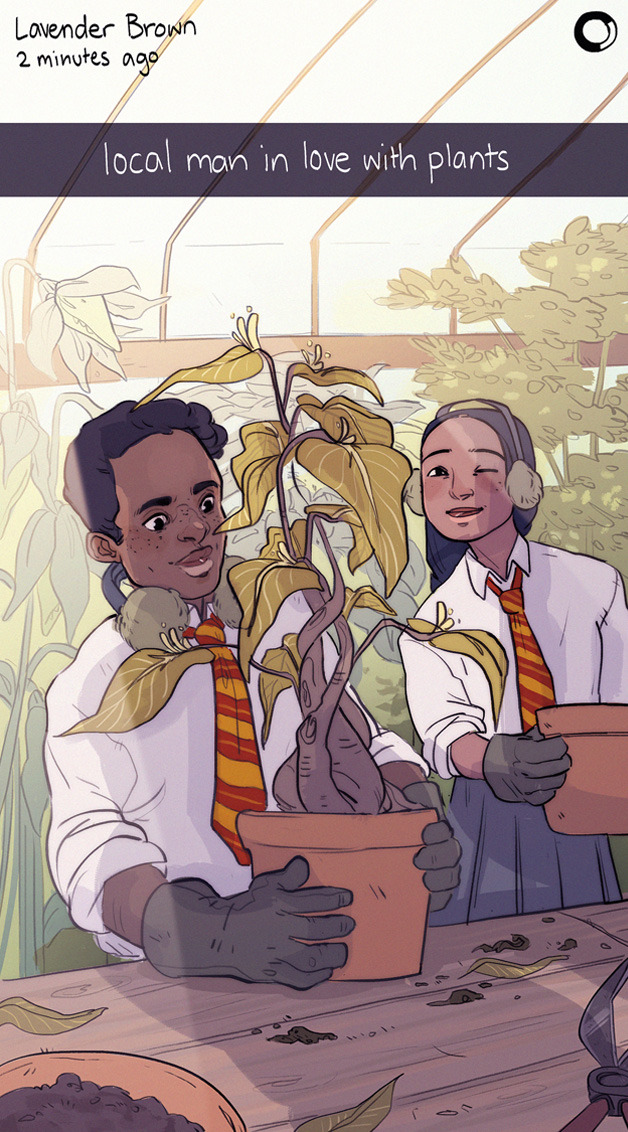
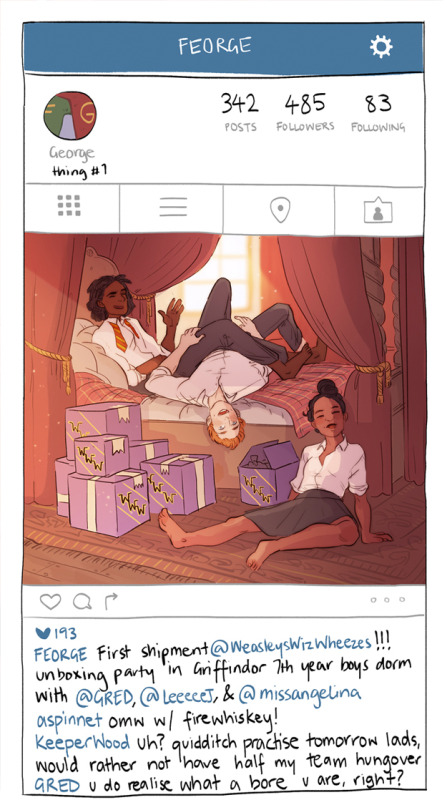
Fan Art Friday #1: Harry Potter and the Chat of Snap

Melbourne, Australia-based illustrator Sas Milledge recently did some amazing fan art for the Sparknotes tumblr that imagined what the kids of the Harry Potter-verse would have been up to had Snapchat and Instagram been around then, and it's AMAZING. Check it out just two of many creative and skillfully composed drawings from the post:


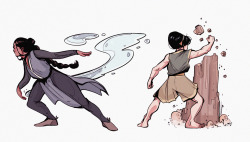
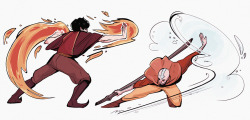
Milledge has also done some great Avatar: The Last Airbender fan art:


Check out the online folio for even more great art, still from animated shorts they done, and more!

Fanart Friday is a now-weekly tradition I'm setting up for the blog. I'm interested in spotting fanworks, of, for and by POC, LGBT artists and if you know of any work you think should begiven a boost, send me an email at shawnstruck@gmail.com or comment below!

Thursday, May 18, 2017

Why Are There No Black Family Emojis?

First created by Shigetaka Kurita in 1999, emojis have come a long way. From little unicode-based pictures and ideograms used by a savvy few to what looks to be a thoroughly forgettable animated movie and novelty pillows shaped like cartoon poop, emoji are used millions of times a day. Once broad-based support was added for emojis in 2015, the use of emojis have almost become a language in and of themselves.

Since there are a lot people emojis, there has been a lot of controversy over representation and what is seen as the default. For example, "Family" emojis at first didn't depict same-sex couples, and after outcry and discussion, these options were added to the Unicode standard. It makes sense, after all. If there's a way to show a person, you'd like that person to look like you, right?

So why aren't there options to make black family emojis? Jeremy Burge, writing for emojipedia says:
[O]ther emojis all have a choice of skin tones. Why not the families? The answer is that black family emojis are already possible. Unicode supports the sequences required to make emoji families with any combination of people or skin tones.
In 2016, Microsoft used these ZWJ sequences to create white families, black families, and all kinds of variations in between in an update to Windows 10.
When Unicode 8.0 was rolled out in 2015, in addition to adding in stuff like a taco emoji🌮 , the standards group also added in a way to give the human emojis human skin tones in the following ranges: 🏻 🏼 🏽 🏾 🏿.

However, there is currently no way to apply these to the family emoji-- either as a whole or for individual family members. Instead, the family emojis are displayed according to one standard- that the skin tones be rendered in pure yellow. Superficially it might make sense-- after all the smiley face is the same yellow. However, that sort of falls apart after even some cursory consideration, because whiteness is usually taken as the default, even with the "cartoonish" yellow. Look no further than the Simpsons! And as emojipedia pointed out on twitter:
Over 35 percent of Americans identify as a race other than white and while they can text a single emoji that closely resembles their skin color, they can't use it for couple or family.I don't know about you but "it's so hard" isn't an acceptable answer for not including black families, and it seems more like an excuse that reeks of 💩.

Wednesday, May 17, 2017

GamerGate's Lasting Effects & How To Fight Back

As the widespread use of the Internet took off in the late '90s and early 2000s, gamers started to form communities. With those communities were norms and rules both written and unwritten than began to coalesce with what those communities did and did not find acceptable. These were mostly-male dominated spaces, with the norms and rules functioning as gate-keeping tactics-- first to keep out those that might have reminded the gate-keepers of bullies, but expanded to be anyone that could be treated as an outsider or an other. This was especially true for women and other minorities. Trash talking was sen as "part of the game", even when it led to rape jokes and threats, for example.

Harassment of women and the marginalized in gaming communities in specific and online in general didn't beging with GamerGate. GamerGate just gave a collective name to what had been lurking under the surface of gaming culture for a long time. It just was now too big to willfully ignore. As I wrote last year, the more virulent influence of GamerGaters seemed prime to make hardcore gamers the new conservative reactionaries-- and this was before Trump was elected on a wave of dank 4chan memes, racism, and twitter rants.

Writing for Bitch Media, Sam Riedel reflects on the 3rd anniversary of the beginning of the GamerGate movement. She also talks about the effect it's had on her as a gamer, and the frustration that many companies that pride themselves on building gaming communities still stand by and don't seem to do much in her essay "No Girls Allowed: The Lasting Rules of GamerGate and Toxic Misogyny":
[Many of the PAX East] show’s panels that touched on harassment and abuse did so in a way that was only marginally helpful.. The Diverse Gaming Coalition held a panel on stopping online bullying, and concluded that “fixing” people who want to cause harm “is our goal” but is “not realistic,” ending 20 minutes early after focusing primarily on hawking T-shirts and signing up new partners. 
The It Gets Better Project’s panel immediately followed and was even more frustrating... When asked what should be done to fight this abuse, panelist Leslie Pirritano recommended that victims reach out to the Online SOS Network—but when it came to reducing instances of harassment, the It Gets Better panel could only spout platitudes; Huertas referenced Game of Thrones’ Tyrian Lannister, saying victims should “wear [their abuse] like armor.” 
Most disappointingly, it doesn’t seem like community managers... seem that concerned with ending the problem. At a panel entitled “Community Management 101”... Devin Connors of game studio Psyonix said CMs can try to “remold their behavior” but should try not to engage. That sort of corporate non-answer, which prioritizes companies over lives, is especially distressing when you consider that Connors is in charge of maintaining the Rocket League community as Corsair Media’s Global Social Media and Community Manager.
As Riedel points out, women play games just as much as men, but cis men hold the majority of jobs in gaming.
Take a look at the numbers: Even though Pew Research Center finds that women play games just as much as men, and "There are no differences by race or ethnicity in who plays video games," the International Game Developers Association reports that over 75% of those working in the games industry are straight, white cisgender men... gaming culture as a whole is still nightmarishly toxic for people who aren't cisgender men, and even for some who are.
This circles back to my earlier posts on diversity in the tech sector. Those in positions of power need to prioritize marginalized voices, and that means hiring more women and people of color and LGBT+ people-- not just as token hires but with real responsibility, As for those not in hiring positions, but positions of societal power, we need to prioritize amplify marginalized voices instead of talking over them, and when they talk, we NEED to listen.


Why Do Teen Dramas Keep Sidelining Black Characters?

Bianca Lawson as Kendra Young
from the second season of Buffy
The Vampire Slayer
Writing for Vulture, Angelica Jade Bastién, talks about hear love of teen dramas, starting as a teen watching The Craft and shows like Buffy The Vampire Slayer when she was a teenager herself. She's remained a fan up to the present day, but she's found that a problem she had with shows in her teens persists in shows today: it's really hard to find characters of color that get as much development in ensemble dramas as their white counterparts. djdjdjdj, :

[B]lack characters are often solely given an arc in relation to the white characters around them... In many films and TV shows, this is also used as a way to discuss racial politics...This may seem radical for the predominantly white filmmakers who work in this genre, but it’s important to remember that black girls’ lives aren’t solely defined by racism. We deal with romantic foibles, desires, and fears just as richly complex as the white leads this genre focuses on to the detriment of the black girls coloring the margins.

Bastién mentions the latest teen drama to start with a promising introduction, only to fall to some of the same problems: CW's Riverdale and the show's introduction of Josie and her bandmates The Pussycats:
K. J. Apa, who plays the remarkably befuddled (and ripped) Archie, is half Samoan. Veronica is Latina. Reggie is played by an Asian-American actor. And most notably, not one, but all of the members of Josie and the Pussycats are black, a change that eschews the tokenization previous iterations of the group have displayed. But as Riverdale approaches the end of its first season, it has reaffirmed some of the age-old problems within the genre... At the least, Riverdale’s Josie, Valerie, and Melody aren’t stereotypes, but they rest in the same troubling space that the black girls in films like Save the Last Dance occupy. They’re not characters so much as they are a vehicle for a Message. Josie and her fellow pussycats are positioned to communicate the message that Riverdale is more modern and inclusive than teen dramas of the past, even though it has yet to prove it beyond its casting.
Heck, in the comics and cartoons, Josie and The Pussycats were mystery solvers. Riverdale ended its season with a murder plotline that's been weaving in and out of the story all season, but Josie and company have been seemingly shunted aside. Bastién name drops The Craft, Buffy and Bring It On-- what ensemble shows do you think dropped the ball with characters of color? Did the writers fix it? What would you like to see, dear readers?

Tuesday, May 16, 2017

100 Must Read LGBTIA YA Novels

Signal-boosting a great resource that writer Casey Stepaniuk has compiled a very detailed list of 100 LGBT-focused young adult novels. While it's, by her own admission, not meant to be a complete list, it's certainly an extensive one. Each novel has link to purchase, a synopsis and review and details on its representation.

Regarding the list she compiled, Stepaniuk took care to be as thorough and as inclusive as possible:
As far as I know, I’ve included all the YA books with intersex and asexual content that exist (in English, anyway). I’ve omitted some trans YA written by cis authors that has been flagged by trans readers as problematic but I aimed to include every trans YA written by a trans author. One last thing: this list includes 36 books by and about people of color (there are additional ones that feature characters of color but are by white authors), all of which have an asterisk next to them so you can easily spot them. Those books were EXTRA hard to find. This is my call on the publishing industry to PLEASE consider intersectionality when publishing LGBTQIA books and to prioritize queer and trans authors of color telling their own stories!
Here's the full list.

Tuesday, May 9, 2017

Writers of Color & Craft: An Invisible Archive


Neil Atkin-- a great translator and poet in his own right-- writes about an amazing and sorely needed collection project that I wanted to signal boost:
A couple weeks ago I was thinking about how Junot Diaz often comments on the fact he’s almost never asked to speak about craft, and instead always is asked to talk about race, identity, and the immigrant experience. And it’s true — when I think about all the books on writing craft I’ve read or heard about over the years I’m struck by how few POC-authored books on writing I’ve seen. 
Are they really that rare? Or are the books and essays out there, but we don’t know where to find them? 
This list is an ongoing project to catalog what writing resources are out there.
You can check out the compilation he's assembled so far right here.


No More Excuses: 1,000 Women & Non Binary Folks Who Can Speak At Your Next Tech Conference

Last year, I wrote how despite the tech sector paying lip service to the idea of addressing diversity in its leadership or workforce, large companies and influential tech conferences are still big on talk and short on action.

For example, this exchange between tech writer Matt Andrews and EdgeConf's Andrew Betts on every single speaker being male:

When men in charge of tech conferences aren't being defensive, they're being straight up lazy, because finding women doing interesting work in tech is sssooooo hhhaaaarrrd, you guys!

No, seriously, someone said that.

Mike Kuniavsky the lead behind the "Sketching in Hardware" conference actually said in an interview that it's "…often much harder to identify the women who are doing interesting work than the men".

Melanie Ehrenkranz, a tech reporter with Mic.com, put out a call for anyone who was

  • willing to speak at a tech conference
  • doing interesting work in the tech sector, and 
  • was not a cis man
In just under a day, she had a list of 1,000 recommended names, which you can see for yourself here.


Okay, so now there's a list of speakers in tech. That's all we need now, right? Wrong. A list of women and nonbinary people that can speak on stage is just the first step. As Ehrenkranz said, the point is not for men in tech to have a list of people to tokenize;
"We also have to disrupt the idea that the only thing minorities are qualified to speak on is being a minority. The tech experts listed here are more than tokens — they're authorities in their fields. Individuals from underrepresented groups shouldn't have to tediously compile lists and shout into the Twittersphere that they are here, they are experts and they want to speak. Panel organizers need to make a more concerted effort to diversify their experts. Male panelists need to look at their fellow panelists and, if they notice it's exclusively white men, make space for more voices.  
We're not always going to do the work for you."

Note: Originally the title of this post inadvertently didn't mention non-binary people. I have since corrected it.

Tuesday, April 25, 2017

Black Materia: Awesome Take On Final Fantasy VII's Cast

Image Description: Cloud Strife from Final
Fantasy VII drawn as a black male with
blond locs. Part of a fan art series by artist Nikolas
Draper-Ivey
Recently, comic artist and illustrator Nikolas Draper-Ivey had enough with random haters online. As he tells it:
...[S]ome people on my page had a problem with me drawing black people because I, a black man, was drawing far too many of them (and not as stereotypes or tropes) when I’m known for having diverse character designs in the first place. 
 I literally got asked, “Do you ever draw white people?” And “You only draw black guys. Why?” In the same morning and I’m like, “Oh so this is a PROBLEM now?” Anyone that has seen my work knows that I draw people from all over. 
...if me drawing people of color as characters and not stereotypes and over used tropes offends you, then get ready to hate my black ass then, because I’m not about to sit by and let us not be represented in a respectful, uplifting and positive light anymore...
Rather than letting the haters get him down, though, he used all that salt to work on some truly awesome fan art and give his take on the main cast of the Squaresoft RPG Final Fantasy VII. Why'd he chose that game? As Draper-Ivey put it, "I specifically chose FFVII because it’s already a diverse cast and to Square Enix’s credit, you could literally tell the same story with these designs."

Those designs are amazing. His work in the superhero genre was already pretty impressive, and seeing his take on a JRPG classic is awesome. He takes the source material and puts his own well-illustrated spin on it. You can see his art of Cloud Strife above, but I was also wowed by his fan art of FFVII's main villain, Sephiroth. Check it out:


Friday, April 14, 2017

Marvel Comics Exec Says "Diversity" Is Why Sales Are Down

David Gabriel, Marvel Comics' Vice President of Sales spoke at a recent retailer summit and said that "...people didn’t want any more diversity. They didn’t want female characters out there," and that "Any character that was diverse, any character that was new, our female characters, anything that was not a core Marvel character, people were turning their nose up [at]."

This contrasts with the experience of one retailer who spoke with ICv2 on the first day of the retailer summit who said a more diverse cast of characters were helping bring new customers to his store. The latest iteration of Ms. Marvel, which has Muslima teenager Khamala Khan taking up the title role, was nominated for a Hugo Award this year. In a detailed post on CBR.com that did some serious number crunching of Marvel Comics' sales for the past year, Charles Paul Hoffman wrote:
Just to be clear, “diversity” has very little to do with the drop in sales in Marvel’s top 10 books. Only three (“The Mighty Thor,” “Invincible Iron Man” and “Black Panther”) can be considered “diverse,” in that they star a lead character who is a woman or a person of color. The rest are series starring white male heroes or teams made up predominantly of white male heroes. These are Marvel’s traditional A-list heroes, being written and drawn by A-list writers and artists (almost all of whom are themselves white men), and yet they are floundering... 
While Marvel has admittedly had some misses among its “diverse” titles, it has also had some genuine hits. “The Mighty Thor” remains Marvel’s No. 2=selling ongoing superhero series. “Black Panther” has been a solid hit as well, selling enough single issues to be in Marvel’s top 10, and enough trades to make the bestseller lists. “Invincible Iron Man” (starring Riri Williams) is also in the top 10, showing very little attrition from writer Brian Micahel Bendis’ pre-“Civil War II” series. “Spider-Man” is close behind, selling about 5,000 more copies than Miles Morales’ pre-“Secret Wars” series.”Spider-Gwen” and “All-New Wolverine” are also both doing well, with more than 29,000 copies sold in February for both titles. And then there’s “Ms. Marvel” and “The Unbeatable Squirrel Girl,” two series whose trades have also made the bestsellers lists. 
Having dug into the data, it’s become clear that diversity is not hurting Marvel. The truth is, Marvel’s “diverse” titles actually sell decently. 
So if Marvel's more diverse offerings are actually selling decently, bringing in newer clintele and winning awards... then what's up with declining sales? Professionals and fans on twitter have a few ideas:

Other industry analyses have pointed out stumbling blocks that Marvel has seemed to put in its own way, like trying to make its Inhumans line-up replace the X-Men series while X-Men hemorrhages sales and the Inhumans branding repeats many of the same mistakes of the X-Men before them. The Nerdist has an excellent take-down of how diverse casts written by the same ol' roster of white men leads to a lot of tone-deaf bullcrap that can end up alienating readers old AND new:
When Brian Michael Bendis writes Miles Morales as being upset with a fan who mentions his black heritage, or when Nick Spencer has Sam Wilson apologize to Steve Rogers for any activism-fueled anger he may have displayed in the past, it comes off as tone-deaf and leaves readers understandably less than thrilled. The same comic features multi-ethnic villains who are parodies of the “Social Justice Warrior” stereotype, who shout phrases like “You should be an ally, not helping to defend oppression culture!” and “Consider this your trigger warning!” as they throw grenades at Sam... 
Let’s also remember SHIELD #8 (2015), written by Mark Waid, where a black woman viewing her young son’s corpse remarks, “He was no angel“—the same phrase used to vindicate Michael Brown’s murder.
G. Williow Wilson, the lead behind the currently Hugo-nominated Ms. Marvel points out a few things about authenticity, new audiences, changing markets and industry expectations:
What I didn’t realize was that the anxieties felt by young Muslims are also felt by young Mormons, evangelicals, orthodox Jews, and others. A h-u-g-e reason Ms Marvel has struck the chord it has is because it deals with the role of traditionalist faith in the context of social justice, and there was–apparently–an untapped audience of people from a wide variety of faith backgrounds who were eager for a story like this... Diversity as a form of performative guilt doesn’t work. Let’s scrap the word diversity entirely and replace it with authenticity and realism. This is not a new world. This is the world... 
Never try to be the next whoever. Be the first and only you. People smell BS a mile away. 
The direct market and the book market have diverged. Never the twain shall meet. We need to accept this and move on, and market accordingly.
That last point is something important to remember as far as sales. The relaunched Moon Girl and Devil Dinosaur (which I covered here back in 2015) only sells a few thousand issues a month... but its trade paperbacks and graphic novel collections sells like hotcakes to little kids via Scholastic Book Fairs. The market is changing, how comics are sold are changing, and the audience is changing. As Alex Brown puts it on Tor.com:
Blaming readers for not buying diverse comics despite the clamor for more is a false narrative. Many of the fans attracted to “diverse” titles are newbies and engage in comics very differently from longtime fans. For a variety of reasons, they tend to wait for the trades or buy digital issues rather than print. The latter is especially true for young adults who generally share digital (and yes, often pirated) issues. Yet the comics industry derives all of its value from how many print issues Diamond Distributors shipped to stores, not from how many issues, trades, or digital copies were actually purchased by readers. Every comics publisher is struggling to walk that customer-centric tightrope, but only Marvel is dumb enough to shoot themselves in the foot, then blame the rope for their fall.
Looking at a diversity initiative as the beginning and end of what's needed to help improve the state of comics is short-sighted and wrong-headed. Instead of just having the same white men tell stories with some characters of color here and there, there should be structure in place for minority writers and artists and creators to tell the stories they want to a mainstream audience. Diversity as the final and only goal is a hollow act that does nothing but reinforce whiteness and the status quo as the default. That's not the world we live in, so why so worlds we get to make up have to be that way? Free your mind, and the audience will follow.

Friday, November 18, 2016

WLW Ask: Where Are Queer Butch Women In Video Games?

In the media landscape of video games, there has been a noticeable rise in the amount of visible queer characters in everything from indie games to AAA big-budget titles. Queer men have a number of different types and portrayals, from Grand Theft Auto's Gay Tony and Dragon Age's Iron Bull, to Mortal Kombat's Kung Jin and Dremfall Chapter's Kian Alvane.

But when it comes to queer women, Femme Hype's Aria argues that there is much less diversity of representation, and that that women who love women are the poorer for it. As Aria explains:

As much as gamers should applaud the industry as a whole making those steady strides to create women who are not sexualized for men, one of the hard points of women that have yet to be presented in games at all is ardent female masculinity, especially within the context of butchness as a trait in women... we have very few characters in the gaming industry who would fit a description of “butch.”  
Though their butch-ish coding may be recognizable to many players, these women are not in games that explore their characters’ stories or personalities, much less their sexualities, leaving any possible hope of butchness up to speculation and easily written off due to their environments and not their specific expression of their sexuality. Indeed, in may of the games in the FPS genre where some of these more “masculine” women exist, players can only speculate about the romantic and sexual modalities of these women—if their lives are explored at all—as the main men usually have their romantic lives explored.
Some would argue (though it's an argument I've only seen put forward by men-- well-meaning or otherwise-- that explicitly coding a woman character as butch could be reinforcing stereotypes. As Aria points out, however, this argument is rather lacking:

The absence of these types of women is not a testament to the gaming industry being uncharacteristically sensitive to queer stereotypes, it’s a testament to how female masculinity is rarely presented at all—and that, in fact, it must be overcompensated through clear heterosexuality. Not only does this prevent diverse representations of women, it upholds standards of women made for consumption by men. Having more butch bisexual or lesbian characters would subvert those standards and create a wider landscape of women for everyone to enjoy and admire.

SO I turn this over to you, dear readers. DO you have any game recommendations, indie, AAA or in-between, that feature butch heroes?

Tuesday, October 4, 2016

Overwatch: FPS, PVP and WLW

Description: In a style parody of the cereal box for "Cap'n Crunch Oops! All Berries",
Tracer from Overwatch appears in place of the Cap'n, bearing the name "Oops! All
Lesbians" with the tagline "All the time, forever" beneath it and the legend "Contains all
women loving women".
For most of its history, the first person shooter (FPS) genre has been dominated by male protagonists. Doom Guy, Master Chief... even Valve's team-based FPS Team Fortress 2 has nine class characters and all nine of them are men (yes, even Pyro, according to the series trading cards). Conversely, of the 22 character's in Blizzard's Overwatch, 9 of them are women. Unlike the cookie-cutter grizzled white guys or male-gazey fantasies of other games, each woman in the game has wildly different identities, roles, and even body types.

So perhaps it's not much of a surprise that Blizzard's foray into the team based FPS field has garnered lots of attention and devotion from a large fanbase of women. Especially prominent has been the large, joyful and vocal fans pairing up the game's women in various couples, across fanart, fan music videos, animations and fan fictions. My personal favorite power couple name is PharMercy, a pairing of the two healers Phara and Mercy.

However, all the of the women loving women content has been made by enthusiastic fans only. In an interview with Kotaku, director Jeff Kaplan had this to say:
The only stated relationship actually that we’ve even ever mentioned in the backstory is between Amelie who is Widowmaker and her husband who was brainwashed and assassinated. That’s the only reference we’ve ever made to a romantic relationship. It’s not that our characters don’t have romantic relationships and don’t have sexual identities or whatever, but the stance that we’ve sort of taken on the team is that we’re not going to talk about that stuff just to pander to the topic that when it comes out for game play or story reasons, that’s the right time for it to come out.
Tumblr user hattersarts, creator of the Sapphic Overwatch fanzine, had this to say about the idea that explicitly saying a character in Overwatch is gay is pandering:
“There is the problem where people say ‘Well, we don’t want to make it about them being gay.’ Well no, we want that, if I’m honest. I want to know they’re gay! I want that, I want you to shove that down people’s throats. Until we get to a point where the world doesn’t care, I want it. We need to care.”
Blizzard's coyness on the issue might be more than just well-intentioned fence-sitting. In a discussion of recent talks from DC Comics writers about Wonder Woman's sexuality on Metafilter, user rokusan had this to say:
 I've been involved in (the periphery of) Hollywood projects working from source material featuring characters who are either straight or of unspecified orientation, who are then deliberately cryptoqueered in the adaptation. They're not made gay, explicitly, but there are deliberate attempts to both raise and muddy the question just enough ... It ends up possible to see the character(s) both ways, or multiple ways...

But it's not a social agenda effort, clever or offensive or otherwise. It seldom comes from the creatives at all. Rather, it's a calculated marketing trick from on high... The logic is that by toeing such a line, they can attract a wider audience, each of whom uses some kind of identity consumerism to see the thing they wish to see in the character(s). Double the sales, the thinking goes.
What do you think, readers? As long as fans keep up the shipping, does it matter what Blizzard says? Or are unambiguous acknowledgment of gay or lesbian characters in Overwatch just as important for fans looking for representation and the series lore?


Tuesday, January 26, 2016

Video: Diversity Makes Cooler Games For Everyone

Youtuber MrBtoungue took a break from his usual fare to expound upon the biggest complaint had had about gaming in 2015: it wasn't diverse enough. How did that affect him, a dude who described himself as "a comfortable cis white male with a lump of coal where my heart should be"?

Part of the reason is that two of his favorite games of the year, the Witcher 3 and Bloodbourne, could only have happened as unique products of their respective developer's times and culture. As he puts it, diversity is an asset:
I see something like an undiscovered country's worth of talent. Right here, within our own borders, a country full of people who want to make and play games-- and would be making and playing games in greater numbers if we didn't keep throwing obstacles in their path. I always wonder over the years how many From-Soft's-worth of talent we've driven off by us constantly asking to see their tits. How many projects' worth of creativity have we driven off with behavior that's racist or homophobic and transphobic or just generally abusive?
The cost of unequal representation and games is not only unfairness but wastedpotential.
You can watch the entire video below:


Thursday, January 21, 2016

Where's Rey? Dark Side of Marketing Forces Heroine Out

Left: Screenshot of Rey from Star Wars the Force Awakens. Right, a letter from 8 year old Annie Rose that reads "Dear Hasbro, How could you leave out Rey!? She belongs in Star Wars Monopoly and all the other Star Wars games! Without her, THERE IS NO FORCE AWAKENS! It awakens in her. And without her, the bad guys would have won! Besides, boys and gorls need to see women ca be as strong as men. Boys or girls, who cares? We are equal, all of us!" letter courtesy of Carrie M Goldman.
Star Wars: The Force Awakes looks to shatter box office records. It's brought in an estimated 1.5 billion dollars in box office sales so far. Rey is the heroine of the story, which is why it's been downright weird to see her missing from so much of the official merchandise Hasbro has been releasing. For example, on Hasbro's Star Wars Monopoly set, there were two characters from the main Star Wars series as game peices: Luke Skywalker and Darth Vader. There were two characters from The Force Awakens: Kylo Ren and Finn. So, representing the classic and modern Star Wars? All men.

The “Battle Action Millennium Falcon” playset tie-in to The Force Awakens has Finn, Chewbacca, and BB-8-- but not Rey even though in the film she is the actual ship's pilot! And while Hasbro released a statement apologizing for leaving her out of the board game release and promising to include her in future releases, most official merchandise for Rey is still exceedingly difficult to find, and what does exist is rather thin on the ground. This has lead to the hashtag #wheresrey as fans and parents have taken to social media to talk about this representation.

According to an insider source with Lucasfilm marketing, Rey's lack of visibility in merchandise was not just some sort of accidental oversight. In an article on pop-culture blog Sweatpants and Coffee, this marketing insider said this was done deliberately:
In January 2015, a number of toy and merchandise vendors descended on Lucasfilm’s Letterman Center in San Francisco. In a series of confidential meetings, the vendors presented their product ideas to tie in with the highly-anticipated new Star Wars film. Representatives presented, pitched, discussed, and agreed upon prototype products. The seeds of the controversies Lucasfilm is facing regarding the marketing and merchandising of The Force Awakens were sown in those meetings, according to the industry insider.
The insider, who was at those meetings, described how initial versions of many of the products presented to Lucasfilm featured Rey prominently. At first, discussions were positive, but as the meetings wore on, one or more individuals raised concerns about the presence of female characters in the Star Wars products. Eventually, the product vendors were specifically directed to exclude the Rey character from all Star Wars-related merchandise, said the insider.
“We know what sells,” the industry insider was told. “No boy wants to be given a product with a female character on it.”
It sounds like a bit of a self-fulfilling, doesn't it? Marketing decision-makers say female characters don't sell, so they exclude them from merchandise. They then use this as evidence that female characters don't sell, and use it to justify excluding them from merchandise in the future. Not only did marketing execs seem to be caught completely by surprise, but according to the article, they seem stymied by the fact that real life wasn't adhering to the narrative they'd created:
“I’ve spoken with Disney people, and they were completely blindsided by the reaction to the new Star Wars characters,” Marcotte went on to say. “They put a huge investment into marketing and merchandizing the Kylo Ren character. They presumed he would be the big breakout role from the film. They were completely surprised when it was Rey everyone identified with and wanted to see more of. Now they’re stuck with vast amounts of Kylo Ren product that is not moving, and a tidal wave of complaints about a lack of Rey items.”
How about your thoughts, readers? Is this sort of aggressively gendered marketing something that's going to fall by the wayside, or will marketers dig in their heels even more?

Share This Post