Showing posts with label fantasy. Show all posts

Tuesday, August 15, 2017

Muslim World's History of Sci-Fi & Fantasy Fiction


Writing for Aeon, Muhammad Aurangzeb Ahmad delves into the long, rich tradition of speculative fiction in Muslim culture, including some of the first examples of feminist fiction in the early 1900s. As he points out, it's not really all that surprising when you consider the background it came from:

Western readers often overlook the Muslim world’s speculative fiction... Some of the first forays into the genre were the utopias dreamt up during the cultural flowering of the Golden Age. As the Islamic empire expanded from the Arabian peninsula to capture territories spanning from Spain to India, literature addressed the problem of how to integrate such a vast array of cultures and people...We also have the Muslim world to thank for one of the first works of feminist science fiction. 

He draws a line from the high fantasy tales of the Golden Age to the early 1800s to today, and it's a pretty interesting journal. And if that whets your appetite, you can find more at www.islamscifi.com .

Wednesday, July 19, 2017

Listen Up: Wizard Team, A Harry Potter Podcast


#WizardTeam is a podcast that's a spin-off from the blog "Black Girls Nerd Out," where hosts Robyn and Bayana discuss the Harry Potter books, in order, one chapter at a time!

It's updated semi-regularly, so the best way to keep up is via  iOS or soundcloud .

Listen Up is an ongoing series devoted to shining a spotlight on podcasts by diverse creators. You can check out all the podcasts previously featured here. If you have a podcast you'd like to recommend, post it in the comments or email me at shawnstruck at gmail dot com.

Friday, July 14, 2017

Announcing BLERD CITY Con

Via Black Girl Nerds, the following awesome announcement:

WHAT:
The first annual BLERD CITY Con will hit New York City’s historic neighborhood and Silicon Valley East, DUMBO (Down Under the Manhattan Bridge Overpass.) Saturday, July 29 and Sunday, July 30, 2017.

BLERD CITY’s mission is to provide the Black community with substantial connections to talented and cutting-edge professionals in the craft of positive image making. BLERD CITY comes from Black + Nerd = Blerd, a conference dedicated to showcasing the complexity and multi-dimension of NERDiness through Art, Science, Film, Literature, and Technology.  The conference includes panels, workshops, film screenings, and a marketplace. The BLERD CITY marketplace will feature a mixture of curated gaming and comic books, and a children’s area for science and technology exploration.

BLERD CITY panels and workshops announced so far include: Women In Comics, Martial Arts and the Urban Landscape, Afropast and Afrofuture, Cosplay Interaction, SciFi/Fantasy/Horror Film Screenings, an L.A. Banks Tribute and more. Guests announced include:Tim Fielder, graphic artist, cartoonist, and animator, Afrofuturism The Next Generation; Nicole Franklin, CBS Sunday Morning Daytime Entertainment Emmy® Award winning editor, filmmaker, and co-producer and co-moderator of the weekly Monday night Twitter series #BlerdDating, Warrington Hudlin, and Regine Sawyer.

WHERE:

The Dumbo Spot, 160 Water Street​
Green Desk, 155 Water Street
Creative Chaos, 28 Jay Street
Automatic Studios, 52 Bridge Street
Brooklyn Bridge Park’s Empire Fulton Ferry (Near Main Street)

Visit the official website for more information about BLERD CITY or to register for the convention.

Thursday, July 13, 2017

It Came From YouTube: The Guild of Ambience

Working alone in a home office can be kind of isolating. Falling asleep to silence can be difficult. Finding just the right level of audio background sounds for a tabletop gaming session can be a chore. Luckily, there's a YouTube channel I came across recently than can solve all three of those scenarios and then some: The Guild of Ambience . The youtube channel is a passion project of a graphic and sound designer from Australia that focuses on fantasy-influenced environmental soundscapes for mood, sleep and relaxation.

For expample, if you're a Game Master wanting to give your players a little more immersion while everyone's in Ye Olde Tavern waiting for the adventure to begin, you could queue up this video:


 Or if some gentle nature sounds with the occasional village ambiance is your thing, you can try this:


 My favorite is this video here-- a gentle soundscape with an hour of original music that presents a gentle shifting of moods:

You can also follow along on Facebook or buy Guild Apparel here on redbubble.

Friday, June 23, 2017

Listen Up: Black Nerd Power

Black Nerd Power is a weekly podcast hosted by Markus Seaberry, Malaika Salaam and Richard Douglas Jones. They discuss the worlds of comics, pop culture, current events, sci fi & fantasy from a black nerd point of view. They are all incisive, witty and laugh out loud hilarious. They were voted Memphis' best podcast last year. Just give an episode a listen and you'll hear why-- the rapport is breezy and chill while also being friendly even when there's some verbal sparring going on. Nerds have never sounded this cool, but Black Nerd Power makes it effortless.

You can listen along via the OAM Network's Black Nerd Power page, or via iOS on iTunes.


Wednesday, June 7, 2017

Dragons, Jewish Families & LGBT Romance

Author Shira Glassman recently announced a new republished collection of what she has dubbed her "Mangoverse books", a whimsical fantasy series featuring queer Jewish characters forging their own paths and forming chosen family through the bonds of adventure. Each book has new color cover art a Hebrew and Yiddish glossary, and the series as a whole gets a new tie-in with a collection of short stories called Tales from Perach. Here's some quick and witty summaries of each book:

  • The Second Mango - origin story, in which the gay Queen and hetero demi warrior woman become BFFs
  • Climbing the Date Palm - Queen helps the bi prince from next door rescue his activist boyfriend from Certain Doom
  • A Harvest of Ripe Figs - Queen solving mysteries in her capital city, chiefly the theft of a priceless violin, while raising a baby with her bi partner
  • The Olive Conspiracy - Queen saves her country from a plot to sabotage her country’s agriculture
Glassman's books are breezy and whimsical without coming off as insubstantial. Queen Shulamit carries power and agency and shows that kindness and compassion need not mean weakness or uncertainty, and is probably easily my favorite non-dragon character.

Monday, August 1, 2016

Spec Fic's Systemic Racism & What To Do About It

Text: Out of 2,039 stories published in 2015, 38 were written by black authors.
Speculative fiction can be a gateway for aspiring authors, above and beyond getting a pay-day or seeing your work in the SF/F anthology of your choice. It can also be the first step to greater access to agents, a fanbase, novel deals and more. Over the past few years, there has been an increased push for publishing a diversity of voices, but in a recent study, Fireside Fiction outlines that out of all of the speculative fiction stories that were published last year, only 1.9 percent of those stories were written by black authors. To put those odds in perspective, they do some math to point out that:
...the probability of the 1.9% average occurring by random chance is 3.21x 10^-76, or
0.00000000000000000000000000000000000000000000000000000000000000000000000000000321%
For comparison’s sake, the odds of winning the New Jersey Pick Six lottery are 7.15x 10^-08, or 0.00000714%
Author Mikki Kendall wrote in a companion essay, "Opportunities Lost", that it's not a matter of talent or lack of stories, but a lack of initiative on the part of publishers:

Race matters at every step of the publishing process. Including who gets out of the slush pile and onto the page. The myth that Black people don’t read science fiction or fantasy has been thoroughly debunked. And despite any claims to the contrary, Black writers of speculative fiction have been producing amazing work since the genre’s inception. The real problem isn’t one of a lack of stories or a lack of talented writers, the problem is a lack of outlets willing to publish stories that don’t center white characters.
New York Times best-selling author Tobias S. Buckwell points out that this lopsided figure doesn't even reflect the current makeup of the United States in his essay "Boldly Going Nowhere":
I don’t remember the first time I was told there were plenty of diverse writers in the field, and had the same few names repeated to me over and over again... the same four names—“Hopkinson, Butler, Delany, Barnes”—as a list of writers of color when I would point out the whiteness of the science fiction field. With some 1,500–2,000 members of the Science Fiction and Fantasy Writers of America, in order for our field to just match the demographics of the USA that meant SFWA should have had at least 150–200 African-American writers because twelve percent of the US population was African-American. 
To match the U.S.A’s demographics, there should be about 200 members of SFWA who would choose African-American on a census bureau questionnaire. 90 who would choose Asian-American. 18 Native-American. 54 like me, who would choose two or more races on the census questionnaire.Basically, every time you go see a bunch of writers, in person or in print, about 30% of them should be something other than white. Just to reflect demographics.
Fireside Fiction is not above pointing out that they have failed at this goal as well, but editor Brian White posted an editorial that, among other things, showed he was willing to put his money where his mouth is:
  • We’re working with the developer of our submissions system to add in an optional, anonymous form for people to self-report their demographic information when they submit to Fireside. This way, we can take a much closer look at what is going on in our submissions pile.
  • We are going to change our submissions process. Once a year, we will still have one big submission period open to everyone. But several other times a year, we will have targeted submissions windows, each targeted toward a specific marginalized group. So black writers, writers of color generally, LGBTQA writers, women, writers with disabilities, etc. We’re still working out the details on this, but all the dates will be publicized well ahead of time, so that people who don’t have the leisure time to whip up a submission on short notice can get their work ready. 
  • We also want to hear from the black writing and publishing community about what else we could do better. You can email me directly at brian@firesidefiction.com or talk to us on Twitter.

Readers, what else do you think can be done to fix this problem in spec fic? Sound off in the comments below.

Monday, September 7, 2015

Black Storm Troopers, White Washing & Spec Fiction

Description: In a still from "Star Wars: The Force Awakens"
a young black man in scuffed white storm trooper armor looks
off screen in disbelief.
Wendell Bernard Britt Jr. writes for medium.com just what John Boyega's casting in the much-anticipated Star Wars: The Force Awakens means not just to him personally as a fan of color, but the impact representation has on speculative fiction in particular:
I’ve been a Star Wars fan for as long as I can remember. One of my earliest memories was watching a drive-in double feature showing of Disney’s The Lion King and Star Wars: A New Hope. My ideas of right and wrong, heroism, self-sacrifice and discipline all come from these movies... 
The first character in the trailer is a harried and exhausted looking John Boyega decked out in a Stormtrooper outfit, and I did all I could do to contain my glee. When I had heard that Boyega was cast to be in the movie, I had assumed it would be in a supporting role, much like Billy Dee Williams’ Lando Calrissian before him. Disney had just dropped 4.4 billion dollars on the franchise, and they only had 1:33 seconds to wow their entire fan-base. To waste those precious seconds on a bit character would be completely irresponsible. Then my brain caught up with what I was seeing. Was it possible that a black character is going to be the protagonist of Star Wars?
This leads him to wonder-- when black people make up 12 percent of the US population, and black people account for 13 percent of  all ticket sales nationwide, why are are there so few characters of color? What effect does that have on who's seen as a hero? What's the response? He goes on to explain that:
Occasionally an enterprising white writer will include black people in fantastical genres. When this happened white audiences tend to have explicitly negative reactions to them. Much like the general public’s reaction to a black person being cast as a Stormtrooper, Hunger Games fans took to Twitter outcrying the casting of Amandla Stenberg (black) as Rue (a character from the predominantly black 8th district from the books). 
For some Americans, understanding, empathizing with and even imagining a little black girl in a fantastical land was beyond possible. Not only did readers fail to register Rue’s blackness, they became upset when they were confronted with it on screen.
The entire article is an illuminating musing, both personal and professional, on what this split means to him, and is well worth a read.

Friday, August 21, 2015

Angry White Guys Hacked The Hugos... And Could Do It Again

Description: Close up of of an angry white man telling at the viewer, mouth wide
open & revealing teeth, face contorted into a scowl.
I've previously written about the efforts by the Sad & Rabid Puppies to hijack the Hugo Awards here and here, and Ria Bridges of bibliotropic wrote an epic guest post taking down the Puppy slate and its goals here. Even Game of Thrones series author George R. R. Martin took to his blog to denounce the Puppies, the ideology, the complaints and their goals.

Having successfully gotten the awards slate loaded with their mediocre reactionary choices, these supporters are harassing authors at Worldcon and taking about how they plan to do this all over again next year. But can they? How did this all happen in the first place?

Writing for Yes Magazine,  Mike Schneiderman quotes an author as saying "The Hugo Award process has always been hackable, There was just never anyone narcissistic enough to hack it." and they seem on the money.

Charlie Jane Anders from Gawker's IO9 suggests the Puppies success in stuffing the nomination ballot this year in fact disproves their very basis for existing:
"The [Puppies strategy] only succeeds if all the other nominations are scattered and disorganized. And that kind of disorganization is exactly what we saw in most nominations. It appears that everybody except Beale’s crew simply nominated whatever stories they happened to enjoy in 2014. Had there been a secret left-wing bloc nominating its own stories in lockstep, then Beale’s strategy would have failed."
Could this happen again? Sadly, the answer appears to be yes-- for at least one more year. Commenter eriko on MetaFilter explains:

...unless the SP/RP faction gets bored this year, it'll all happen next year, because there can't be any changes to the nominating process. There are a number of proposals being mooted this year, but regardless of which (if any) pass, none of them will take effect next year because they'll require ratification by the next Worldcon. So, the Hugos will use the same nomination process next year.
What will almost certainly happen, though, is a lot more people will pay attention to nominations next year, for good or ill. 
It's always been known that you could stuff the nominations and easily get a work on the ballot, and with a little effort, take over the ballot. The primary control of this wasn't regulatory, it was social. You just didn't do that --- and for decades, that worked just fine. The social contract that one did not logroll for the Hugo was strong enough that there were fans who were against authors even posting a single "these are my eligible works this year" posts online. I am not one of them, but the moment you post two? You're logrolling and you've broken the contract, and I would not only not nominate you, I'd campaign against you. 
That broke down when the SP/RP came along. They didn't care about the social contract, they easily got enough nomination to take over the ballot, and they did. It did help that, for too long, too many people who claimed to care about the Hugos and who were eligible to nominate didn't. The favorite excuse was "I didn't read a lot" and I kept saying "Doesn't matter. If you read something that you thought was Hugo Worthy, nominate it. If you read more than 5 things in a category that were Hugo Worthy, then you have to choose. Otherwise, nominate just the things you read that you think are worthy. If enough people agree with you, it'll make the short list. If not, it won't -- the 5% rule will make sure of that."They didn't, so between not enough nominations and the SP/RPs, this happened. The nice thing about the old system was it was simple, open, and transparent. The systems being mooted range from minimally effective, like 4/6, to OMG complex -- so much so that it's basically impossible to know if they'll actually fix the problem, but they'll certainly make it fun to figure out the nominations. It's all very....fannish. 
So, again, next year will only be different in the sense that maybe a lot more people will nominate -- for good or for ill. You will be eligible to nominate if you are a member (supporting or attending) of this year's Worldcon, or next year's Worldcon (in KC) or the Worldcon after that (which we find out out where tonight) if you join before the end of this year (basically, if you join this year, this being the year they'd be awarding.) Only members of next years Worldcon (KC) will be able to vote on the final shortlist, but the nomination pool is much larger.
So, what is the Hugo awards committee to do? What about WorldCon attendees?

Thursday, August 20, 2015

Harry Potter and the Invisible People of Color

Description: From left to right are screenshot of the character of Lavender Brown from the Harry
Potter movie series In the first two pictures, she is played by a black girl. In the 3rd picture, the character
is portrayed by a white girl. A comment sarcastically asks "Did she get a haircut".
The Harry Potter film series has been a worldwide blockbuster, spanning 8 films and a cornucopia of related merchandising tie-ins. The entire series has many allegories for hatred, genocide and racism. Which, as the Every Word Spoken project points out, is really weird considering that there are so few characters of color in the movie series, and the characters of color that are in the movie barely have any speaking lines. They released a video supercut tallying up how much screen and speaking time people of color got across the entire 19 hours & 39 minutes of the films. POC speaking time, in comparison, was just a little over 5 minutes and 40 seconds. Here's the video:


The tally:
  • Total POC talk time: 5 minutes and 40 seconds
  • Total run time of all films: 1,207 minutes
  • That comes out to 0.47% of screen time in which POCs speak throughout the entire series. This is split among 12 characters and 13 actors (Parvati Patil was played by two actors, Sitara Shah & Shefali Chowdhury)
  • Of these 12 characters, 2 were CGI bodies voiced by POC actors (Firenze & Shrunken Head)
  • On average, each POC character speaks for 28.33 seconds. 
The books aren't that much better, sadly. Looking at the 200 most mentioned characters in the series, here’s what you’ll find:

  • Number of POC characters: 9 (4.5%): Cho Chang, Dean Thomas, Angelina Johnson, Parvati Patil, Lee Jordan, Kingsley Shacklebolt, Blaise Zabini, Padma Patil, Hassan Mostafa 
  • Number of POC characters in the top 50: 2 (#44 Cho Chang, #45 Dean Thomas)
  • Number of non-human characters in the top 200: 26 (13%)
  • (4 more characters are described as being part giant or part veela, but are white-appearing.)
As they point out this means that even in the books, there is better representation of centaurs, house-elves, giants, and goblins in this series than there are of human characters of color. Dobby and Kreacher in particular get way more page time and deeper character development than any of the POC characters. And unlike the series you can't fixit by waving a wand, but maybe we can address it better by pointing it out so the next fantasy series has plenty of different kids from all sorts of backgrounds, too.

Wednesday, August 5, 2015

Why "I Don't See An Author's Race" Is BS

DescriptionL A young white man and a young black woman are facing one another, with the white man covering the black woman's eyes and the black woman covering the white man's eyes, preventing them from seeing each other.

Tumblr user theawesomersace (whom you might also know as part of The Awesome Sauce on BookRiot) discovered something interesting recently after two similar tweets were responded to in very different ways. The first tweet simply asked their followers to name their favorite science fiction or fantasy author of color. Later in the afternoon, they asked twitter to name their favorite white science fiction and fantasy authors, and the responses she got this time were altogether different and unexpected:
Some people thought I was being sarcastic. Others said that is was a terrible way to label an author. "I hope I’m never labeled that way"... “I don’t see color," "I just read good books," "I don’t know what color my favorite authors are," "What does an author’s race have to do with anything?...  people either didn’t like me labeling white authors as white or they thought race was unimportant when discussing authors or they didn’t like having to admit that they had a favorite white author.
I remember a bunch of similar responses a few years ago, when during the usual pre-game banter in my gaming group, I mentioned I noticed I hadn't been reading any authors of color without even realizing it, so I went looking for some and found some really great fantasy and sci-fi! Before I could even begin to talk about books themselves, others in my group (all white) had pretty much the same reaction. I see it all too often in discussing race in creative works, and I used to believe it too: "Oh, I just read stuff. I don't notice race. I'm colorblind."

They put forth the idea that this ideal that isn't really ideal is present in society at large which is why it "... so heavily influences our current publishing climate, is the belief that by default an author is white unless otherwise specified [and] why authors of color are shunted off to imprints and shelves marked "Certain Marginalized Group" Literature and why discussions of “quality” and “taste” center around a white, masculine narrative.  This is the key to why representation within publishing is so dismal: there are (white) authors and then there are all of the other special categories. And when we’ve checked a box in one of those other special categories, we’re done.

To be colorblind at this moment means that you aren’t willing to take any of that background into account when choosing something to read... White is not the default. And we all need to work better to make sure that is reflected in the media we consume. "

So, readers, what are your thoughts? What are you doing in your nedia and reading habits to change things, even if just for yourselves?

NK Jemisin On Fantasy Worlds & Status Quo

Cover for the collection "The Inheritance
Trilogy" by N.K. Jemisin
There was a great interview in The Guardian last week with one of my favorite fantasy writers-- N. K. Jemisin. I first heard of her during the whole racefail 09 debacle. But she didn't just rest on her laurels. She's not just been continuing to write novels and novellas, but also working with other POC to confront racism and sexism in the industry head on.

In part of the interview she talks about how so much of epic fantasy and science fiction seems to end up reinforce a lot of industry and genre status quo in particular as well as the status quo for viewpoints and stories told in general. She puts forth the idea that not only is that contrary to the nature of fantasy, it is contrary to who she is as an author, and person, and why she seeks to challenge and change with her writing:
 “As a black woman, I have no particular interest in maintaining the status quo. Why would I? The status quo is harmful, the status quo is significantly racist and sexist and a whole bunch of other things that I think need to change. With epic fantasy there is a tendency for it to be quintessentially conservative, in that its job is to restore what is perceived to be out of whack... I hear all the excuses: things were just like that back then. There really were 90% men in medieval Europe and they were all white and somehow they magically got silk from East Asia and we don’t know how that happened... But that makes no sense to me. I don’t really understand why so many fantasy writers choose to focus on worlds that just seem strangely denuded. But to them I guess it doesn’t seem strange. And I guess that’s their privilege. It isn’t mine.” 
For some concrete examples, of Nemisin's work, the collection pictured aboce, is an amazing series of stories, with action and intrigue, alliances and betrayals set in a far-future fantasy Egypt-like kingdom. It was nominated for, and won a pile of awards, and rightly so!  If you'd like to get a good idea of what her writing style is like for free, you can read her story "Non-Zero Probability" here. It;s available in both text and audio versions.

Tuesday, July 21, 2015

Strange Horizons Is Sick Of Your Cliched, Crap Stories

Description: A wastebasket, overflowing with crumpled up pieces of paper and trash.
Strange Horizon is a online speculative fiction magazine that has released free, curated content and 51 issues a year for fifteen years. They've published a LOT of fiction... and read many, many more submissions. Of course, when you see so many, you start to notice certain ideas, trends, and plot devices that occur over and over... in Strange Horizon's case, they've seen so many they've compiled a list called called "Stories We've Seen Too Often". Here are some examples:

  1. Weird things happen, but it turns out they're not real.
    1. In the end, it turns out it was all a dream.
    2. In the end, it turns out it was all in virtual reality.
    3. In the end, it turns out the protagonist is insane.
    4. In the end, it turns out the protagonist is writing a novel and the events we've seen are part of the novel.
  2. An AI gets loose on the Net, but the author doesn't have a clear concept of what it means for software to be "loose on the Net." (For example, the computer it was on may not be connected to the Net.)
They're up to 51 different types of stories, with several sub-types. And lest your consider your story that follows something on that list (or like some people I know, you thinking that list is actually a challenge):

We often receive stories that match items on this list but that have cover letters saying "This matches something on your list, but I've done something new and unique and different with it." Such stories almost always turn out to be very similar to other stories we've seen. If your story is a close match to one or more items on this list (especially if it's a close enough match that you feel the need to include a cover-letter disclaimer), you may want to consult some friends who are well-read in the genre before deciding that it's probably different from what we see all the time. (And by the way, we often don't read cover letters until after we've read the story.) One more thing: We know it's tempting to look at this list as a challenge. Please don't. In particular, please don't send us stories that intentionally incorporate one or more of these items.
The whole list is instructive, illuminating and also kind of awesome. Read the whole thing.

Tuesday, June 16, 2015

Guest Post: Puppies Crying Bitter Tears

Description: Screenshot of tweets with hashtag "New Hugo
Categories" from Foz &Arthur Chu: "Best UNcritical Use of
1950s Gender Roles In Story Set 2000 Years In Future", "Best
Non-White Protagonist Portrayed By White Model On Cover" &
"The Dan Simmons Award For Best Time Traveller From
Future Telling You All Your Political Opinions Are Right".
Friend of the blog Ria, of Bibliotropic, had a lot to say about the spate of what the Puppies rhetoric has meant for them  personally as well as the field of writing in general recently. The Code is proud to present the following guest post from Ria. I also stand by everything they say here. Warning: contans swears.

"I dislike the both Puppy litter ideologies. I talked a bit about why last year, long before this current Puppy debacle began, with a post about Correia's comments on diversity in SFF. For those who don't want to read a long post about it, in a nutshell, someone who is now very strongly identified with the Puppies said, a while back, that including nonbinary characters and other forms of diversity in SFF would make for bad fiction, because doing so would come across solely as message fiction and remove any entertainment value. I objected to that, since what that amounts to in a practical sense is to erase people like me from having representation in fiction. The insinuation is that people such as myself aren't of any real value to have our stories, nor does anyone want to actually read about us or have us around. It's insulting, and it's dehumanizing.

So when this round of Puppy problems started, I admit I was already pretty inclined to dislike them, given that my experience of one of their figureheads was that he thinks people like me shouldn't play a central role in his beloved genre. And the more I read about what they stood for, the more my hackles rose. Accusations that women, people of colour, QUILTBAG folk were only getting nominations for awards due to affirmative action are galling, since what they essentially say is that these people getting nominations aren't actually as good as that straight white male over there and are only getting nominated because of quotas that need filling. If it wasn't for those quotas, that nomination would rightfully go to a dude. Comments that because certain of their books or series were popular with a certain crowd and sold well, they should totally be eligible for more award nominations. (Because quantity equals quality, I guess.)

There may be no AWARD for such well-selling books, but there is a REWARD. It's called a paycheque. A paycheque you get for doing a thing you love, which is something many people don't get to experience in their lives. That isn't to say that people with well-selling books don't deserve more than a simple paycheque. It's awesome to have fans, fan experiences, interaction, the knowledge that you're doing something people enjoy. Maybe there ought to be an award for the SFF book that sells the most copies in a year, I dunno. (Then, I suspect, there'd be a cry-out about how books released toward the end of a year just didn't have a chance, and look how many they sold the next year, so they should totally have won that award after all. Nobody gets everything.)

The problem I see with most of the Puppy stuff is that their message seems very unclear. First it appeared to be, "The Hugos are a stupid award full of politics I disagree with and all given to books I don't want to write or read. ...So how come I never win one?" Then it started to be about affirmative action accusations, about women and non-white and non-straight people swooping in and stealing awards that should go to more deserving folk. Then the hypocrisies really started coming to light, where Puppies would insult authors they disagreed with, very personally, but as soon as there was any retaliation against even their politics they'd cry defamation and abuse. At the end of it all, what I can see is that the Puppies stand for only the Puppies, and to hell with anything else. And by "to hell with," I mean largely that they'll insult and threaten people who don't toe the Puppy party line. it's fine and dandy for someone to come in and defend the Puppies and say, "Look, all they're saying is that they think their works should be judged as being just as valid as anyone else's, and that people are free to do as they please so long as he can do the same."

Sounds good on paper. And utterly out of context.

Because major Puppy authors are being allowed to write and publish the books they do. They're not being blocked from selling them. They may not qualify for awards, but hell, so do the vast majority of books published in a year. Big damn deal. The idea that everyone should have an award is a very liberal thing, and given that the Puppies seem to have a beef with politically liberal things, you'd think they'd be a bit more on board with a meritocracy. Nobody is imposing their ideals on the Puppies. The world can, amazingly, have multiple things in it, some of which by default disagree with other things. But the accusations made by them are harmful. Painful. Dismissive. And are largely focused on gender issues, sexuality, race, and a whole load of other things that make people say yes, there's some godsdamn bigotry happening here.

People love to say that so-and-so can't possibly be racist because they have black friends. Okay, so, by that logic, no heterosexual man can be sexist if they're married to a woman. Oh, wait, LOGIC DOES NOT COMPUTE! Someone can have black friends and still be racist. And since what a person writes and what a person believes aren't always walking along hand-in-hand, a person can also write about a black woman being just as kick-ass as a white man, but when they throw out n-word jokes at parties, sorry, that's still being racist.

I think some of the major Puppy supporters miss what a lot of people miss about prejudice. They hear the word sexism and assume that sexism comes in only one form: overt. You're only really sexist if you state that women are inferior to men and they shouldn't be allowed to do man things and should stay at home and quietly raise the kids. If you don't believe that, then you're totes not sexist. Except that sexism can also come in the form of believing that a woman only got an award nomination because she's a woman, which has the unspoken opinion that she didn't get it because she did something worthwhile. And since gender is brought into it, what's also unspoken is that she didn't do something as well as a man. Which means the award should rightfully go to men.

Sometimes bigotry is about what you don't say. It's about what you don't even think consciously. Sometimes this shit is so ingrained in you, thanks to a hundred and one different factors, that you don't even realise you're denigrating someone. Likewise, with racism and thinking you're only a racist if you want to bring back lynchings and banning black people from being around white people. There's no other way to be racist. Except that there is, and many of the Puppy opinions about race are very damn racist.

Surely there's going to be someone who wants to jump in and say, "Oh, fine, so you think all straight white men are worthless and wrong all the time, then." And no, I don't. And it's just a little bit ridiculous to say so. It's a bizarre extrapolation from my arguments. The fact that some straight white men have done some shitty-ass things doesn't make them wrong about everything. Just in the same way that I'm transgender doesn't make me right about everything. Including things involving gender politics.

Changing the subject a little, another thing that weirds me out about Puppy stuff? The way they seem to think that the Hugos have this liberal bias toward books that only talk about what liberals want talked about, and how nobody's actually reading these books. And how the voters at Worldcon are some elite subgroup of liberals who earned their voting privileges by, I dunno, helping an elderly Asian woman across the street to get to her ACA-funded doctor's appointment or something. That stuff straight-up ignores facts that are easily corrected. 30 seconds on Google will net you dozens of reviews for these books, showing that yes, people are reading them. Got the money to go to Worldcon? Great, here are your rights to vote on the Hugos and make your voice heard. It's not like you have to pass a liberal test or something in order to get these things. You pay money. And you read books. So the idea that books are winning a prestigious award when nobody's reading them because they suck so bad is just a touch ridiculous.

People have pointed this out before. I'm not the first. But this info seems to slide off people on the Puppy side of the fence because it doesn't mesh with what they see. It's not a flawless system. No system is. But some accusations are very easily refutable, and I'm not even sure where they came from beyond, "I'm not winning this award, so it must be a conspiracy against my politics." At the end of all this, I want the whole damn thing to be over. I want people to stop insulting each other for daring to like a different subset of SFF than they do. There's room for a lot of opinions here. A lot.

And that includes both conservative "men doing manly things" fiction AND fiction involving nonbinary people in stories that look like they can right out of a liberal buzzword dictionary. Doesn't make either of them good or bad by default. That's the trick for the author to manage. You can make a terrible idea into a good story, and a great idea into a terrible story. So yeah, I dislike the Puppies on both a personal and political level, because they're largely insulting, ignorant, and seem like they'd be a lot happier if people like me shut our mouths and let them get on with doing what they do unopposed, but damn, am I ever eager for this bullshit to stop!"

Ria is an agender ex-pat Brit currently living on the east coast of Canada, along with 5 cats and a glorified budgie named Albert. When not reading and reviewing books on bibliotropic.net, Ria can often be found obsessively playing video games, being an amateur photographer, or experimenting with various fibre arts.

Wednesday, June 10, 2015

Sherlock, Watson & Chainmail Bikinis

Description: A red-haired woman warrior locked in combat
with a lizard monster taller than she is. She holds a shield
to defend against attacks, sword ready to strike.  The armor
she is wearing is a chain mail bikini, leaving much of her body
exposed to attack.
There are two terms in literary criticism that have been used in the wider world of media fandom and fiction critiques: Watsonian and Doylian. Watsonian means looking at something from an in-universe perspective. For example: "Sherlock Holmes died in that story because he fell off a cliff," would be a Watsonian explanation. "Sherlock Holmes died because the author was sick of writing stories about the detective and wanted to start something new," would be a Doylian perspective, named after the author of the Sherlock Holmes, Arthur Conan Doyle. It was first used on a Bujold-Master fan discussion list and spread from there. It's basically making a difference between talking about something a character says or does and how it fits with the character's fictional world, and why or how the writer's choices fit into our real life life culture, society and circumstances.

There can be a bit of a problem in discussions of fiction when a Watsonian (in-universe) perspective is used to dismiss a Doylian (real world) criticism, and nowhere is that more apparent in both tabletop and gaming circles than the trope of the Warrior Woman Who Fights In A Chainmail Bikini.

The chainmail bikini has been a staple of pulp fantasy art since the 1930s, and has appeared in one form or another in the art and character designs of fantasy novels,tabletop games and video games ever since. Take the cover art for Runequest up there. An in-universe explanation for why the character chooses to wear a chainmail bikini because she feels powerful, almost invincible in battle, and doesn't think she really needs to wear practical armor, so what's the big deal? That would be a Watsonian view.

Description: Video game renders of characters in
armor.On the left,a woman wears armor that covers
armor covering her hands, feet, legs& shoulders while
barely covering her crotch and breasts & exposed
midriff. At right, a male character in armor leaving
nothing exposed but his head.
But the artist or character designer choosing to draw her or portray her that way isn't a value-neutral choice when you look at it in a Doylist (real world) sense. Sure, in the fictional world the story takes place she's Druscilla the Invincible and her bikini symbolizes her fearlessness. But the character also exists as part of a whole trope of chainmail bikini women in fantasy battlefields that have the men warriors decked out in armor from head to toe. And THAT exists among a tradition and media landscape showing women dressed like that merely acting as decoration for men who look like the traditional badass power fantasy. In-universe, the chainmail bikini could represent the character's choice to show fearlessness. In the real world, it is the artist who is choosing to create this look for a character, and those depictions mean something else entirely.

So yes, you can totally appreciate and acknowledge just how awesome Druscilla is in her story
setting. You can't, however, make the context for her portrayal and her appearance vanish or ignore it just because you happen to like her story or her character. So if someone points out how that portrayal in the wider world is sexist, and you counter with "This armor has a practical advantage and it's the character herself choosing to wear it!" you are trying to counter a Doylian crtique with a Watsonian explanation, and that doesn't quite work. Someone pointing out the inherent sexism in chainmail bikini art and representation is also about everything else in fiction in specific and society in general that that bikini can represent. If you're bombarded with those images and these portrayals amongst the constant sea of objectification of women, and you're a woman, you can't just not exists in the world you're living in and you can't just un-see it.


When someone points out issues with sexism in a game, it doesn't make the people who play it bad people. It doesn't make the artists or writers bad people either (though it might show them to be making lazy decisions). Critiquing elements of a game isn't an attack on the game or an attack on people playing it. Criticism of something you like isn't an attack on you. And this isn't just limited to video games.As recently as 2013, the The Science Fiction and Fantasy Writers of America's (SFWA) magazine The Bulletin generated controversy with its cheesecake cover of a woman in a chainmail bikini...on the heels of editorials and columns written talking about "lady editors" and rating women solely on attractiveness and how Barbie should be a role model to women in sci-fi and fantasy because she was "dignified".

Most people protesting what they see as gratuitous elements don't want to see things banned and certainly aren't trying to censor anybody (besides, censorship is something only a government body can do)-- they'd just like it to not be the default. It would be cool to have the default be something other that just skimpy or revealing attire. It'd be nice to get a break from the constant objectification. And these critiques can open up the door to considering other things we take for granted. Why not a lithe man calling himself Dru the Invincible wading into battle in naught but a thong? Does that seem silly to you, but not so much if it were Drucilla in her chainmail bikini? Why not?

Wednesday, May 27, 2015

"Other" Histories of Fantasy: Legend of the Rest of the World

Photo via yahoo.com
Phenderson Djèlí Clark, an Afro-Carribean-American spec fiction author (with my personal favorite work being the amazing short story "Skin Magic" feature in the sword and soul anthology Griotts) has long been a force in the speculative fiction market in general and sci-fi and fantasy in particular advocating for a richer representation in the genre of history and milieus from all over the world, not just the most often-seen "America in space" or "medieval Europe with dragons and magic". As a fan of the genre, it has been frustrating to see that on a planet with such a rich tapestry of histories and governments and cultural perspectives that so many settings are under-represented, or not even represented at all. With that in mind, I think it's a good idea to revisit his post "The 'Other' Histories of Fantasy":
From the clothing, to the weapons to the names, to the folklore, fantasy is dominated by a fascination with medieval Europe. When I was a kid, I would often place myself into my favorite fantasy realms from literature–the lone PoC, complete with knight’s gear, somehow sucked into a medieval European-based world. As I got older, and a bit more cognizant on the issues, I’d actually root for the swarthy bad guys–because at least the Haradrim and their giant mûmakil came from someplace that veered away from the Eurocentric norm. Yet even then, as I tried to create my own fledgling fantasy tales early on, I found my mind sometimes unable to imagine beyond broadswords, armor, medieval castles, dwarves and lots and lots of SNOW...
...[other writers] have mostly asked if the genre can perhaps spare a glance at the Earth’s other five habitable continents. Just a smidge. Medieval Africa sees the rise and fall of large Western Sudanic Empires like Ghana, Songhai and Mali. There’s the Fatamid Caliphate in the North, not to mention other polities like Kanem-Bornu and the Swahili States, or the Kongo Kingdoms further South and those of Zimbabwe. We have Axum/Abyssinia in the Northeast, along with the Nubian Christian kingdoms. All of these feature “fascinating, dynamic, cataclysmic and downright exciting events” for which any fantasy writer should salivate. Abyssinia even has a castle called Gondar–no kidding! Gondar!

The whole post is a great read, and there's some pretty fascinating discussion in the comments, so by all means-- read the whole thing!

Wednesday, August 13, 2014

Star Trek Author: "We Must Strive for Diversity in SF/F"

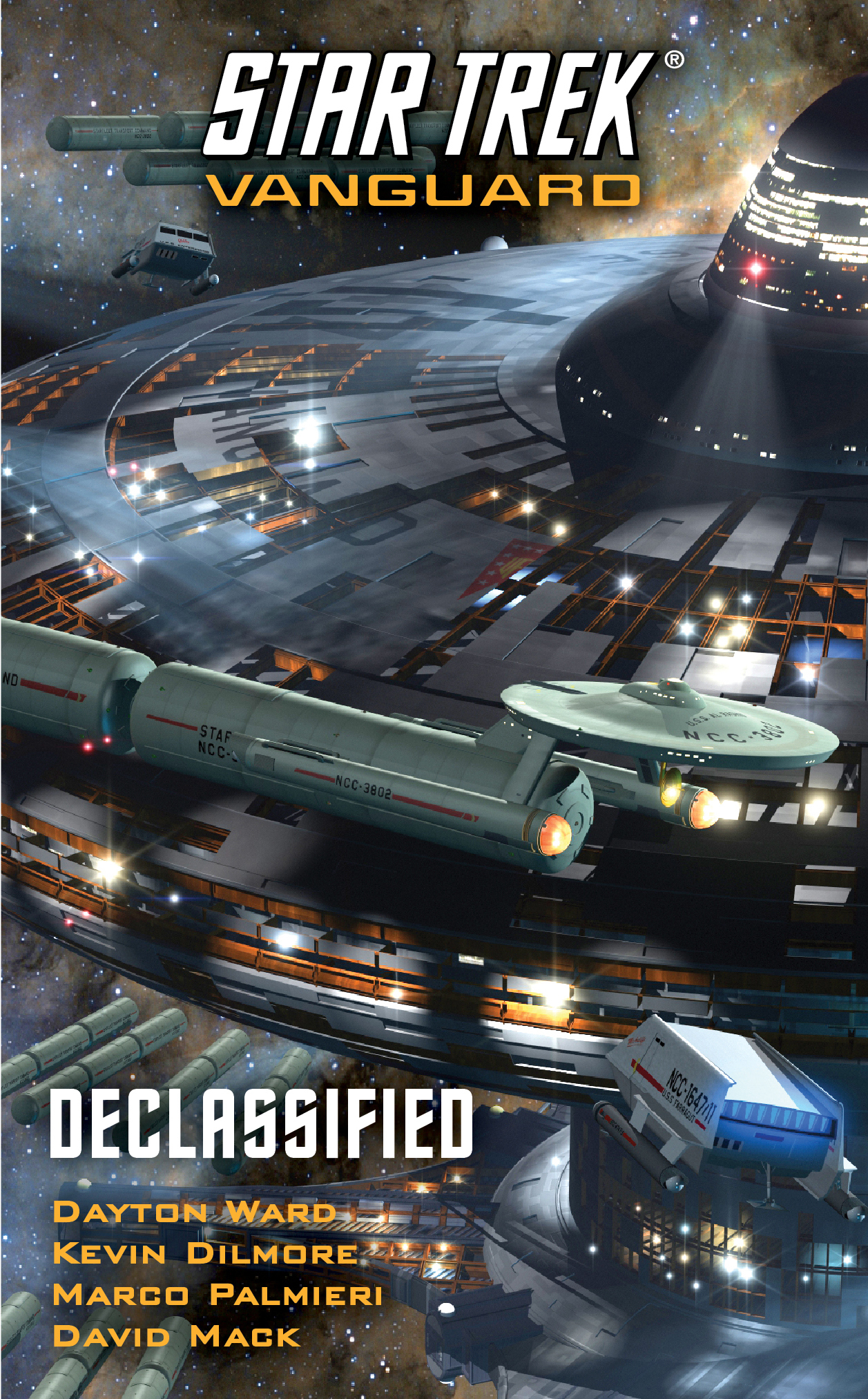
Cover image courtesy of Pocket Books
As my pal Drew can attest, I recently discovered the Star Trek: Vanguard series of novels and have gone ga-ga for them. They take place during the original Star Trek series run, right around the time of the episode "The Tholian Web" on a far-flung starbase 47 called Vanguard.

In addition to having a well-written cast of characters both main and incidental, the diverse spectrum of characters is well-represented. There are plenty of black people, people of color, gay characters, characters of faith as well as skeptics, and plenty of call-backs and calls forwards to other moments in the series. And none of these characters suffer from "tokenism". They are are relevant to the plot, which manages to weave cosmic shattering forces and threats to the Federation among other themes like struggling with depression, addiction, the role of a free press in society, classified warfare, and morality.

I'm on the 8th and final book, and I'm going to be a little sad to see the series end, myself, because I've grown invested in both the setting and the characters-- something I certainly wasn't expecting when I first picked up the books for a little light reading during my commute!

Though the Vanguard series ended a few years ago, author David Mack still gets email about it from readers every week. One reader wrote him to let him know that after Mack included a Vulcan woman who is (gasp!) a lesbian, that reader would never buy a book from him again! Mack responded on his own blog, and the response is awesome. An excerpt:

If he thinks the fear of alienating a few closed-minded readers is going to stop me from writing stories that feature and promote characters of diverse backgrounds—including LGBTQ characters, persons of color, and people who belong to ideological or philosophical minorities—he must be out of his mind...  
...[W]e’ve tried to make our literary dramatis personae more closely resemble the people of Earth. We’ve tried to include more people of African, Asian, and Southeast Asian ancestry than were seen in the televised and feature-film stories. We’ve tried to incorporate characters who hail from many cultures and viewpoints. We’ve tried to imagine a future in which people of all faiths have learned to live in harmony with people of other creeds as well as those who prefer to lead purely secular lives.  
We’ve tried to depict a future in which people’s gender identities are no longer limited to some arbitrary binary social construct, but rather reflect a more fluid sense of personal identity. 
I will never be made to feel shame for doing this. 

You can read the entire post here.

Thursday, July 31, 2014

Someone Like Me: What Children's Stories Can Teach Minority Kids

Image via spesiria
Why do so many princesses looks the same? In a moving personal essay entitled "Challenging “Normal”: Why Non-Token Diversity in Kids’ Storytelling Is Important", Navdeep Singh Dhillon uses a recent heart-breaking incident with her young daughter to posit that in media for children, most characters that are not white only seem to be defined by their “otherness. An excerpt:

On New Year’s Day, we are heading out to brunch, and Kavya’s sitting on the stairs, her head in her hands. Crying. I ask her what happened. In most cases, we verbally abuse the pain-inflicting object, followed immediately by a good stomping, and that sorts things out. But this time is different. 

In-between muted, heaving sobs, she says something that I hadn’t expected for at least a few more years: “I want yellow hair. Like Rapunzel.” She points to the large, manga-eyed, blonde princess with tiny toothpick-wrists, smiling on her t-shirt. 

It’s one of those parenting moments where time stands still.  I fight the urge to say, “Rapunzel’s hair is stupid. She can go to hell.” 

My wife, Sona, sits on the stairs with Kavya and tries to comfort her. Sona’s parents don’t really understand the heaviness of what Kavya is saying, and view it as just a random tantrum. 

…Instead of berating Rapunzel for her physical appearance, I ask Kavya if she knows who my favourite princess is. 

She looks up at me. “Who?” 

“Princess Kavya.” I say, touching her nose. 

She starts crying even louder. After a bit, she says, “Why do you like Princess Kavya?”

In fact, Sona wrote an essay herself on why she co-founded CAKE Literary, a literary development company that focuses on high concept fiction with a strong commitment to diversity.:

“Growing up as a little brown girl—one of the few, back then—in small-town, suburban central New Jersey, books were my escape. I caused a ruckus alongside little Anne in Avonlea; I mourned Beth along with her sisters in the harsh winter of Maine; I honed my grand ambitions like Kristy and her babysitters’ club; I even swooned alongside Elena over the brothers Salvatore when The Vampire Diaries was originally released. (Yes, I am that old.) 

But if you’ll note: in all those books and the hundreds of others I devoured, I never really saw myself, or anyone remotely like me. The majority of characters in books for kids and teens in the ’80s and ’90s were white. And, according to Christopher Myers in his recent New York Times piece, “The Apartheid of Children’s Literature,” the majority still are today, by quite a landslide. 

Why is this worth discussing? Because it hurts. A lot. It’s a hit to a kid’s self-esteem to be told—silently, but oh so clearly—that their story is not worth telling, that their voice is not important.”

Image courtesy of dakotaa.deviantart.com

In the meantime, many artists on tumblr have contributed to This Could Have Been Frozen, featuring different takes on Disney's Frozen recasting the lead characters as people of color. While Frozen takes its cues from the fairy tale "The Snow Queen," they points out that not all Europeans are white, and the movie explicitly references Saami culture in the way many characters dress.

Some people may be wondering what the big deal is? Stories are stories, and books are books, right?

Wrong.

Stories help kids understand the world. When there are entire sections of society that are barely represented-- or worse, neglected-- then it becomes harder for kids to idetiny with, understand, or empathize with them. It's even worse when a minority kid  doesn't see anyone like them in the stories they read or the media they experience, because they miss out on that sense of belong, of being a valued part of society, and of getting to identify with the heroes in books or on-screen.

Author Deepa D. outlined this feeling in "I Didn't Dream of Dragons" in a personal essay that is still relevant almost five years later:

When I was around thirteen years old, I tried to write a fantasy novel. It was going to be an epic adventure with a cross-dressing princess on the run, a snarky hero, and dragons. I got stuck when I had to figure out what they would do after they left the city. Logically, there would be a tavern. But there were no taverns in India. 

Write what you know is a rule that didn’t really need to be told to me; after having spent my entire life reading books in English about people named Peter and Sally, I wanted to write about the place I lived in, even if I didn’t have a whole bookcase of Indian fantasy world-building to steal from. And I couldn’t get past the lack of taverns. Even now, I have spent a number of years trying to figure out how cross-dressing disguise would work in a pre-Islamic India where the women went bare-breasted. When I considered including a dragon at the end of a story, I had to map out their route to the Himalayas, because dragons can be a part of a Tibetan Buddhist tradition—they do not figure in Hindu mythology.

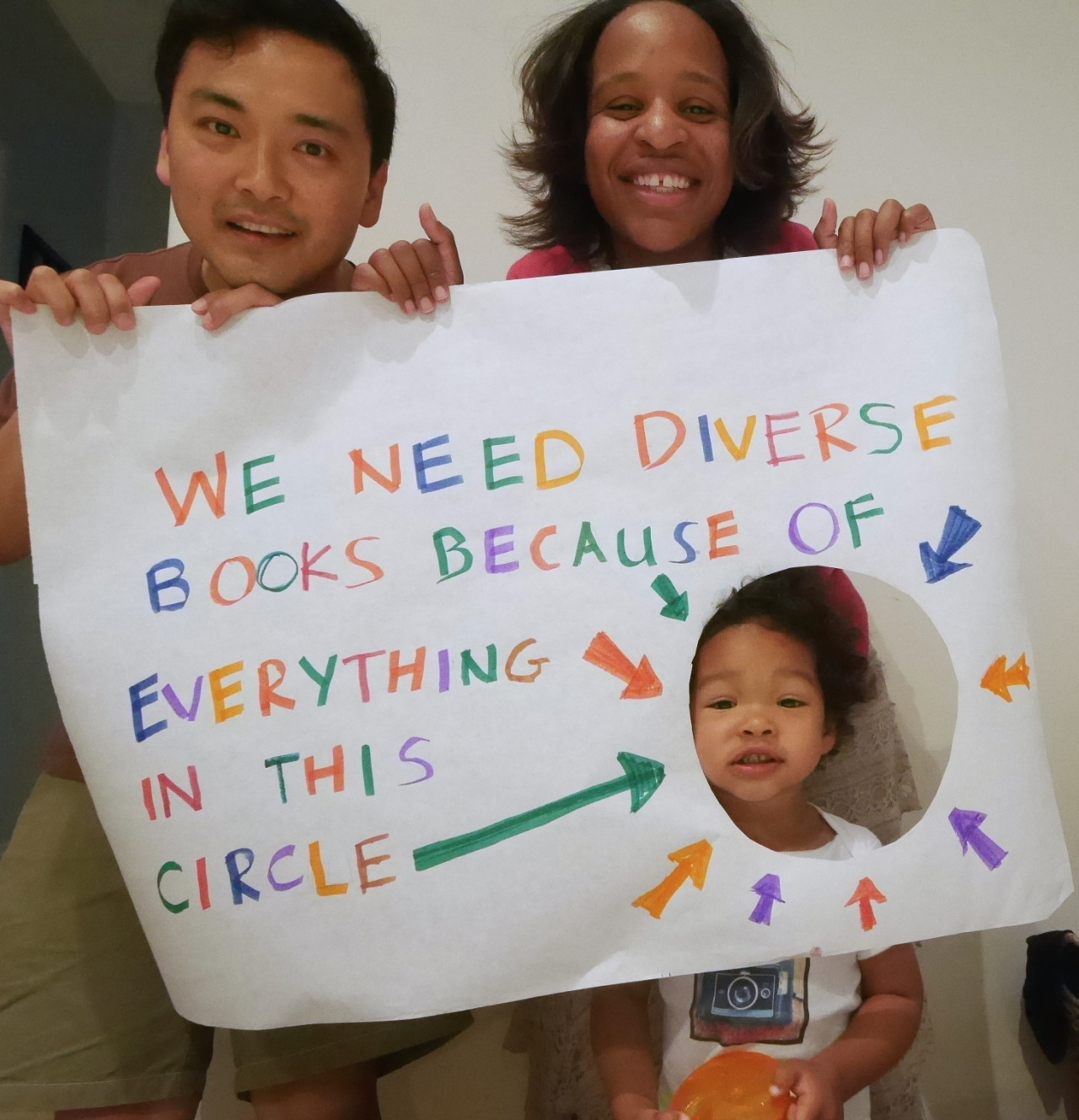
Image courtesy of We Need Diverse Books.

Wednesday, July 23, 2014

Not Just A Character Quiz... But a Character Adventure

Image via sharksden.deviantart.com
You might be forgiven for thinking this is like those uncounted number of buzzfeed personality tests passed around Facebook, tumblr, or the like, but The Fantasy RPG Character Class is a little more involved.

For starters, it offers about one hundred different possible character class results. How does this test manage that, you might ask? Well in addition to the standard fantasy-flavored personality questions, you can also go on an optional 4 part adventure that has some twists and turns, depending on your previously chosen answers.

You can take the test here! Feel free to share what you got in the comments.

Tuesday, March 24, 2009

Fantasy Novel: Amy Tan Meets Crouching Tiger, Hidden Dragon

[info]coffeeandink asked people to recommend books by people of color. She got a response from Cindy Pon:
i've got a YA asian fantasy coming out in
may : Silver Phoenix

when i met with a [sci fi/ fantasy] publisher
at a writing conference last year, he had read the first
12 pages and said to me : "why is this fantasy?
this is amy tan meets crouching tiger."
like it was a BAD thing.

also : "asian fantasy does not sell."

i was crushed.
Fortunately, another publisher bought the book, and Silver Phoenix: Beyond the Kingdom of Xia is coming out from HarperTeen in April. Seriously, "amy tan meets CTHD" sounds like an elevator pitch, not a rejection reason.

It's called Silver Phoenix: Beyond the Kingdom of Xia, and I just preordered it (thanks to trade-ins to Amazon's game trade). I'd suggest you check it out, too.

Share This Post