Showing posts with label gamer culture. Show all posts

Wednesday, July 12, 2017

Looking For Group: Gamers of Color Sticking Together

Image description: A tweet from twitter user sourcedumal that reads "when
there are 47 long flowing hair options in character creator but 3 natural hair
options: afros, cornrows, dreads. And they all look terrible."
Writing for Endgadget, Jessica Condit gave us "Gaming While Black: From Casual Racism to Cautious Optimism", and detailed how many gamers of color have either banded together or not engaged in voice chat just to be able to keep enjoying a hobby and form of entertainment important to them because social pressures and racial harassment follow them everywhere:
“The stories Allen could tell probably wouldn't surprise Dr. Kishonna Gray. Dr. Gray is an Assistant Professor at Eastern Kentucky University's School of Justice Studies, and the founder and director of EKU's Critical Gaming Lab, a hub for researching the immersive online environments within console gaming. She studies gaming and harassment from the player's point of view. "Most gamers of color have isolated themselves into private parties, private chats, or just don't engage verbally at all," Dr. Gray said. "And that's sad because they can't take full advantage of the gaming experience that they paid for. So what's happening is a virtual ghettoization of minority gamers. [...] Because a person's identity is automatically revealed when a person speaks, they are targeted. I call it linguistic profiling. As soon as someone hears how you sound, they engage in this practice. They hear how you sound and react based on that. So a lot of black gamers are called derogatory terms because of how they sound. They don't have to do anything but sound black."”
While thre are still some that would cling to the dismissive response of video games and online game not being a part of the real world, Dr. Gray disagrees:
"Gaming culture is a direct reflection of our society," she said. "The only reason racism and sexism run rampant in gaming is because racism and sexism run rampant in society. But in physical spaces, mostly, it's not overt. It's subtle. It's covert. So, yes, these issues manifest in a similar manner in gaming, but I contend that they present themselves worse. It's not subtle. It's in-your-face racism. A black person may not be called a [n word] to their face, but they can almost guarantee it will happen in virtuality."
Although the article was written in 2015, not much has changed. The entire article is a fascinating read, so go read the whole thing.

Monday, April 17, 2017

Dramatic Failure: Serial Harasser Zak S. Joins White Wolf

Photo of Zak Smith courtesy of White Wolf.
It recently came to light that Zak Smith, the serial harasser who clings to the ass of the role playing game industry like a boil you can't lance, managed to find continued employment.

This time, Zak's managed to attach their lamprey-like mouth to the mobile division of White Wolf (WW) as the co-author of Vampire The Masquerade: We Eat Blood, as announced here. Notably, this announcement blog post from WW also includes the following concluding paragraph:
Regarding the recent accusations made against our freelancers: White Wolf was aware of and investigated the previous accusations against Zak before contracting him to write and illustrate the game script. Fortunately, these accusations all pertained to alleged online behavior: each accusation is connected to an online discussion, and the digital records of these discussions can be located and reviewed. White Wolf’s investigation concluded that the accusations are false, and that Zak did not engage in the alleged behavior. We have full faith in Zak and Sarah and are excited to see their great work with the World of Darkness spread!
It's notable because this paragraph confirms that White Wolf has not just gone creatively bankrupt but morally bankrupt, too. Aside from the fact that WW decided to hire a sentient trash pile that assumed the shape of a person, WW's decision is puzzling because Zak Smith has used his fanbase  to harass people important to WW's past, like David Hill (Chronicles of Darkness, Changeling) and Avery Adler (Monsterhearts). David Hill writes of the harassment he received:
The phone call that I received came from a cheap prepaid phone purchased in the city he lives, but millions do. The phone call directly referenced him, and things he's specifically obsessed with. Around that time, I received an email rerouted through the United Arab Emirates which featured a photo of my child's school and a number of very specific threats... it referenced things he's said about me which were not true, and at the time, he lived some 20~ minutes from me.  
I know every time he brings me up, because I tend to wake up to a stream of threats and very disturbing anonymous messages.  
For the past seven or so years, he's screen-shotted and saved everything I say online, even things I've said in private groups, in spite of thorough blocks. I've had to aggressively block people suspected of being his sock puppets. At one time, a friend of mine being harassed by him actually had an associate who is a plagiarism expert identify a few of his sock puppet accounts who write exactly like him... He's been impersonating [an] RPG net mod for over a year... When called on it, he said it wasn't him and it didn't happen. When logs were shown, his story changed and now he's saying it isn't him, but someone that shares a computer with him, who has been impersonating this community figure for over a year to defend him and talk him up. And who writes with an almost laughably similar style to him.  
My issue is that he stalks me. He saves everything I say online. His fans threaten me and my family. I have tried for the better part of a decade to get him to leave me the fuck alone, but he absolutely under no circumstances will not. This isn't some thing where I can sit down with a cup of tea and meet him half way... This is not some rational disagreement. He's a stalker. He's an abuser. I'm not going to kindly ask him to pretty please stop abusing me and everyone else he's abusing. Because I have before. It didn't work. It won't work.
In 2015, I covered Zak Smith's use of a website he ran to snipe, misgender, insult and harass anyone Zak didn't like. But the documentation of Zak Smith's harassment doesn't end there. Here's a first-hand account from another one of his targets of one incident, and then a master post of what Zak did over the course of three and a half years. Here's a 3 part post from another woman in tabletop gaming Zak Smith has harassed detailed what she was put through: Part One, Part Two and Part three.

Zak Smith also has a secret group he uses to co-ordinate his followers into his private harassment army.

And just when you thought that GamerGate's fever dream given flesh couldn't sink any lower, here's how Zak Smith used a charity to force his harassment victims to have to interact with him.

At this point, it's a pretty good idea to view seeing Zak Smith's name attached to anything in the same way you'd view watching a cockroach skitter out of a diner's restaurant kitchen: a warning sign for you to take your business elsewhere, lest you consume something disgusting.

Thursday, January 28, 2016

Are Hardcore Gamers The New Right Wing Conservatives?

Description: Stephen Colbert, dressed in a business suit &
seated at a desk, raising a pitchfork. the caption reads "Unleash
Nerd Fury!"
 In the mid-to-late 90s up to the the early 2000s, there was a lot of sound and fury and fear about censoring video games, worries about the resultant effect on free speech and the possibility of strangling video games as an art-form before it even left the cradle. There were Congressional hearings on video game violence, pundits bloviating in newspapers, magazines and online, and reactionary conservatives seemingly pinning blame for video games on everything from the Columbine massacre to the collapse of the nuclear family. But for all the sturm und drang, all the worries about legislators attempting to legislate morality... nothing really came of it. As the Houston Chronicle's Jeff Rouner outlines in "Have Gamers Become The New Religious Right?":
However, though there was a lot of talk about official censorship there was never really any serious chance it would happen in America. Video games were declared free speech by the Supreme Court in 2005 in a 7 – 2 decision, and Nintendo had given up their dream of completely family-friendly entertainment by 1994. Mature content became a badge of honor to the gamer community. It was proof that the medium couldn’t be stopped by moralistic thugs determined to protect us from ourselves.
So what happened?
Journalists like Leigh Alexander and Mattie Bryce as well as YouTubers like Anita Sarkeesian began looking at game content, both narrative and mechanical, and examining what that content said about us. It was not, as a lot of gamers like to claim, a call to censor or ban that content. It was just looking at it in a more thoughtful and nuanced way. With games now protected by all the power of the First Amendment, you would think that discussion over them could flourish more freely since they were in no danger of being taken away. 
That’s not what happened, though. Organized retaliation against the concept of conversation and dialogue in the form of 4chan ops and GamerGate happened instead. Sarkeesian’s videos were constantly flagged on YouTube in an attempt to take them down and online campaigns to have various journalists discredited or fired became a new way of life for anyone who dared deconstructing games from a social justice perspective... Criticism of the status quo, no matter how mild, is felt like an attack on a person’s morality. Religious people in the ‘80s who were comfortable with traditional gender roles took the idea of someone else rejecting those roles as a judgment. Likewise, players who are perfectly happy with a white, male-centric, violent, heteronormative status quo in gaming feel judged for that happiness when marginalized people and their allies speak up about how it affects them.
How bad has it gotten? A couple worked together for a year on a game called "That Dragon, Cancer" as a way to help process and explore their grief as well as the boundaries of games as an interactive medium. And hardcore gamers howled with outrage. Over a game a couple made born from their experiences of watching their infant son wrestle with cancer.
Unfortunately, Feminist Frequency gave the game a good review, and so of course the horde has descended on Steam to flood the forums with cries of “feels-marketing” and saying the Greens immoral for not donating profits to cancer research. Bear in mind, none of these people have actually played That Dragon, Cancer. They just hate it because a bunch of other people they normally pick on all got together and said it made them feel something.
So readers, I ask you: what are moderate gamers to do? Sound off in the comments below.

Monday, September 7, 2015

Fake Geek Girls, Real Fans And Your Brain

Description: the caption "this is a gamer" is displayed over a
cartoon drawing of a woman with tied-back long hair, wearing a Triforce
T-shirt, jeans, and sneakers. Next to her is a woman with loose long hair
wearing a tank top, mini-skirt and heels, captioned "This is also a gamer."
Below it reads "How you dress does not define how much of a real gamer you
are. A gamer plays video games. The concept is not that difficult, you bunch
of territorial turbo-nerds."
Writing at the Fandom MetaReader, blogger teaberryblue brings up an excellent point  that is often overlooked in think pieces about territorial men, nerd gatekeepers and so-called "fake geek girls". Some of the common defenses offered are:

  • cosplay is just as real as any other
  • women have been playing or reading or participating just aslong as men
  • women can be real, passionate fans of things men like
... etc, etc etc. And while these and many other reasons are all correct, and all true, teaberry blue points out that they leave out some very important truths, too. They write:

 "...there are women and poc and queer people who are fans and collectors and have an incredible wealth of knowledge and shouldn’t be treated like second-class citizens in fandom.
But it’s not because of that knowledge.
 
It’s because no one deserves to be treated badly or like they aren’t good enough just because they don’t meet your standards. 
It’s because there are no standards for being a fan. There are no real fans or fake fans. 
And even if you’re "not really" a fan?  If you really do just like the tee shirt design or thought a costume was cool and decided to wear it? There’s actually no rule against that.  You are not less of a human being for not knowing a lot about a character you dressed up as.  You are not less of a human being for not knowing the secret identity of the superhero on the keychain you bought because she kind of looked like you.

I think that's something that we need to remember. Fans shouldn't ultimately focus on rewrint a definition of "real fans" in order to accept that there are people out there we don’t think of as real fans who might actually be. We need to accept and embrace the idea that the "real fan" isn't a real thing.

Wednesday, January 7, 2015

Steam Users to Valve: #GamerGate Group's Gotta Go

A few months ago, Steam introduced what was called the "Discovery Update" to the service. One of its biggest additions was introducing something called "Steam Curators". Curators can be any individual or organization who has opinions about games and wants to share them, and Steam offers a home page where the group list its recommendations.

Unfortunately, Steam helpfully will recommend groups to you whether you want to or not, which is how users have reported being shown the Gamergate Recommends curator recommendations:


And when a group is recognized as a Curator, there's more than just a homepage with game recommendations. These recommendations also appear in the official Steam stores, right near the "add to cart" button. User [FoH]Fansy screencapped what appeared on the official Steam store for Shantae: Risky's Revenge The Director's Cut:


I wrote about the harassment , the misogynistic, and hate-group roots of the the gamegate movement, and it's sadly chugged along, making increasingly desperate stabs at relevancy. While Steam added the ability to hide recommendations it's both poorly documented and a band-aid solution. You can read the discussion [FoH]Fansy started in the official Steam Suggestions forum here.

Thursday, August 28, 2014

Writer Reveals The Truth About Zoe Quinn & Women In Tech


It's been a hell of a week for a few prominent women in video games. Just two days ago, Anita Sarkeesian got explicit, credible threats to her family, address and loved ones that she actually had to call police and move herself and her family out of their home for a night.

I've written pretty extensively about the campaign of harassment that's surrounded Zoe Quinn in two posts: "Not Okay: Hateful Man-Babies Target Zoe Quinn. Again." and "If You Call This Justice, I Don't Want Your Support". Since publishing those two posts, I've gotten comments, tweets and emails (the majority of which are unsigned) saying I was spreading a campaign of lies, that it was incumbent upon me to tell "the truth" about Quinn.

Yesterday, Elizabeth Sampat wrote a post called "The Truth About Zoe Quinn". Here's what she had to say:
The truth about Zoe Quinn is that no one in the world deserves the shit that she has gotten. The truth is that these witch hunts over journalistic ethics and transparency and whatever bullshit dog whistle that 4chan and its ilk are using for their issues with a woman’s sexual agency are driving women out of the industry.
...The truth is sometimes I have survivor’s guilt, and sometimes I have panic attacks about being the only one left fighting, and sometimes despite all of my tough words and the fact I literally cannot imagine doing anything else with my life, the truth is that I can’t stop thinking about maybe leaving the industry. I don’t want to; the thought is like an involuntary tic, tugging at my consciousness. Maybe it’s a survival instinct. I keep using the word “survive” but I can’t help but wonder: is this surviving? What parts of me are surviving? Can any woman escape this whole? 
...The truth is, a lot of the women who are being driven away have never met or interacted with Anita or Zoe. A lot of the women in our industry exist in a constant state of fear.  
Women who make games and would never dream of connecting their face or real name with a Twitter account, just in case.  
Women who would never go indie. Women who are terrified of starting a crowdfunding campaign but who can’t get their dreams funded any other way, and so their dreams just die.  
Are you okay with this?  
Is this the industry that you want?
It certainly isn't one I want. However, a lot of men don't realize they're complicit in creating this atmosphere, either by inaction of playing devils advocate. In the comments section almost every games news site I've seen there will be comments that start out with the obvious “What happened was horrible! I can't believe people would stoop so low" and then follow up with a huge "BUUUUUUUT look, her videos are so controversial and maybe if she hadn't been nicer or less emotional or were virtuos or didn't game people a reason to mad it would happen blippety bloo it's just my opinion blorpety blah not all men and not all gamers blah blah devilsadvocatecakes." It's maddening.


Friday, August 22, 2014

If You Call This Justice, I Don't Want Your Support

Image courtesy of shutterstock.com
After my post on the unacceptable torrent of abuse that has been heaped upon Zoe Quinn by misogynist nerd man-babies so desperate to deny that the little clubhouse of video games is changing that they are perfectly happy to take a vituperative screed from her ex-boyfriend and run with it to harass, hack, speculate, insult and demean her by claiming that the private sexual life matters because she's a women making a game they don't like, , someone anonymous left a comment saying that I should link to "unbiased sources". The sources the comment linked was one tumblr post labeling her everything from a "shit-tier developer" to literally calling her a whore that faked every single bit of her abuse, harassment and public hacking at the center of an industry-wide conspiracy (that comment's gone, now, btw).

Prominent youtube "personality" joined the pile-on, with Youtuber JonTron linking approvingly to a pornographic slander comic, and then later approvingly linking to a fan comparing the outcry against his actions to black people being lynched.

Other games industry writers from Stephen Totilio and Patrick Klepek to Leigh Alexander and Jenn Frank took to her defense. One of her most prominent game developer defenders of Zoe Quinn was Phil Fish (who had recently returned publicly to twitter to comment on the human rights abuses in Ferguson). This week, both his twitter account and business website Polytron were hacked, and personal details were released-- everything from back accounts to home address history, along with a data dump of 1.5 GB of developer only assets and financial records for FEZ and his business. After he regained control of his accounts, he announced he was selling off the FEZ IP, the Polytron assets and leaving video game development for good.

Liz Ryerson has a cutting analysis of these angry, scared self-appointed gatekeepers:
Zoe has become the scapegoat for every bit of internalized misogyny and misdirected rage these people felt. she appears to them an amorphous assemblage of everything that is viewed as wrong with women - manipulativeness, sluttiness, being an 'attention-whore'. the idea of trusting the word of a frighteningly narcissistic ex who's out to ruin her reputation is fine with them, because it meshes with their worldview... 

...often it's a conservative, reactionary anger that comes out of disillusionment and fear, and gets constantly externalized onto marginalized people, especially women and queer people. they struggle to understand and adjust to a rapidly shifting cultural landscape, in and out of games, that's moving away from traditionally catering to them and their empathy-deficient values into something more culturally sensitive and aware. and so they find simple explanations for these complex phenomena that fit within their bigoted worldview - boogeymans of evil, manipulative and misleading women like Zoe Quinn or Anita Sarskeesian. they view themselves as anti-authority and anti-power, even as their actions are tremendously conservative and tremendously serving of the interests of power.

The outrage over alleged private infidelity that never even resulted in an actual review lays bare the lie that this is about hand-wringing over worries of "journalistic ethics" and shows instead that those joining in on the pile-on really just see women as a threat to the world of video games and other geeky hobbies, and are ready to rage and holler and attempt to intimidate any woman they decide is somehow a threat at the flimsiest provocation. If you really cared about favorable review currying for games, you'd maybe throw some of this vitriol at the industry practice of only releasing game information to friendly outlets, perhaps.

It shouldn't be up to women to fight these battles alone. As I mentioned in my post about what men need to do about the harassment of women online, we need to make it absolutely clear that this behavior is unacceptable and that anyone that feels otherwise is unwelcome.

So let me make this crystal clear: If you support the harassment of Zoe Quinn or her supporters, if you think you are doing the right thing by shaming her about her private relationships or sexual history, if you think that anyone harassed in the way she has been "had it coming" or that by doing any sort of gate-keeping to women in your hobby you are fighting the good fight-- I don't EVER want your support.

Don't visit my blog. Don't support my patreon. Don't donate to me. Don't read my work or play my games. Don't listen to my podcast. You are not welcome here on The Code, and I don't want you as a fan.

I call on major gaming sites to issue clear condemnations of this behavior in general and defense of Zoe Quinn in particular. When fans or site visitors heap abuse on women that criticize actions or inaction of those in the industry, it because these harassers and misogynists view this as okay thing to do. And if your site policy doesn't explicitly forbid these attitudes and actions from your audience, the toxic elements of your audience view this sort of pile on as implicitly okay. Look at the harassment of Courtney Stanton and Maddy Meyers by webcomic fans, the harassment of Samanta Allen by Giant Bomb fans, the pile-ons from 4chan and reddit and totalbiscuit and jontron fans and elsewhere of Zoe Quinn.

It is unacceptable and unforgivable. You are not noble truth seekers. You're just flinging shit.

Wednesday, August 20, 2014

Not OK: Hateful Man-Babies Target Zoe Quinn. Again.

Image via shutterstock
 Zoe Quinn, the indie lead developer behind the emotionally moving interaction fiction game Depression Quest recently released for free on Steam, as well as Narrative Designer for FRAMED, is being targeted by an unruly mob of misogynist anti-feminists (both overtly and under the guise of being concerned with journalistic integrity) again.

She was first targeted last year when her attempt to get Depression Quest approved via Steam's Greenlight program was cancelled after she was the target of a harassment campaign from a message board. The harassment bled from online into her offline world when her private phone number was published, leading to harassing and obscene phone calls. 

She resubmitted Depression Quest to the Steam Greenlight program a second time, and this time, despite the harassment from reddit, twitter, 4chan, and down-voting campaigns on Steam itself, Depression Quest was approved and released on Steam last week.

Now the same brigade of angry dudebro gamers are claiming Quinn is corrupt, or corrupting Kotaku, or setting back women developers? Quinn tweeted about her parents' phone number getting obscene phone calls. The sub-reddit r/Gaming has a post from its moderator calling out the egregious, harassing behavior of its members-- only to receive nearly 2,000 down-votes.Why? Thanks to a multi-part blog series by an angry ex-boyfriend that did nothing but air out relationship problems in public. Suddenly, men that would not bat an eye over sexual behavior were it done by a fellow dude are calling for an end to her career.

Quinn herself addressed the matter as much as it deserved in a blog entry on Monday:
I am not going to link to, or address anything having to do with the validity of the specific claims made by an angry ex-boyfriend with an ax to grind and a desire to use 4chan as his own personal army. This is not a “she-said” to his “he-said”. The idea that I am required to debunk a manifesto of my sexual past written by an openly malicious ex-boyfriend in order to continue participating in this industry is horrifying, and I won’t do it. It’s a personal matter that never should have been made public, and I don’t want to delve into personal shit, mine or anyone else’s, while saying that people’s love and sex lives are no one’s business. I’m not going to talk about it. I will never talk about it. It is not your goddamned business. 
What I *am* going to say is that the proliferation of nude pictures of me, death threats, vandalization, doxxing of my trans friends for having the audacity to converse with me publicly, harassment of friends and family and my friends’ family in addition to TOTALLY UNRELATED PEOPLE, sending my home address around, rape threats, memes about me being a whore, pressures to kill myself, slurs of every variety, fucking debates over what my genitals smell like, vultures trying to make money off of youtube videos about it, all of these things are inexcusable and will continue to happen to women until this culture changes. I’m certainly not the first. I wish I could be the last. 
Because I've had a small degree of success in a specific subculture, every aspect of my life is suddenly a matter of public concern. Suddenly it’s acceptable to share pictures of my breasts on social media to threaten and punish me. Suddenly I don’t have any right to privacy or basic dignity. Suddenly I don’t get to live out normal parts of life, like going through a bad and ugly breakup in private. I have forfeited this by being a blip in a small community, while those who delight in assailing me hide behind their keyboards and a culture that permits it, beyond reproach. 
My life and my body are not public property. No one’s life and body are public property.
And that's what it boils down to-- a bunch of sexist shook gamers acting like gatekeepers and hypocritically talking about ethics and integrity while trying to bring up a women's private life as a detriment to her career. Talking about fighting corruption while harassing her via reddit and twitter. Talking out of one side of their mouth about the truth while talking gossip and character assassination with the other.

This is unacceptable. It's unacceptable to happen to Zoe Quinn. It's unacceptable to happen to any women in the games industry. This happening to even one woman is one too many, and while Zoe Quinn isn't going anywhere, a number of bright, talented women writers in the gaming scene have been targeted, harassed and hounded-- Anita Sarkeesian, Samantha Allen, Courtney Stanton, Maddy Meyers, and Brianna Wu are the most recent that come to mind. Samantha Allen actually stopped writing about games because of the daily level of constant harassment. 

I covered a bit on the difference between the harassment men and women get in the games industry in "Mythbusting Ideas About Women In Games" that excerpted from Brianna Wu's article as well as linking to an example provided by Sarkeesian, but I want to quote from the end of my post "The Status Is Not Quo: Being A Geeky Woman Online & What Med Need To Do":

Women's hurt and fear for safety and the emotional toll for being harassed online have real, chilling impact on discourse.

This is unacceptable. And the burden of speaking out shouldn't continually fall to the women being harassed. So what can we do? Guys, we have to loudly speak out against this behavior. We have to support women in our creative and media spaces. We need to let other men know that this behavior is not okay, and we need to make it socially unacceptable. We need to listen to women's experiences-- really listen, and not just wait for our chance to say "not all men". We need to realize that online harassment isn't something that just happens-- it's a choice that is made, it is a crime that is done.

As Andy Kouri says in "Fake Geek Guys: A Message to Men About Sexual Harassment":

It is wholly and rightfully and crucially up to men in this society and especially in this subculture to speak out and watch out. To end the cycle of bullying, harassment and violence. To recognize the grotesque irony of degrading women over matters of heroic fictions whose lessons about fairness and decency we've supposedly been studying since we were just little boys, and to start putting those ideas into practice as grown-ass men.


It's not just a few bad apples, guys. It's a lot of bad apples. These are guys that think they represent gamers, that they say what other men are thinking. And we have to push back on this. If you care about safety, if you care about equality, you must push back on this. Staying silent in an attempt to be neutral isn't really being neutral. It just makes dissenting voices less common, and makes the misogynists think that they have your support.

Thursday, August 14, 2014

GenCon & Gaming's Race Problem

Image courtesy GenCon LLC
GenCon 2014 officially starts today. It's a four day convention that draws over 40,000 attendees to a celebration of gaming, from tabletop games, miniatures, war gaming, board games, collectible card gaming and the like. This year will be its 47th year of operation, making GenCon the longest running convention of its kind (Friend of the blog, Drew of Drew's Robots will be there showing off his walker robot throughout the convention, btw).

However, for all of its long and storied history, there is little doubt that its demographic makeup hasn't changed as drastically as it could have. As A.A. George writes, in "Gaming’s Race Problem: GenCon and Beyond" for Tor.com:
As a lifelong gamer, I am excited to go to GenCon. 
As an ethnic minority, I am apprehensive about going to GenCon. 
For all that GenCon offers, it lacks in minority gamers. Last year was my first GenCon, and as I explored the convention, I saw almost no one who looked like me. By far, the most visible minorities at GenCon were the hired convention hall facilities staff who were setting up, serving, and cleaning up garbage for the predominantly white convention-goers... 
... GenCon is emblematic of this problem. Of the twenty-seven Guests of Honor (in various categories), only two are people of color. The judges of the prestigious ENnie Awards for role-playing, hosted at GenCon, have been almost exclusively white since its inception. The same is true for the nominees and winners of the Diana Jones Awards. There may be more efforts to include people of color in gaming artwork, but where are the real life people of color on the grand stage of gaming? 
Furthermore, GenCon is disturbingly tolerant of deeply offensive material. Shoshana Kessock wrote about her experiences with Nazi cosplay and paraphernalia at Gencon shortly after returning from GenCon 2013, and I had similar encounters... GenCon has weakly worded policies to prevent these horrific violations, but it has failed to enforce its own rules.
There are lots of well-meaning gamers that say that race isn't a factor in what they choose to play or who they choose to play with. I've even heard a number of gamers insights that they don't even see color, just a gamer. A.A. George responds:
I’ve been told time and again by gamers, “I don’t see race” as if they were doing me a kindness. This is not enlightenment or progressiveness. It is ignorance. If you do not see race, you do not see me. You do not see my identity, my ethnicity, my history, my people. What you are telling me, when you say “I do not see race,” is that you see everything as the normal default of society: white. In the absence of race and ethnicity, it is only the majority that remains. I am erased.
He does have suggestions, however, on what allies, advocates and those that want to make gaming an open, inclusive and more accepting and diverse:
  • Listen. The Gaming as Other series is a great place to start. There are a handful of panels at Cons on the topic and I’ll be sitting on two of them at GenCon: “Why is Inclusivity Such a Scary Word?” and “Gaming As Other.” 
  • Keep engaging, listening and supporting. We notice your support and it gives us the strength to keep going. 
  • Hire more people of color and give them agency, visibility, power, responsibility, and credit in a wide variety of meaningful and important areas in your organization. Do not simply hire a token minority. Do not use people of color as a form of marketing. 
  • Reach out to minority groups and invite them personally to conventions. Your neighbors, your co-workers, the people at your church, all of them. 
  • Offer and play games that are actively and intentionally more inclusive.
These are all excellent starting points. I'd also encourage you to read the entire post of George's, because he addresses how fantasy gaming both helped and hindered acceptance his own identity.

Wednesday, August 13, 2014

Fashion Is A Legit Gameplay Mechanic

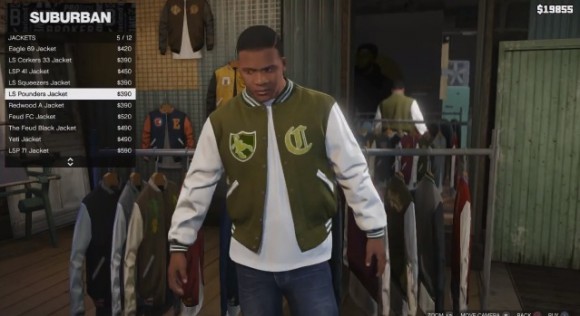
gta v fashion.jpg
Image courtesy of Janine Hawkins
Janine Hawkins has an excellent article in Paste Magazine today entitles "How Grand Theft Auto V Is Just Like Barbie" about the intersection of dress-up play, fashion and video games, and argues that whether it is in a video game centered exclusively around fashion, or is an incidental part of the overall game, it is an intersection that is both crucial and fascinating to explore:
When you think of the intersection of fashion and gaming, it’s unlikely that Grand Theft Auto V is the first thing that surfaces in your mind. Instead, you might think about those “Girl Games,” almost invariably packaged in a shade of pink equal parts magnetic and repellant, interspersed between the “good” games on a store shelf. If you’re up to date on your mobile gaming, you may just think of Kim Kardashian: Hollywood and the polarized reception it received. Fashion is a common subject of many games targeted towards girls and women, and it’s also easily one of the most derided in gaming...
...My point isn’t that there are good fashion games—it’s that placing an importance on fashion-play doesn’t taint a game. If you don’t believe me, just look at Grand Theft Auto. The fashion system present in Grand Theft Auto is a significant part of the experience of existing in its open world, and has been developed and refined with each installment... Players now post videos on YouTube modeling their favorite outfits and the latest clothing DLC for GTA V and Grand Theft Auto Online, and these videos have nothing to do with what pieces provide the best stat bonuses or buffs.
This is absolutely true, and not just for the GTA series. One of the key appeal for the WWE franchise of videogames to me from the 32-bit era and beyond has been the ability to completely customize  and create your own wrestlers' appearance, from the exact body proportions to every pattern and stich of clothing. The last few installments of the series even let you create 3 seperate outfits: one outfit for cinematic scenes, another outfit for your wrestler to wear during the entrance to the ring and a third outfit to wrestle in, plus 4 other "alternate" attire outfits and clothing layering. That's a lot of outfit designs that's just for aesthetics, but still a big part of the game!

 That's how I spent  a bunch of time creating the jobber parody of "The Apex Predator" Randy Orton called "The Apex Redditor":

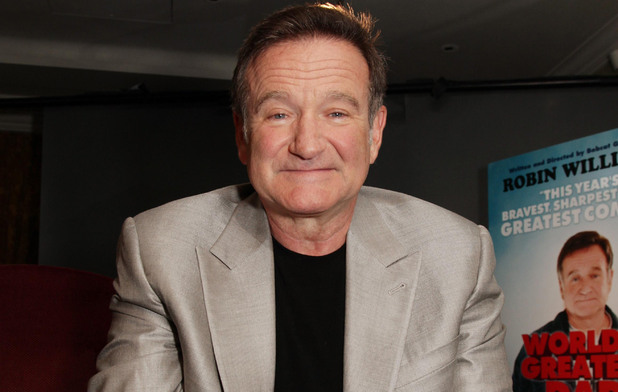
Robin Williams Officially Honored In World of Warcraft

Robin Williams
Image courtesy of PA Images/Yuki Mok/PA Archive
Following the passing of actor and comedian Robin Williams earlier this week, tributes have poured in across the globe, and across all forms of media, from career retrospectives on television to celebrities tweeting and writing essays on Facebook. The most surprising tribute to Robin Williams so far though is one announced by Blizzard earlier yesterday evening: Robin Williams will be immortalized as an NPC in World of Warcraft.

Williams was an avid video game player, counting Call of Duty, Wizardry, Half-Life and the Portal series among his favorites. He also was way into the lore behind the Warcraft franchise, especially of Warcraft 3's single player campaign. Acording to a petition by WoW players addressed to Blizzard campaigning for a tribute to Williams to be put in the game, he had a character on the Mannoroth server, and "was something of a troll in trade on good days or when anonymity allowed..." him the luxury of tweaking players in the chat channel. The petition went on to request that Blizzard honor the comedian's love for the game and its lore by memorializing him in the game as a non-player character.

A little more than a day later, Technical Game Designer Chadd Nervigg announced on Twitter that Blizzard was working on it.

In that vein, a similar petition has been addressed to Nintendo, asking that a character in the upcoming Legend of Zelda game for the WiiU have a character named "Robin" in tribute. This request might not be as out of left field as you think. While Williams was an avid PC game player, he was also an ardent fan of Nintendo's Legend of Zelda series-- so much so that he named his daughter, Zelda Williams, after Princess Zelda. He even appeared in 2 advertisements for Legend of Zelda: Ocarina of Time 3DS alongside his daughter:


As of this writing, the change.org petitions had nearly 6,000 signatures.

Tuesday, August 12, 2014

Telltale Games' Devs Eager To Kill Disabled Character

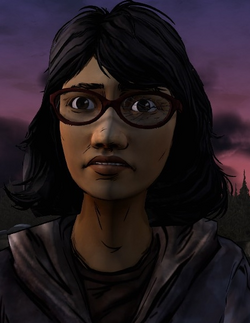
AmTR Sarah Evening
Note: This post has spoilers for Season 2 of The Walking Dead Game.

Telltale Games have had a successful run with spinning great episodic adventure games from licensed franchises while managing to stay true to the source material, from the goofy absurdity of Homestar Runner in the "Strong Bad's Cool Game For Awesome People" to the sci-fi adventures of the Back to the Future series. The praise has continued for its adaptation of a video game based on the best-selling comic book series and cable TV show, The Walking Dead.

The Walking Dead video game has also been given kudos in particular for its diverse cast. Women characters are well-represented and well written. There are a wide range of characters in a wide range of backgrounds, ethnicity and even body types.

The second season of Telltale Games' Walking Dead game introduced a new original character as part of that season's group of cabin survivors: Sarah, a Hispanic teenager girl presented as neuro-divergent and implied to have some sort of anxiety disorder, complete with disassociation and panic attacks. Her father Carlos is shown to be overbearing and over-protective.

While there were the usual complaints from gamer dudebros about women characters followed discussion of Sarah in the game, there was also a grimy patina of ableism. Players talked about Sarah being a liability or bringing the group down. Slurs used against people with disabilities were used to describe the character, and gamers took to Facebook and Telltale's official forums to talk about how they had the chance to kill Sarah, how they would be happy to get the chance.They uploaded videos to Youtube titled "I HATE SARAH" or videos about how the suggested she could die.

But this was all asshole gamer dudebros, right? Not like this gross language was being echoed by actual Telltale developers, right?

Sadly, it actually was, in a recent episode of the web series "Playing Dead" with the team behind The Walking Dead Game where they echoed all this gross language... and worse. Marissa has the details:
Greg Miller spent the entire segment on Sarah putting her down. 
 image
 image
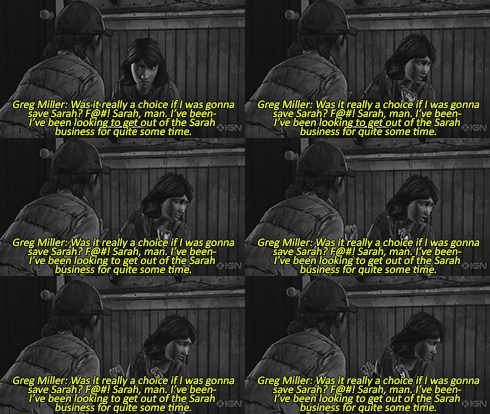
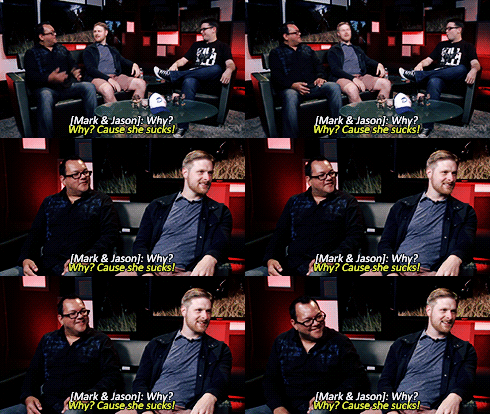
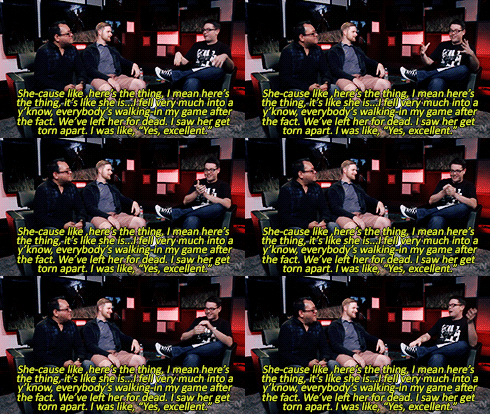
(“Was it really a choice if I was gonna save Sarah? Fuck Sarah, man. I’ve been looking to get out of the Sarah business for quite some time.” “Why?” “Cause she sucks!”)He talked about how glad he was to be able to leave her behind, and how happy he was to watch her get eaten. 
 image
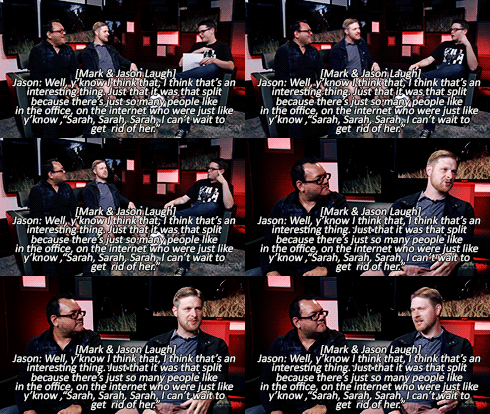
(“I saw her get torn apart. I was like, ‘Yes. Excellent.’”)Now, this would be bad enough. But we know Greg Miller is an asshole to female characters. He has been since Season 1. Where this went wrong, was this part: image
(“…there’s just so many people like in the office, on the internet who were just like y’know, ‘Sarah, Sarah, Sarah, I can’t wait to get rid of her.’”) 
The two Telltale employees publicly stated that people at Telltale were excited to kill Sarah. That they were waiting for a chance to do so. And that they listened to the ableist casual fandom who hated her and used that to go forward with her eventual pointless death.  
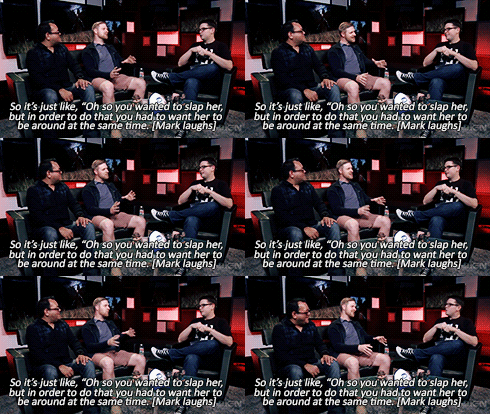
They then go on to make a joke about the fact that, in order to save Sarah, the player has to physically assault her while she’s in the middle of a shut-down. They joke that people who hated her wanted to slap her, but that would mean saving her, something they didn't want to do. 
image
(“So it’s just like, ‘Oh so you wanted to slap her, but in order to do that you had to want her to be around at the same time.’ [Mark laughs]”The final nail in the coffin... came from this part of the interview: 
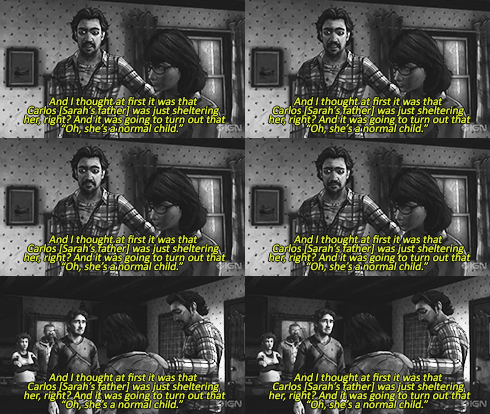
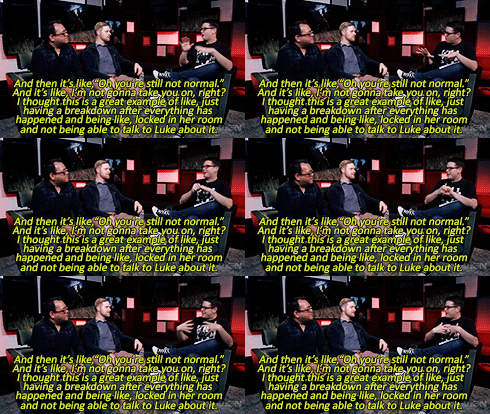
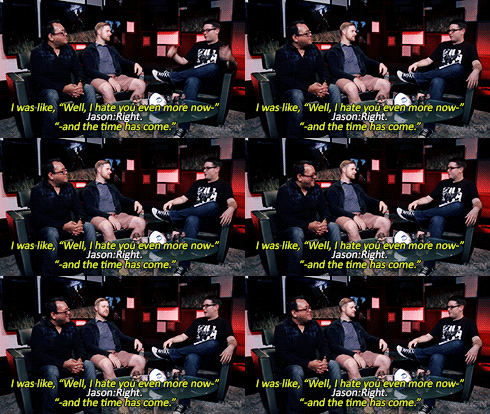
imageimageimage image
(“We meet her for the first time in Episode, I guess at the end of Episode 1, right?” ”Yeah.” “Where [Clementine] gets to talk to her. Something’s off about her.” “Something’s off. Yeah.” “This isn’t right.”"And I thought at first it was that Carlos [Sarah’s father] was just sheltering her, right? And it was going to turn out that ‘Oh, she’s a normal child.’”"And then it’s like, ‘Oh, you’re still not normal.’”"I was like, ‘Well, I hate you even more now.’ ‘Right.’ ‘And the time has come.’”)He tells the Telltale employees how he feels about Sarah “not being normal” and that he wants her to die for it - and they agree! 
This is unacceptable. It is disgusting and unprofessional for a studio to speak openly about how much they were looking forward to killing a disabled character, and to let shitpiles like Greg Miller speak in such an ableist way about her without saying a word in her defense - even agreeing with him.  
Disabled and neurodivergent players all over the internet are hurt by this. Several have tried to contact Telltale, to try to get some sort of apology or acknowledgment out of them, to no avail. So many players, myself included, are disappointed that this company - known for diversity and well-handled diverse characters - has botched the treatment of a disabled WoC so badly.
As Anna Anthropy said on twitter:
"yeah, i'm glad we could cater to your fantasies of wanting to watch a disabled girl of color die" ~two dudes who still have jobs somehow

Seriously, "not normal"? We need to make them aware that this is unacceptable. If you agree you can send an email to feedback@telltalegames.com or tweet them @telltalegames and let them know this is unprofessional, unacceptable, and hurts actual people with disabilities too.

Monday, August 11, 2014

Is "Social Gaming" A Misnomer?


Leigh Alexander has a great article in The Guardian that delves into multi-player games as a social activity in general, and the recent beta of Bungie latest game, Destiny, in particular. An excerpt:
I watched a colleague of mine play through the beta of Bungie’s latest game, Destiny. It has all the beauty and heft of a massive, futuristic space opera, it has a gorgeous user interface, and it will be a high-end online game where friends can do missions together forever. It is a genius way to do business: create a game where the mode of participation is endless investment. As Destiny is a cutting-edge product you feel almost peer-pressured to participate. 
It is social in that business sense: you must collaborate with and keep up with your friends, ensure that your statistics and equipment – your fitness for competition – are ever increasing. You participate excitedly in this capitalistic metaphor.
Yet are people really playing “together”?
Jenn Frank tackles the idea of socialization-- or the lack thereof-- that happened between her and Ted (her fiance), and how utterly alien it felt for her (she was traditionally the sole "gamer" in a relationship) to feel like a so-called "game widow", especially when Destiny seemed to designed to be a constant, always-on experience:
Later, Ted tells me there is no “pause,” not in the sense where games often have a “pause.” He isn’t even playing multiplayer; he is on a solo mission. “I can’t put the game down,” he explains to me, helplessly. 
This, I do understand. 
I am not angry with Ted. I am furious with Destiny, however. Due to a design flaw—in this case, the flaw is with a game that cannot be paused—I am finally experiencing true relationship strife.
And while this phenomenon may sound most familiar to those who play MMORPGS like World of Warcraft and its ilk, Jason McIntosh wrote about a similar strain on his relation with another game that has no pause feature even though it's not always a multi-player game: Dark Souls. As he explains in "Dark Souls: Pain Without Pause":
But for most of the game your character is strictly alone in their world; you often see the flickering shadows of other players rushing past, but cannot interact with them in any way. And indeed, I never reached any true multi-player segment, so as far as my own experience is concerned, the lack of a pause button serves only as another tool the game uses to mold the player into the correct mindset for disciplined play... 
Whether it was bad for me just then or completely unworkable for me at all remains to be seen. I can offer none of this contextualization as an excuse for my behavior; I became an unpleasant jerk while playing this game, and that was awful and I never want to have that happen again.
Personally, while I've been on both sides of the divide over the years, I've seen a shift recently in that many AAA game companies try to design it so that they capture as much your your attention and investment of time and money that it can often end up having a detrimental effect on one's social life and relationships. Of course, moderation is the key, but a system like Destiny seems to be working very hard to upend that part of the equation.

What do you think, readers?

Tuesday, July 29, 2014

Keep the Game Alive: Preserving Video Games For Art History

Image courtesy of Trevor Owens
Jeremy Parish has a new article up on 2-dimensions about preserving video games for the future, and it's a pretty interesting read.:
The fact that we even need to have a conversation about game preservation is just, like, the most pathetic thing ever. In a good world, it would be a no-brainer proposition. Of course the history of video games, and specifically the games involved, should be enshrined and preserved and presented in a clear and sensible fashion. Of course. And yet, here we are... the concept of video game preservation exists as an almost entirely grassroots movement, often skating at the edge of the law. That sounds so dramatic and important, which is silly; it’s just a matter of keeping old creations from vanishing into obscurity, which is really the furthest thing from going rogue. It shouldn’t have to be like that. And yet, here we are.

Video games and computer games are part of our shared cultural heritage and go back at least 50 years (and some would argue further back than that, depending on how you define "game"). The general public is very interested in early video games- as plenty of exhibitions on video game history, like the Smithsonian's show on the history of video games, and articles like Parish's show.

One problem faced by those looking to preserve classic console and arcade games is that the source code to video games is often proprietary. Other times, the original code has been lost to time, and the specific hardware used may be difficult to use later, as the team behind the Ms. Pac-Man & Galaga 20th Anniversary arcade cabinet found:

Galaga has three Z80 processors where Ms Pac-Man has one, Galaga has 64 sprites where Ms Pac-Man has six, Galaga's stamps are in front of the sprites while Ms Pac-Man's are behind, not to mention the additional complexity of switching between games in the attract mode and selecting which game to play... To make matters worse we would need to make some minor tweaks to the game code to enable the games to live together on the same hardware and Namco was unable to come up with the source code. So, we wound up disassembling and reverse-engineering pretty much all of both games.
As Parish notes, even documenting and compiling examples of game prototypes can be a daunting task :
...the effort, money, networking, and perseverance required to find code for a game that never made it past the unreleased sample stage is extraordinary. And that doesn’t even factor in the constant struggle to gain access to unreleased code that’s fallen into the hands of jealous collectors who are more concerned with being able to lord their possession of something truly unique over the rest of the collecting community than they are with making sure those one-of-a-kind rarities aren’t lost to time, magnetism, or bit rot… and so, here we are.
Hats off to those doing the hard work of curating video games, since as of yet they are not considered by mainstream sources to be an important part of our cultural history that should be carefully preserved like any other medium. However, if video games were ever to become considered culturally significant, or someday viewed in a different light, classic video games, (some of which are facing original & master copy data degradation, laser disc rot, bitrot etc) might meet the same fate as silent-era films that weren’t preserved because they were seen as cheap, disposable entertainment and have been lost to time forever.

Wednesday, July 23, 2014

D & D & D (Dungeons & Dragons & Diversity)


The newest version of Dungeons and Dragons is finally released this week. Last week, Wizards of the Coast released the Version 5 Basic Rules as a free PDF download.

Among the mechanics changes and rewrites and other things that come with a new release of a tabletop system come another welcome change in both the free and full price version: an explicit welcome of diversity! In the character creation section, the rule-set encourages players:
"Think about how your character does or does not conform to the broader culture's expectations of sex, gender, and sexual behavior... You don’t need to be confined to binary notions of sex and gender. The elf god Corellon Larethian is often seen as androgynous or hermaphroditic, for example, and some elves in the multiverse are made in Corellon’s image. You could also play a female character who presents herself as a man, a man who feels trapped in afemale body, or a bearded female dwarf who hates being mistaken for a male. Likewise, your character's sexual orientation is for you to decide."

Dungeons and Dragons has attracted players from all walks of life for ages, and in a nerd culture that can often feel ignorant of, or even downright hostile to, players from marginalized groups, seeing an unapolgetic and matter-of-fact welcome to this player base in the game instructions itself is awesome. Kudos to WotC!

Tuesday, July 22, 2014

Mythbusting Ideas About Women In The Game Industry


Brianna Wu has an excellent article on polygon today on women in the gaming industry and harassment. She outlines the stories of a number of women in the gaming industry and the harassment they have received.

Not only that, but each particular case study takes a myth surrounding online harassment of women in the games industry and shows how it's false, using that woman's direct, lived experience.

An excerpt from the introduction:
My name is Brianna Wu. I lead a development studio that makes games. Sometimes, I write about issues in the games industry that relate to the equality of women. My reward is that I regularly have men threatening to rape and commit acts of violence against me. 
If you are a woman working in the games industry, especially in a public way, you’re going to experience harassment. I imagine telling my 12-year-old self that fulfilling my dream of making games would lead to constant threats. Would she still do it? Would any woman? The problem with sharing these stories in broad terms is that people think men and women receive the same harassment online. They do not. I’m not writing this piece to evoke your sympathy. I’m writing to share with you what prominent, successful women in the industry experience, in their own words.
The entire article is a must-read.

She also created a companion video:

The harassment of women in the games industry is an epidemic, and it's also a reflection of the crap that women have to go through in society in general. It's easy to lay the blame at the feet of anonymous internet cesspools like 4chan and misogynistic pockets of Reddit but those are really just enablers. The internet doesn't exist in a vacuum. It’s part of the culture that we, as a society, have allowed to mushroom because we haven’t done much as a society to stop it.

I talked about a few things men can do to help stop this both online and in general in my blog post "The Status Is Not Quo: Being A Geeky Woman Online & What Men Need To Do".

Dungeons & Dragons Has Influenced A Generation of Writers & How It Helps Kids Today

Artwork courtesy of James Howe.
From a recent New York Times article:
For a new generation of writers, especially those raised in the 1970s and ’80s, all that time spent in basements has paid off. Dungeons and Dragons helped jump-start their creative lives. 
When he was an immigrant boy growing up in New Jersey, the writer Junot Díaz said he felt marginalized. But that feeling was dispelled somewhat in 1981 when he was in sixth grade. He and his buddies, adventuring pals with roots in distant realms — Egypt, Ireland, Cuba and the Dominican Republic — became “totally sucked in,” he said, by a “completely radical concept: role-playing,” in the form of Dungeons & Dragons.
When you think about it, it's not really too surprising. Speaking personally, while D&D offered an escape from an abusive home life, coming up with character back-stories that fit within an adventuring party was my first taste of collaborative storytelling. There are a lot of skills you can learning playing D&D-  collaborative problem solving, team building, working in groups, spatial awareness, multiplication, plus all of the creative things involved with running or taking part in a campaign, like character and world building.

And the current generation of D&D players are finding ways to use D&D to not just instill a love of the game in kids, but also teach children development skills. One author has even come up with a version for pre-preschoolers!

Laura Petelle has released a free game called Monster Dice Fight, a proto-D&D game for preschoolers that also teaches Early Learning Standards skills. As she describes it:
My husband was eager for our sons to get big enough to play D&D with him, and I suggested they were big enough now -- if we adjusted the game. I had recently been in early learning standard presentations, so that was on my mind as well... Parents can adjust the game in a variety of ways to help their children with specific developmental tasks, and can at the same time create appropriate challenges within the game for children of different ages.
If the kids are a little older and you want to introduce them to D&D, collaborative storytelling and some of the game mechanics, artist Jason Howe has you covered with "D&D For 8 Year Olds". As he explains it:
For my son's 8th birthday party he convinced me to run Dungeons and Dragons for four 2nd graders... I decided to take actual characters made in the DND Insider and simplify them us that the boys could have fun without much of a learning curve. Here are the six characters I made from scratch for the game. I am happy to report it was a huge success, each boy had a fantastic time... and so did I. I would happily do it again.
Howe didn't leave girls out, either, and created a number of boy and girl character sheets in full color, all ready to print out and personalize, which you can check out here.

Monday, June 7, 2010

Jake Gyllenhaal Stole Gamer's Video Game and Identity

... metaphorically.

Sara Haghdoosti is a 22-year-old Iranian-Australian feminist writer, active with GetUp! Australia, and has been a lifelong fan of the the Prince of Persia video game series, ever since the very first game for the PC.

So she was very excited when the Prince of Persia movie was first announced... and then very disappointed when the movie was first released.
Why does she feel the Prince of Persia movie took computer games the she loved as a child and ruined them in a movie based on those video games as an adult?

She explains:

"As a child I loved the computer games. They weren’t just fun, they gave me an easy way to talk to and relate to others over something that was special to me and my heritage. As an adult, I feel like the movie has totally wiped out that aspect of it. The movie has reduced my identity, my heritage and my cultural background to lighting and make up.

Why should we care about the casting of the latest Hollywood epic action film? Castings of movies like the ‘Prince of Persia’ are important because we know that media images have profound impacts on our identities. "


Nick Mahatmas also explains and points out that the physical and cultural identities are whitewashed or papered over in his review of the film. To wit:

"Are non-white characters being played by white people? Of course! Everyone already knows that Jake Gyllenhaal is the titular Prince Dastan, but he's not the only blue-eyed Persian in this flick. There's two older brothers, one a blue-eyed guy who looks sort of like a Mormon Jesus Christ, and another, angrier brother who is at least dark-complected, but he looks more like Zack de la Rocha than anything else. (Next up for Disney—Martin Mull IS Barack Obama in The Audacity of Hope: The Imax Experience.)... Persia is a pretty neat place, actually. Maybe one day someone will make a cool fantasy movie about it. "


M. Night Shamalyan-directed The Last Airbender, the live-action movie based on the Nickeloden cartoon Avatar: The Last Airbender, has encountered similar protests and charges of erasing and whitewashing all of the pan-Asian influences of the show-- changing the Chinese calligraphy to nonsense glyphs, and casting all of the principal lead characters, who were Asian in the show, white white actors instead. There has even been an activist group, Racebending that has been writing about and addressing the controversy for nearly two years.

What do you think we can do, as gamers and as activists and people who care, about the distressing tendency of whitewashing or under-representation? Will you vote with your wallet? Write letters? Speak out to your friends? Or if it doesn't affect you, do you say it's not a big deal? Why does or does it not matter to you?

Thursday, March 26, 2009

You left me outside and now you want in

Blogger yeloson talks about some of his personal frustrations regarding fandom and racial cluelessness. An excerpt:
A few years back, I went to GenCon, the largest tabletop roleplaying convention in the US. I arrived excited and eager to play, and a little sad my friends whom I had attended ComiCon weren't with me. I had just gotten out of the registration line and saw a person dressed up in blackface as a drow/dark elf. I flashed back just about 4 days before when a friend of mine had to leave ComiCon, completely shaking with hurt because someone thought it would be cool to get in blackface to dress up as Storm from the X-men.

The day before I flew back, I saw a newspaper headline, "Blacks are leaving Indianapolis, feel unwelcome". I wonder why?

I began to start looking hard at my hobby. Everything from artwork to social circles and the behaviors around it. I tried to start up conversations. Conversations with people who were intelligent, who I knew personally, who had no problem analyzing social behavior and how it affected play (after all, a roleplaying game is nothing but a group socially deciding imaginary stuff...).

But those conversations failed.

At first I thought I wasn't approaching it correctly, I tried different tacks, from talking about the raw representation of the artwork, to the historical issues of blackface, to, well... everything.

But see, my mistake wasn't that I was talking to intelligent, well read people - it was that I was continuing to mistake ignorance on the part of intelligent, well read people as unintentional. I was giving benefit of the doubt to the people who had the least excuse to be ignorant of both history and media. It wasn't not knowing, it was choosing not to know.

Instead of turning their minds to a legitimate question, "Hey, how did I NOT notice that all the bad guys are dark, or that the language used around orcs = the language used on native populations, or that even POC heroes are dehumanized with glowing eyes etc.?", instead the response was "You're crazy/reading too much into it/it's just a game/why do you care/you should find another hobby!"

That's right. "If you don't like it here, you can leave." And then they turn around and ask why there's so few POC in their hobby or their numbers are shrinking. (I went to GenCon SoCal that year, and all I saw were asian and hispanic kids playing Yu-Gi-Oh. I guess people of color aren't into geek stuff, right?)

But my story is not unique.
Read the whole post here.

Tuesday, March 24, 2009

A qucik summary of RaceFail '09

What is RaceFail '09? [info]daedala provided the shortest summary of RaceFail '09 here and it is as followed:
1. Elizabeth Bear writes a post about "how to write the Other"
2. Avalon's Willow critiques one of her books on racial tropes
3. Bear agrees unequivocally in writing
4. Commenters defend Bear in increasingly racist language.
5. Massive fail all over the internet.
6. Bear says that she was lying in 3. in order to model appropriate conversation.
But [info]daedala's summary barely scratches the surface. Here are other more detailed, but still brief summaries of events:

» A reader's digest of RaceFail '09 by [info]white_serpent, which [info]dmarley kindly provided some contexts here.
» A summary of RaceFail '09 by [info]withdiamonds.
» A Timeline (of the Great Cultural Appropriation Debate of Doom '09) (a summary of the beginning of RaceFail '09) by Willow.
» Because "tl;dr" shouldn't be an excuse (a summary of the middle and later part of RaceFail '09) by [info]rydra_wong.
» Endangering somebody is okay when you do it under your real name (a summary of later events of RaceFail '09) @ unfunnybusiness.
» Racefail09: Just This (a summary of the beginning and later part of RaceFail '09) by [info]mpoetess.

And here are a few longer overviews:

» A themed summary of RaceFail ‘09 in large friendly letters for those who think race discussions are hard by Ann Somerville.
» O HAI RACEFAILZ: Notes on Reading an Internet Conflict by [info]tablesaw.
» I have stayed quiet about something for too long, and I am ashamed by [info]popelizbet.

For a comprehensive overview though, [info]rydra_wong has provided an almost chronological link list here and you could follow the discussion at her gcadod 09 tag. And among the many, many people who have spoken up about RaceFail '09 are [info]asim, [info]bossymarmalade, [info]ciderpress, [info]coffeeandink, [info]deepad, [info]helsmeta, [info]inalasahl, [info]nojojojo, [info]oyceter, Seeking Avalon's Willow, [info]shewhohashope, [info]sparkymonster, [info]spiralsheep, [info]vito_excalibur, [info]vom_marlowe, [info]yeloson and [info]zvi_likes_tv.

The reason it’s called RaceFail ’09 is to distinguish this from past incidents, and also to acknowledge that not only it is ongoing, but that this could happen again.

Does that worry you, too?

To quote Nick:
If the Fail is happening anyway—if havoc is already being wrecked in the hearts of authors and fans of color, if people who shouldn’t be driven out are already being driven out (or at least too damn close to out)—then I kind of want it to impinge on the space of as many white fans and authors as is humanly possible. Yes, it IS too high a price for mere education, but if the price is being paid regardless, let’s goddamn GET something for it. The more clueless-but-well-meaning white folk (I firmly include myself in this category) see the hurt being caused and start reading, thinking, and trying to understand the things being said by the myriad brilliant fans/authors/theorists of color (and allies!) involved here, the more likely it is that something will have changed by the time the next high-profile racial screw-up rolls ‘round.

Share This Post